




 Home
Home
 News
News
 Colleges




 Courses
 Admission
 Lectures
 Online Test
 Past Papers
 Date Sheets
 Results
 Study Abroad
 Jobs
Jobs
 Tutors
 More
More


 Apps
Apps





MCQ's Test For ECAT Chemistry Chapter 18 Fundamental Principles of Organic Chemistry
Try The MCQ's Test For ECAT Chemistry Chapter 18 Fundamental Principles of Organic Chemistry
-
Total Questions30
-
Time Allowed30
ECAT Chemistry Chapter 18 Fundamental Principles of Organic Chemistry
00:00

Question # 1
The process in which one s and two p orbitals mix up with each other is called
Question # 2
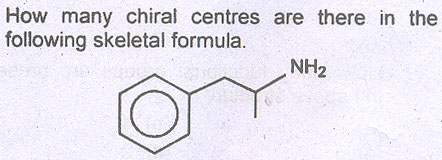
Question # 3
Type of isomerism in BrCH=CHBr is:
Question # 4
Coal is used to bake bricks in lime kiln:
Question # 5
Quality of fuel is judged from its octane number. The best fuels are
Question # 6
The state of hybridization of carbon atom in methane is
Question # 7
Which set of hybrid orbitals has planar triangle shape?
Question # 8
The functional group of acid amide is
Question # 9
The open chain compounds are also called
Question # 10
Acetylene had a characteristic ethereal smell resembling that of
Question # 11
The fractions obtained from fractional distillation of petroleum are placed in increasing order of their boiling points. Which order is correct
Question # 12
Products of coal is:
Question # 13
In ter-butyl alcohol, the tertiary carbon is bonded to
Question # 14
Which set of hybrid orbitals has planar triangular shape
Question # 15
The major portion of natural gas is
Question # 16
The percentage of methane in natural gas is
Question # 17
Cracking normally gives smaller ______
Question # 18
Major component of natural gas is:
Question # 19
A double bond consists of:
Question # 20
The major components of coal gas are
Question # 21
The branch of chemistry which deals with the study of compounds containing carbon as an essential elements is called
Question # 22
The next homologue of C10H22will be
Question # 23
Which is not a nucleophile
Question # 24
Organic compounds generally react at ______ rates
Question # 25
Identify the heterocyclic compound
Question # 26
The formula of esters is
Question # 27
The functional group isomer of dimethylether is
Question # 28
On passing ethane into concentrated suphuric acid the intermediate compound formed on hydrolysis with boiling water gives
Question # 29
Alkynes normally have ______ hybridization
Question # 30
I-Chloropropane has two isomers, it is an example of





Top Scorers Of ECAT Chemistry Chapter 18 Fundamental Principles of Organic Chemistry MCQ`s Test
-
S Shazi Ansari 05 - Jun - 2024 01 Min 16 Sec 115/120 -
A Ahmad Chand 24 - Dec - 2024 01 Min 25 Sec 115/120 -
M M Umer Arain 25 - Nov - 2024 00 Min 07 Sec 110/120 -
A Abdul Rehman 21 - Jul - 2024 03 Min 05 Sec 110/120 -
F Furqan Asif 18 - Mar - 2026 38 Min 33 Sec 92/120 -
A Abdull Rehman 30 - May - 2024 05 Min 36 Sec 90/120 -
H HAFIZ MUHAMMAD HADEED ZAHID HAFIZ HADEED 08 - Dec - 2024 05 Min 52 Sec 90/120 -
G GOVT. SUFFA EDUCATION CENTER GIRLS MURIDKE 01 - Jun - 2024 08 Min 37 Sec 90/120 -
A Abdullah Akhtar 06 - Jun - 2024 14 Min 02 Sec 90/120 -
H Haider Ali 03 - Jun - 2024 14 Min 43 Sec 85/120 -
A Afzaal Falak 28 - Feb - 2026 06 Min 38 Sec 84/120 -
A Ayan Khan 06 - Aug - 2024 07 Min 32 Sec 80/120 -
F Fatima Anis 26 - Dec - 2024 06 Min 39 Sec 75/120 -
S shahmeer Ch 17 - Jun - 2026 05 Min 45 Sec 72/120 -
N Nasir Jamal 25 - Jan - 2026 06 Min 07 Sec 72/120
ECAT Chemistry Chapter 18 Important MCQ's
| Sr.# | Question | Answer |
|---|---|---|
| 1 | Due to the bacterial action on wood it is converted into |
A. Peat
B. Lignite
C. Bituminous coal
D. Anthracite
|
| 2 |

|
A. 2, 2, 4-trimethylpentane
B. 2, 4, 4-trimethylpentane
C. 2, 4, 4-methyepentane
D. 2, 2, 4-methylpentane
|
| 3 | Angle 120° is observed in molecules : |
A. CH4
B. CH3-CH3
C. CH -CH
D. CH2 =CH2
|
| 4 | Which of the following contains single bonds |
A. Benzene
B. Alkyne
C. Alkene
D. Alkane
|
| 5 | Which reaction produces a free radical |
A. SN reaction
B. Homelytic fission reaction
C. Heterolytic fission reaction
D. Addition reaction
|
| 6 | Which of the following is complex? |
A. CaSO4. 0.5H2O
B. (C6H10O5)n
C. C6H12O6
D. CH4
|
| 7 | Which is not a fossil fuel |
A. Petroleum
B. Coal
C. Natural gas
D. None of them
|
| 8 | In ter-butyl alcohol, the tertiary carbon is bonded to |
A. Two hydrogen atoms
B. Three hydrogen atoms
C. One hydrogen atoms
D. No hydrogen atom
|
| 9 | Which of the following expressions show a heterolytic bond fission | |
| 10 | Compounds having the same molecular formula, but different functional groups show |
A. Metamerism
B. Position isomerism
C. Chain isomerism
D. Functional group isomerism
|
Test Questions