




 Home
Home
 News
News
 Colleges




 Courses
 Admission
 Lectures
 Online Test
 Past Papers
 Date Sheets
 Results
 Study Abroad
 Jobs
Jobs
 Tutors
 More
More


 Apps
Apps





MCQ's Test For ECAT Mathematics Chapter 9 Permutation, Combination & Probability
Try The MCQ's Test For ECAT Mathematics Chapter 9 Permutation, Combination & Probability
-
Total Questions30
-
Time Allowed30
ECAT Mathematics Chapter 9 Permutation, Combination & Probability
00:00

Question # 1
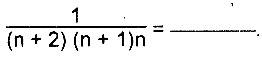
(n + 2) (n + 1) n= ______
Question # 2
The number of words that can be formed out of the letters of the word ASSASSINATION is
Question # 3
Five engineering, four mathematics, two chemistry books are placed on a table at random.The probability that the books of each kind are all together is
Question # 4
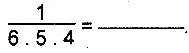
Question # 5
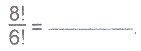
6! = ______
Question # 6
A box contains 10 red 30 white and 20 black marbles When a marble is drawn at random the probability that it is either red or white is
Question # 7
n(n - 1) (n - 2) .... (n - r + 1) = ______
Question # 8
Question # 9
The key for opening a door is in a bunch of 10 keys. A man attempts to open the door by trying the keys at random discarding the wrong key. The probability that the door is opened in the 5th trial is
Question # 10
An experiment yields 3 mutually exclusive and exhaustive events A, B, C, if P(A) =2 and P(B) = 3. then P(C) =
Question # 11
A box containing 10 mangoes out of which 4 are rotter. Two mangoes are taken together from the box. If one of them is found to be good, the probability that the other is also good is
Question # 12
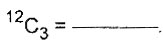
Question # 13
Which one is not defined∀n∈Z+
Question # 14
Number of combination of zero or more things out of n different things
Question # 15
Form a group of 5 men and 3 women, a committee of 4 persons is to be selected randomly. The probability that there is a majority of men is
Question # 16
A coin is tossed. If head comes up, a die is thrown but if tail comes up, the coin is tossed again. The probability of obtaining a head and an even number is
Question # 17
If 4 6Pr= 6Pr+1, then r is equal to
Question # 18
Three unbiased coins are tossed. Then the probabilities of getting two heads is
Question # 19
Number of selections of n different things out of n
Question # 20
The probability that a slip of numbers divisible by 4 is picked from the slips of number 1,2,3,4,......10 is
Question # 21
What is the probability of being born on Wednesday?
Question # 22
How many arrangements of the letters of the word PAKISTAN cab be made
Question # 23
How many 3 digit numbers can be formed by using each one of the digit 2, 3, 5, 7, 9 only once?
Question # 24

Question # 25
0! = ______
Question # 26
The number of the diagonals of a 6 sided figure is
Question # 27

Question # 28
Question # 29
How many 6-Digit number can be formed without repairing any digit from the digits 0,1,2,3,4,5
Question # 30






Top Scorers Of ECAT Mathematics Chapter 9 Permutation, Combination & Probability MCQ`s Test
-
H hadeed 06 - Mar - 2023 10 Min 50 Sec 45/120 -
A Abdul Rehman 24 - Sep - 2023 01 Min 10 Sec 5/120
ECAT Mathematics Chapter 9 Important MCQ's
| Sr.# | Question | Answer |
|---|---|---|
| 1 | How many arrangements of the letters of the word MATHEMATICS can be made | |
| 2 |

|
|
| 3 | A dice is rolled. The probability that the dots on the top are greater than 4 is |
A. 1/6
B. 1/3
C. 1/2
D. 1
|
| 4 | Which one is not defined∀n∈Z+ |
A. -n!
B. n!
C. (-n)!
D. n!+0!=n!+1
|
| 5 | Number of combination of zero or more things out of n different things |
A. nPn
B. nPr
C. nCr
D. 2n
|
| 6 |

|
A. n!
B. 0!
C. 1
D. None of these
|
| 7 |

|
|
| 8 | 5 unbiased coins coins are tossed simultaneously. The probability of getting at least one head is |
A. 1 / 32
B. 31 / 32
C. 1 / 16
D. None of these
|
| 9 |

|
A. 56
B. 7
C. 8
D. 8/7
|
| 10 | 8 . 7 . 6. 5 in factorial form is |

Test Questions