




 Home
Home
 News
News
 Colleges




 Courses
 Admission
 Lectures
 Online Test
 Past Papers
 Date Sheets
 Results
 Study Abroad
 Jobs
Jobs
 Tutors
 More
More


 Apps
Apps





MCQ's Test For ECAT Mathematics Chapter 3 Logic
Try The MCQ's Test For ECAT Mathematics Chapter 3 Logic
-
Total Questions30
-
Time Allowed30
ECAT Mathematics Chapter 3 Logic
00:00

Question # 1
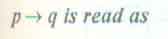
Question # 2

Question # 3
Logic in which there is scope of third or fourth possibility is called.
Question # 4
Deduction is mostly used in
Question # 5
10 is a even number or 0 is a natural number, then truth value of this disjunction is
Question # 6
Basic-principles of deductive logic were laid down by:
Question # 7
-p is the
Question # 8
A statement which is already false is called
Question # 9
All men are mortal. We are men, therefore, we are also mortal. This is a useful example of
Question # 10
Any two propositions which is combined by the word "and" and form a compound proposition is called
Question # 11
While witting his hooks on geometry, Euclid used
Question # 12
A daclarative statement which may be true or false but not both is called a
Question # 13
Deductive logic in which every statement is regarded as true or false and there is no other possibility is called
Question # 14
If p is false, -p is
Question # 15
All men are mortal, We are men, there fore, we are also mortal. This is a useful example of
Question # 16
According to Aristotle, in preposition there could be
Question # 17
If both p and q are false, then the disjunction of p and q is
Question # 18
A conjunction is considered to he true only if both its components are
Question # 19
The statements of the form "If p then q" are called
Question # 20
Which of the following statement, is true
Question # 21

Question # 22

Question # 23
Which of the following statement, is ture
Question # 24
~ p is the
Question # 25
To draw conclusions from some experiments or few contacts only is called:
Question # 26
The symbol∋ stand for
Question # 27
If p is false, ~ p is
Question # 28
To draw conclusions front premises believed to be true, this way of reasoning is called
Question # 29
The greater part of our knowledge, is based on
Question # 30
Disjunction of p and q is





Top Scorers Of ECAT Mathematics Chapter 3 Logic MCQ`s Test
-
S Syed Faizan Gillani 05 - Dec - 2024 00 Min 41 Sec 120/120 -
D David Navid 23 - Nov - 2023 02 Min 24 Sec 120/120 -
K Kifayet Ali 17 - May - 2024 09 Min 14 Sec 120/120 -
M Muneeb ur Rehman 24 - Jun - 2026 02 Min 40 Sec 116/120 -
H Heer 17 - Feb - 2024 01 Min 11 Sec 115/120 -
U Umair Irshad 02 - Jun - 2024 02 Min 54 Sec 110/120 -
S suzi 14 - Feb - 2026 04 Min 46 Sec 108/120 -
Z zainab naeem 29 - Nov - 2025 05 Min 39 Sec 108/120 -
M Moazzam Sultan 14 - Nov - 2023 02 Min 27 Sec 105/120 -
L Laiba Fatima 03 - Jun - 2024 02 Min 52 Sec 105/120 -
U Umair Sajid 03 - Mar - 2024 01 Min 01 Sec 95/120 -
K khuzaima 10 - Jul - 2024 02 Min 04 Sec 95/120 -
E Ehsan Ullah 26 - Mar - 2024 04 Min 06 Sec 90/120 -
Z Zoha Chohan 06 - Mar - 2024 04 Min 46 Sec 90/120 -
S Samavia Khan 15 - Feb - 2024 05 Min 07 Sec 90/120
ECAT Mathematics Chapter 3 Important MCQ's
| Sr.# | Question | Answer |
|---|---|---|
| 1 | Conjunction of two statements p and q is denoted symbolically as | |
| 2 | The conditional statement "If p then q" is logically equivalent to the statement. |
A. Not p or Not q
B. Not p and Not q
C. Not p or q
D. p or q
|
| 3 | The symbol∋ stand for |
A. Such that
B. There exist
C. For all
D. Belongs to
|
| 4 | Deductive logic in which every statement is regarded as true or false and there is no other possibility is called: |
A. Deductive logic
B. Inductive logic
C. Aristotlian logic
D. Non-Aristotlian logic
|
| 5 |

|
A. hypothesis
B. implication
C. consequent
D. conditional
|
| 6 | Basic principles of deductive logic were laid down by |
A. Euclid
B. Leibniz
C. Newton
D. Aristotle
|
| 7 | A daclarative statement which may be true or false but not both is called a |
A. hypothesis
B. proposition
C. implication
D. conjuction
|
| 8 | A declarative statement which may be true or false but not both is called a |
A. Hypothesis
B. Proposition
C. implication
D. conjunction
|
| 9 | All men are mortal. We are men, therefore, we are also mortal. This is a useful example of |
A. deduction
B. induction
C. conjunction
D. disjunction
|
| 10 | An implication of p and q is denoted by |

Test Questions