








BS Economics Admissions 2026 in Pakistan
BS Economics is a four-year, eight-semester degree that you can start after intermediate (FA, FSc, ICS or I.Com) or A-levels. Most universities ask for at least 45–50% marks. Many also run an entry test, an interview or both, and the most competitive programmes fill seats on high merit.
This page lists open BS Economics admissions, explains who can apply, and walks you through the process so you can plan your applications. Deadlines pass quickly, so use the table below for the latest notices and confirm every date on the university’s own website.
Admissions in different Institutes for BS Economics
| Date Posted | Last Date | Institute Name | Program Name | Admission Image |
|---|---|---|---|---|
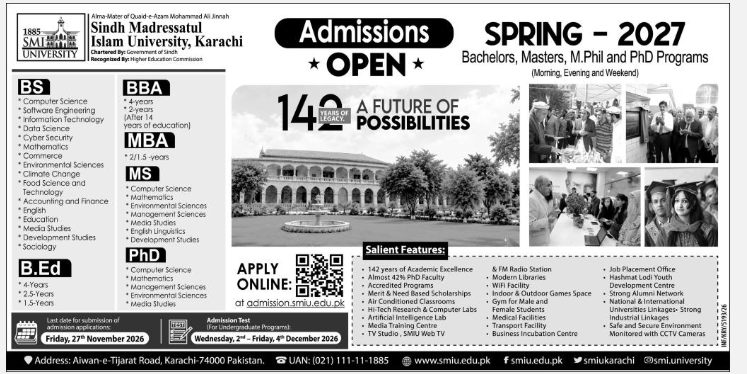
| 24-Nov-2026 | N/A |
 Sindh Madressatul Islam University |
|
|
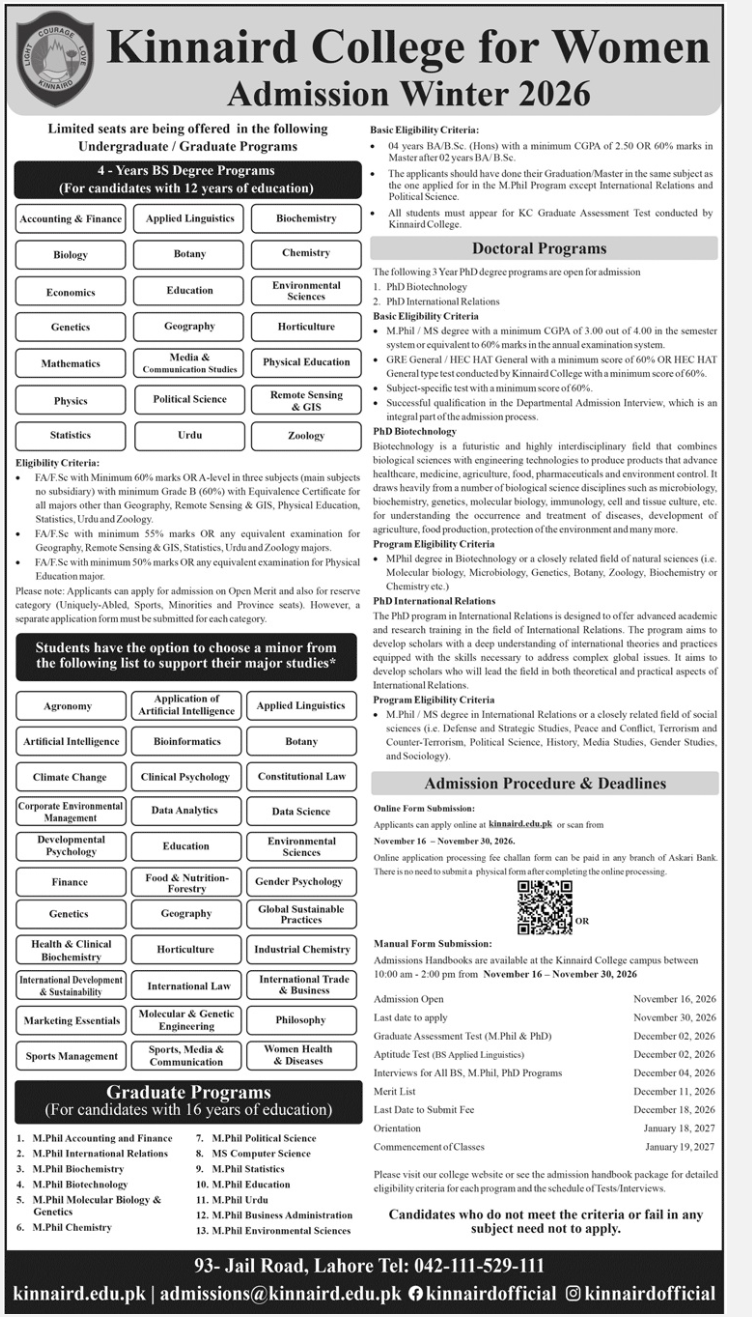
| 24-Nov-2026 | 30-Nov-2026 |
 Kinnaird College For Women Lahore |
|
|
| 22-Nov-2026 | 14-Dec-2026 |
 University Of Sargodha UOS |
|
|
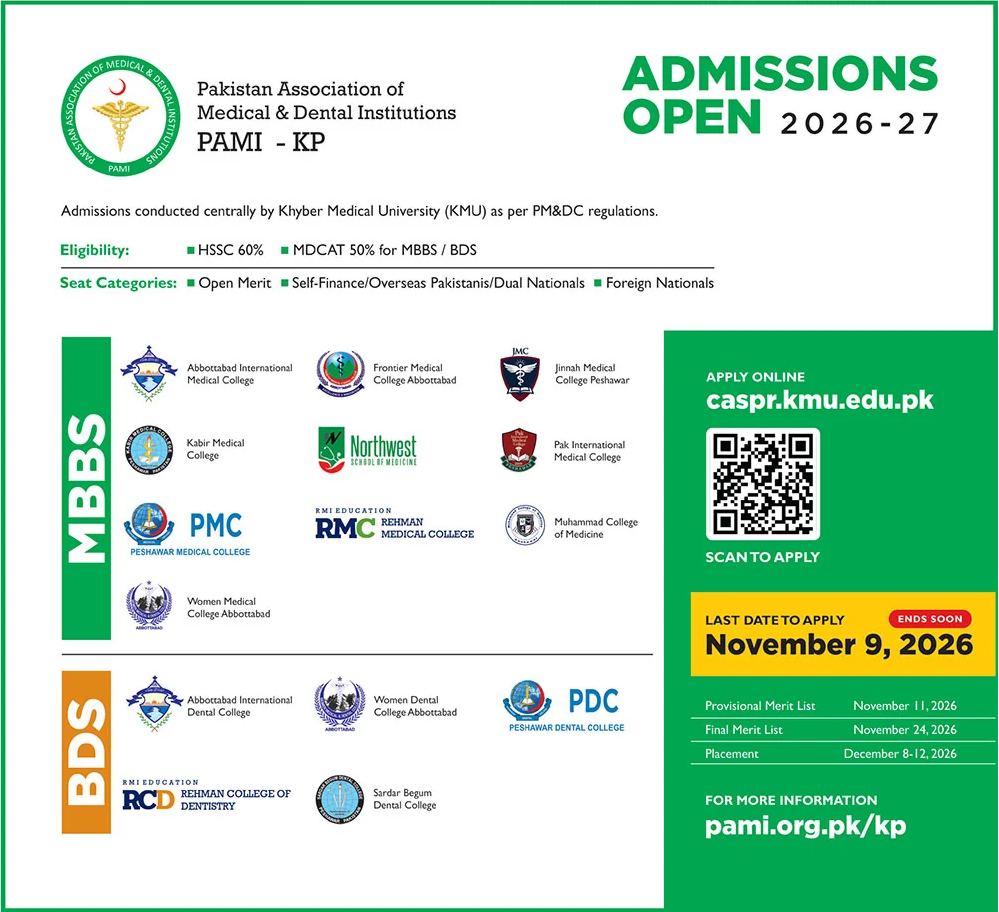
| 20-Nov-2026 | 05-Dec-2026 |
 Balochistan University Of Information Technology & Management Sciences (BUITEMS) Quetta |
|
|
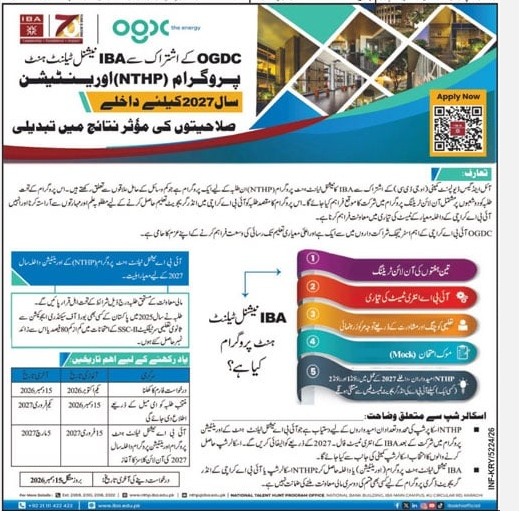
| 18-Nov-2026 | 15-Dec-2026 |
 Institute Of Business Administration (IBA) Karachi |
|
|
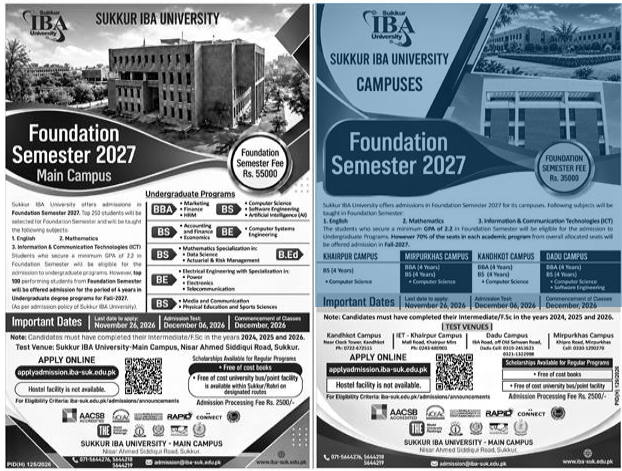
| 15-Nov-2026 | 08-Jan-2027 |
 International Islamic University IIU Islamabad |
|
|
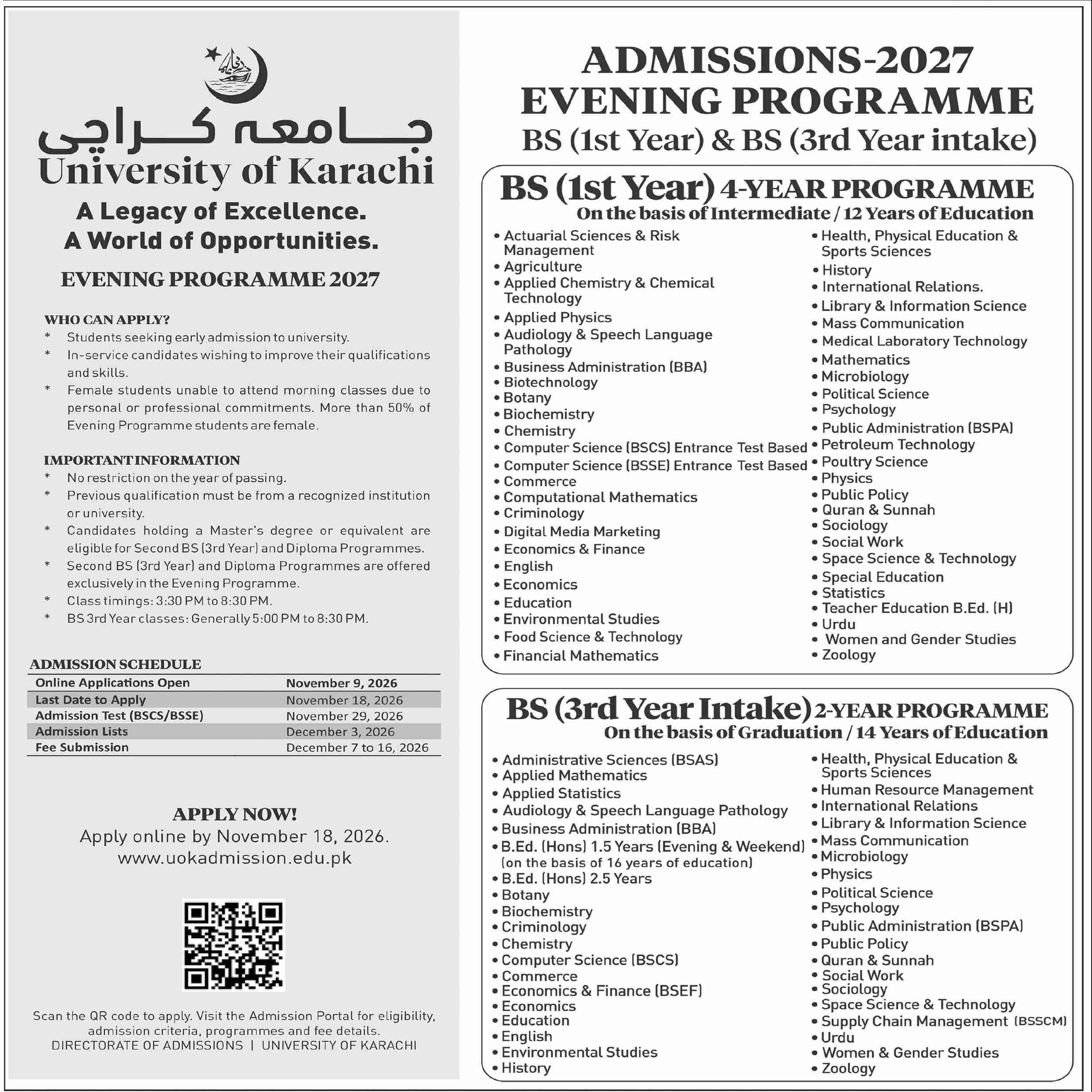
| 15-Nov-2026 | 20-Nov-2026 |
 University Of Karachi |
|
|
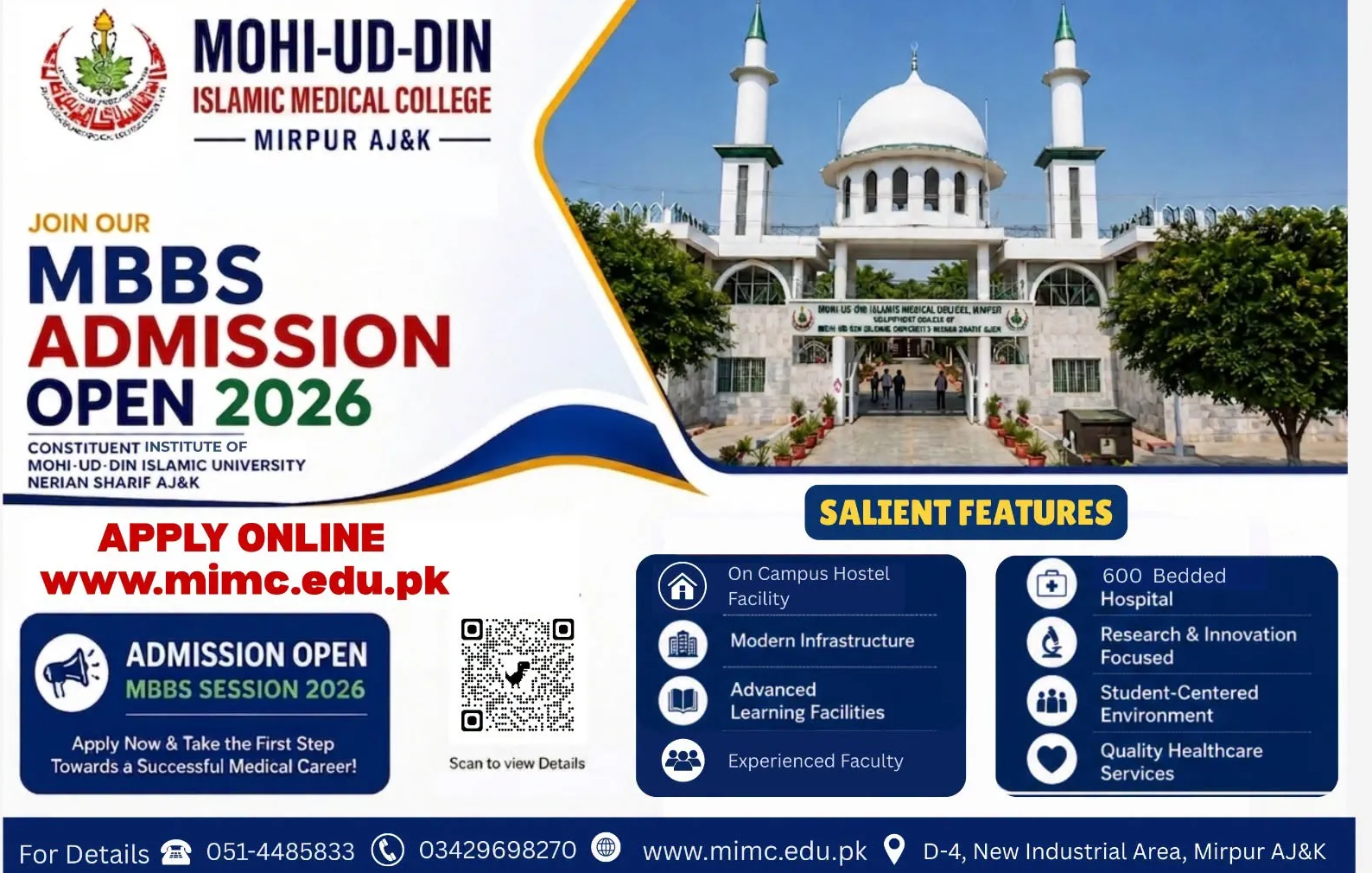
| 11-Nov-2026 | 15-Nov-2026 |
 Iqra University Karachi |
|
|
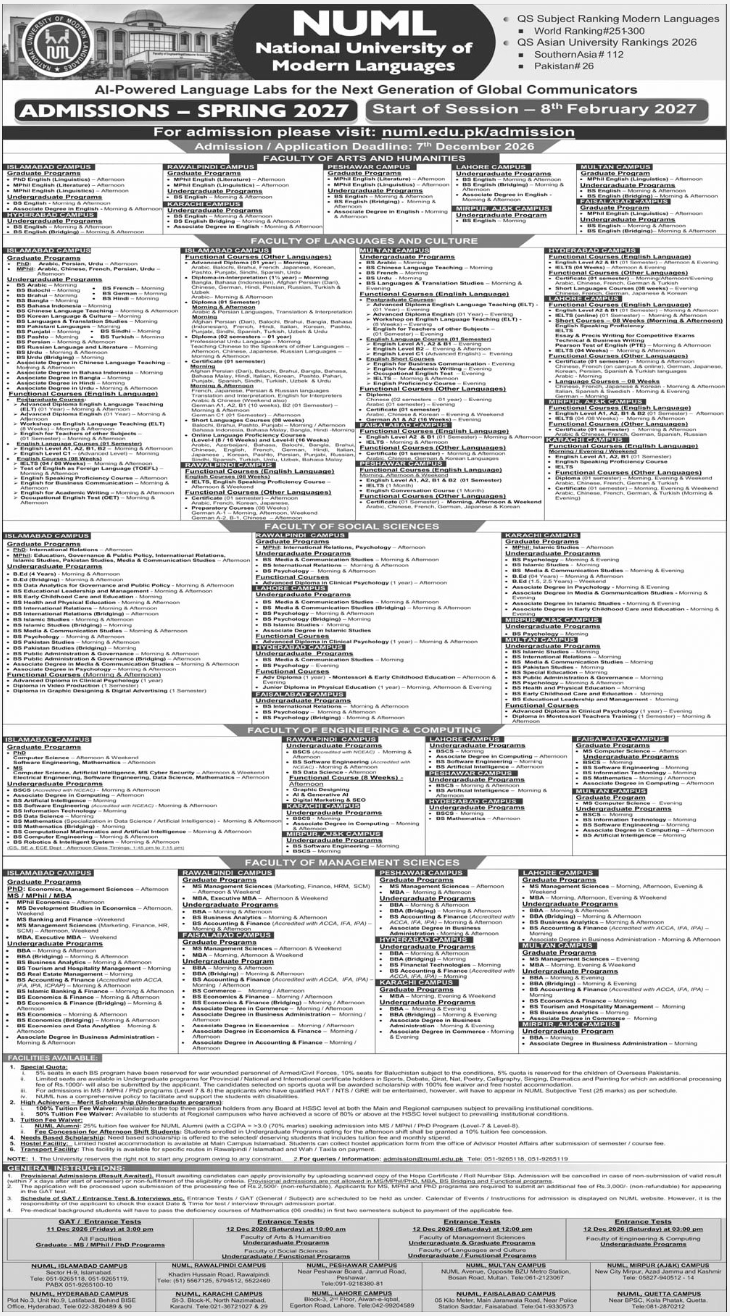
| 10-Nov-2026 | N/A |
 National University Of Modern Languages Islamabad |
|
|
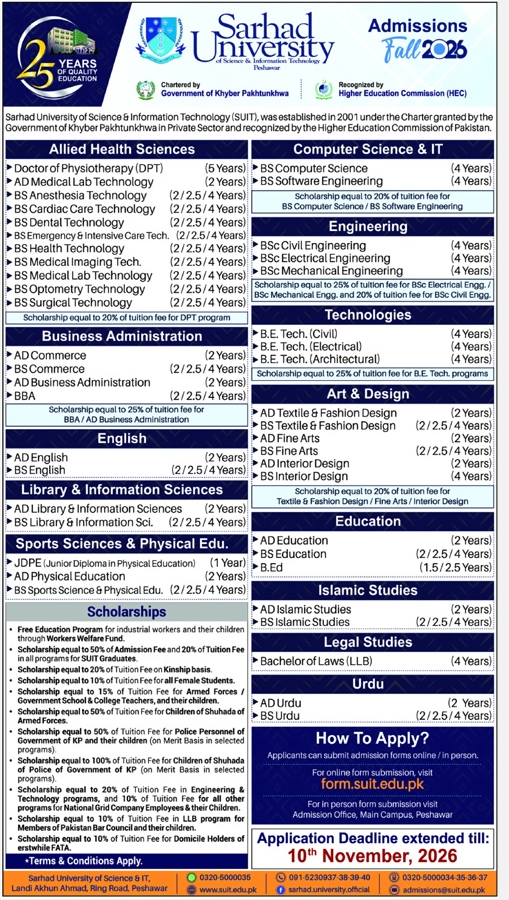
| 06-Nov-2026 | 10-Nov-2026 |
 Sarhad University |
|
|
-
-
Kinnaird College For Women Lahore Date Posted: 24-Nov-2026 Last Date: 30-Nov-2026 Program: BS Economics
-
-
Balochistan University Of Information Technology & Management Sciences (BUITEMS) Quetta Date Posted: 20-Nov-2026 Last Date: 05-Dec-2026 Program: BS Economics
-
Institute Of Business Administration (IBA) Karachi Date Posted: 18-Nov-2026 Last Date: 15-Dec-2026 Program: Bs Economics & Mathematics
-
International Islamic University IIU Islamabad Date Posted: 15-Nov-2026 Last Date: 08-Jan-2027 Program: BS Economics
-
-
Iqra University Karachi Date Posted: 11-Nov-2026 Last Date: 15-Nov-2026 Program: BS Economics & Finance
-
National University Of Modern Languages Islamabad Date Posted: 10-Nov-2026 Last Date: N/A Program: BS ECONOMICS
-
Quick facts: BS Economics in Pakistan
|
Detail |
What to expect |
|---|---|
|
Length |
4 years, 8 semesters |
|
Credit hours |
HEC’s undergraduate policy sets a minimum of 120 credit hours for a single-major degree. The programme schemes we reviewed run from about 126 to 138 |
|
Minimum qualification |
Intermediate (FA, FSc, ICS, I.Com) or A-levels/equivalent |
|
Typical minimum marks |
45% to 60%, depending on the university |
|
How seats are decided |
Merit, entry test, SAT/ACT, interview, or a combination |
|
Intake |
Fall is the main intake for most universities we checked. Some announce spring or mid-year admissions, so check each notice |
Who can apply: eligibility criteria
The basic rule is a completed intermediate with the university’s minimum marks. The details differ, and the published minimum is a floor, not a guarantee. Here is how eight institutions set theirs:
|
University |
Published criteria |
Selection route |
|---|---|---|
|
Quaid-i-Azam University |
Merit formula: 30% matric + 70% intermediate; O/A-level students use IBCC equivalence |
Merit (check the current notice) |
|
Lahore College for Women University |
50% in intermediate; General Science, FSc, ICS (Physics/Economics/Statistics), I.Com, FA with Economics and A-levels with Economics |
Open merit; women only |
|
University of Central Punjab |
At least 45% or second division in FSc/FA/I.Com/ICS/A-level |
In-house test and interview |
|
IMSciences, Peshawar |
Admission test and interview compulsory; below 40% in the test and interview disqualifies; 30 bonus marks if you studied economics, psychology, computers, advanced English or home economics at intermediate or A-level |
Test + interview |
|
Lahore School of Economics |
SAT I (at least 1200/1600 with 600+ in Math) or the Lahore School entrance exam |
Test + interview |
|
IBA Karachi |
IBA aptitude test, or SAT/ACT route. Its Fall 2026 lists used SAT cut-offs of 640 (Math) and 600 (English) |
Test or SAT/ACT; cut-offs are competitive results, not entry minimums |
|
NUST |
NUST Entry Test (NET) plus academic marks; one source reports a 60% intermediate minimum, so confirm on the NUST portal |
NET + merit |
|
Beaconhouse National University |
Academic record, admission test and interview; online application |
Test + interview |
A few things to watch:
-
O-level, A-level, American High School Diploma and IB students usually need an IBCC equivalence certificate.
-
Subject choice matters at some universities. Preston University, for example, prefers applicants who studied economics, mathematics, statistics or science subjects, and adds a written test and interview.
-
Women-only options exist, such as LCWU and Kinnaird College for Women.
How BS Economics admission works
-
Shortlist universities. Compare by city, budget and test route. Our universities offering BS Economics and BS Economics fee structure pages help.
-
Check eligibility and intake. Confirm minimum marks, accepted intermediate groups and the application window.
-
Apply. Most universities now take applications online and charge an application fee.
-
Take the test or interview, where required. This may be an in-house test, the IBA test, the NUST Entry Test, the SAT, or a combination. See the NUST merit criteria for how NUST combines scores.
-
Watch the merit lists. Track the latest BS Economics merit lists. If your name appears, you will usually be asked to bring original documents for verification.
-
Pay the fee before the deadline. At many universities, an unpaid challan means the seat can pass to the next merit list.
-
Apply to more than one university. Mix a competitive choice, a realistic choice and a safer one. For other BS subjects, see our general BS admissions guide.
Merit: what scores to expect
Closing merit changes every year and varies by quota, campus and category. As a reference point, the first Fall 2024-25 merit lists recorded on our merit page showed a University of the Punjab range of about 69–89%, Information Technology University 70–93%, and Government College University Faisalabad 64–87%. These figures are two cycles old, so use them for scale rather than prediction. Always check the current list for your university and category.
Documents checklist
Requirements differ, but most universities ask for:
-
Matric (SSC) and intermediate (HSSC) result cards or certificates
-
Attested CNIC or B-form copies, plus a copy of the guardian’s CNIC
-
Domicile certificate
-
Character certificate
-
IBCC equivalence certificate (O-level, A-level, American High School Diploma, IB)
-
Test, SAT or ACT score card, where applicable
Read the admission notice carefully. It is the final word on what you must submit.
Fees and scholarships
Fees range widely between public and private universities. On our fee page, for example, University of Turbat is listed at Rs 11,000 per semester, University of Education (Bank Road, Lahore) at Rs 25,350 for the first morning semester, and Hajvery University at Rs 85,000 per semester. Universities publish fees in different formats (per semester, per credit hour, or whole programme), so compare total cost, not just the first instalment. The full list is on the BS Economics fee structure page.
Many universities offer merit and need-based aid. IBA and NUST both publish financial support options. Ask the admission office what applies to you.
Programme variants
-
BS Economics is the standard four-year degree.
-
BS Economics and Finance is offered at universities such as Iqra University Karachi and the University of Education.
-
BS Economics and Mathematics and BS Economics and Data Science are offered at IBA, and several others offer “with Data Science” versions, including ITU Lahore and the University of Sahiwal.
-
Bridging and post-ADP routes exist for students with an earlier degree. HEC’s policy allows BA/BSc holders to join the fifth semester of a four-year BS, and listings such as UMT’s “BS Economics – Post ADP” and Sargodha’s “BS Economics (Bridging)” follow this model.
Compare the scheme of studies before choosing. Variants differ in maths, finance and data content.
BS Economics admission by city
Each city page below carries current notices. Use these notes to get oriented.
Lahore
Universities appearing in our Lahore listings include the University of the Punjab, GCU, Kinnaird College for Women, LCWU, UMT, Minhaj University, the University of Lahore, ITU, UCP, Lahore School of Economics and BNU. See BS Economics admissions in Lahore.
Karachi
Options include the University of Karachi (see its admission page), IBA Karachi, Bahria University Karachi and Iqra University Karachi. See BS Economics admissions in Karachi.
Islamabad and Rawalpindi
Options include NUST, Quaid-i-Azam University, International Islamic University, Bahria University Islamabad, AIOU and Federal Urdu University. See BS Economics admissions in Islamabad.
Peshawar
Options include the University of Peshawar, IMSciences and Sarhad University. See BS Economics admissions in Peshawar.
Multan
Options include Bahauddin Zakariya University and The Women University Multan. See BS Economics admissions in Multan.
Quetta
Options include Al-Hamd Islamic University and BUITEMS. See BS Economics admissions in Quetta.
Faisalabad
Options include the University of Agriculture Faisalabad, GC University Faisalabad, the University of Education Faisalabad campus and Riphah International University Faisalabad. See BS Economics admissions in Faisalabad.
What you will study
Economics at this level leans on mathematics and statistics. At the University of the Punjab, for example, the early semesters cover principles of microeconomics and macroeconomics, elementary statistics, algebra and calculus. Later semesters add econometrics, development economics, monetary economics, public sector economics and international trade, plus electives. Read the full BS Economics subjects and course outline.
How to choose a university
-
Check the selection route first. A test-and-interview route needs preparation time that a merit-only route doesn’t.
-
Look at the maths and statistics load. It varies between programmes.
-
Compare total cost. Multiply the semester fee by eight and add admission dues.
-
Confirm HEC recognition on the HEC website before you pay any fee.
-
Think about campus and city, including travel, hostel needs and women-only options.
-
Compare alternatives. If you like the finance side, also look at BS Banking and Finance.
After BS Economics
Graduates move into MS or MPhil programmes. Under HEC’s current policy, a BS graduate can also apply directly for PhD programmes. Others work in banking, research, public policy and data analysis. See career options after BS Economics for more.
Cities with Admissions in BS Economics
Related Disciplines of BS Economics



More on BS Economics
Free Admission Advice for bs economics
Frequently Asked Questions
What are the eligibility criteria for BS Economics admission?
You need an intermediate (FA, FSc, ICS or I.Com) or A-levels with the university’s minimum marks, usually 45–60%. Some universities add an entry test, SAT or interview.
Can I apply with FA, ICS or I.Com?
Many universities accept them, but some list specific subject combinations. LCWU, for instance, names eligible streams, so check the notice for your target university.
Is an entry test compulsory?
It depends on the university. UCP, IMSciences and BNU use a test and interview, IBA uses its own test or SAT/ACT, and NUST uses the NET. Some universities decide on merit alone.
How long is BS Economics?
Four years, divided into eight semesters.
What documents do I need?
Matric and intermediate results, CNIC or B-form copies, domicile, character certificate, and an IBCC equivalence certificate for O/A-level students. Each notice lists exact requirements.
Can I apply while my result is pending?
Some universities allow provisional admission, but only if you submit the result afterwards. Lahore School of Economics does this for A-level students. Check each university’s rules.
What is the difference between BS Economics and BS Economics and Finance?
Both are four-year degrees. The finance version adds finance courses to the economics core. Compare the scheme of studies.
Can BA/BSc or ADP holders join BS Economics?
Under HEC’s policy, BA/BSc holders can join the fifth semester of a four-year BS. Bridging and post-ADP programmes follow this route. Confirm with the university.
How do I find the last date to apply?
Use the admissions table on this page and confirm on the university’s website. Deadlines change each session.
Are scholarships available?
Many universities offer merit or need-based aid. IBA and NUST publish theirs.