








Admissions in different Institutes for BS Economics
| Date Posted | Institute Name | City | Program Name | Admission Image |
|---|---|---|---|---|
| 22-Sep-2026 |
 Pir Mehr Ali Shah Arid Agriculture University Rawalpindi |
Rawalpindi |
|

|
| 18-Aug-2026 |
 Barani Institute of Management Sciences Rawalpindi |
Rawalpindi |
|

|
| 14-Jul-2025 |
 Arid Agriculture University, Rawalpindi |
Rawalpindi |
|
|
| 21-Jan-2024 |
 Bilquis College of Education for Women PAF Chaklala Rawalpindi |
Rawalpindi |
|
|
| 05-Apr-2022 |
 Govt Post Graduate College Asghar Mall Rawalpindi |
Rawalpindi |
|
|
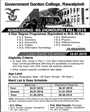
| 07-Jul-2019 |
 Govt Gordon College Rawalpindi |
Rawalpindi |
|
|
| 04-Sep-2015 |
 Cadet College Rawalpindi |
Rawalpindi |
|

|
| 13-Jul-2015 |
Cadet College Rawalpindi
|
Rawalpindi |
|

|
| 22-Jun-2015 |
 Technical Education and Vocational Training Authority Rawalpindi |
Rawalpindi |
|
|
| 22-Jun-2015 |
 Islamic International Medical College - RawalPindi |
Rawalpindi |
|
|
BS Economics Admissions in Rawalpindi 2026
Students looking for BS Economics admission in Rawalpindi 2026 can explore degree programmes offered by public universities, government colleges and affiliated educational institutes. Institutions including Pir Mehr Ali Shah Arid Agriculture University, Fatima Jinnah Women University, Barani Institute of Management & Sciences, Government Gordon Graduate College and Government Graduate College Asghar Mall offer BS Economics or related degree programmes.
A BS Economics degree generally takes four years to complete and introduces students to economic theory, finance, mathematics, statistics, research and economic policy. Before applying, students should compare admission deadlines, academic eligibility, fee structures and programme requirements.
Ilmkidunya provides information about BS Economics admissions across Pakistan, helping students explore additional universities and admission opportunities.
BS Economics Admissions in Rawalpindi 2026 – Latest Updates
Universities and colleges in Rawalpindi publish admission announcements according to their academic calendars. Most undergraduate applications are associated with the Fall intake, although additional admission rounds depend on individual institutions.
The following table includes the most recent 2026 deadline information identified during research.
|
Institute |
Programme |
Latest identified 2026 deadline |
Status |
|---|---|---|---|
|
Pir Mehr Ali Shah Arid Agriculture University |
BS Economics |
12 June 2026 |
Previous deadline passed |
|
Fatima Jinnah Women University |
BS Economics |
10 August 2026 |
Previous deadline passed |
|
Barani Institute of Management & Sciences |
BS Economics |
30 August 2026 |
Previous deadline passed |
|
Government Gordon Graduate College |
BS Economics |
Not verified |
2026–2030 intake advertised |
|
Government Graduate College Asghar Mall |
BS Economics |
Not verified |
Check current college admission notice |
The first three dates are taken from Eduvision's 2026 admission records. The other colleges' official pages confirm programme availability but do not establish a currently open application window. Students should verify the latest announcement before submitting an application.
Universities and Colleges Offering BS Economics in Rawalpindi
Rawalpindi provides several options for students interested in studying economics. These institutions differ in academic environments, admission policies, fees and programme specialisations.
1. Pir Mehr Ali Shah Arid Agriculture University Rawalpindi
Pir Mehr Ali Shah Arid Agriculture University (PMAS-Arid) is a public-sector university in Rawalpindi that offers economics-related undergraduate education.
Students interested in the BS Economics programme should review the university's current admission schedule, departmental requirements and merit list announcements. The university has also published BS Economics merit lists for its 2026 intake.
Applicants should confirm their eligibility, whether a test is required for their chosen programme, and the closing date for their admission category.
2. Fatima Jinnah Women University Rawalpindi
Fatima Jinnah Women University (FJWU), situated on The Mall, Rawalpindi, offers undergraduate programmes through its Department of Economics.
The university provides BS Economics and BS Economics and Finance study options. The latter combines economics with financial management, accounting and financial analysis.
The published BS Economics and Finance programme is four years long. Its programme page specifies a minimum second division in Intermediate and an NTS NAT-I requirement. Applicants should confirm the criteria for the exact degree they intend to pursue.
3. Barani Institute of Management & Sciences Rawalpindi
Barani Institute of Management & Sciences (BIMS) is affiliated with PMAS-Arid Agriculture University and offers a four-year BS Economics programme.
Its published eligibility criteria require at least 50% marks in Intermediate or an equivalent recognised qualification. The institute also describes an open-merit selection process based on previous academic performance.
Students should confirm the current fee structure, programme affiliation, admission deadlines and documentary requirements before applying.
4. Government Gordon Graduate College Rawalpindi
Government Gordon Graduate College is another option for students seeking BS Economics education in Rawalpindi.
The college published its BS admissions announcement for the academic session 2026–2030, listing BS Economics among its undergraduate programmes.
The announcement states that admissions are based on Grade 11 results under the applicable admission policy. Applicants should consult the college's most recent prospectus and merit criteria to understand final selection requirements.
5. Government Graduate College Asghar Mall Rawalpindi
Government Graduate College Asghar Mall offers a four-year BS Economics degree following a University of the Punjab academic scheme.
The Economics Department covers microeconomics, macroeconomics, public finance, international economics and applied economic research. Students also learn to use statistical and data-analysis tools.
The college provides online admission information and a BS Economics programme option in its application system. Applicants should check whether the current application round is accepting submissions.
Students can compare these institutes with additional options through the BS Economics universities in Pakistan directory.
Eligibility Criteria for BS Economics Admission in Rawalpindi
The eligibility criteria for admission in BS Economics in Rawalpindi depend on the institution and its academic regulations.
Generally, candidates must have completed Intermediate or an equivalent qualification from a recognised institution. Depending on the university, eligible qualifications may include FA, FSc, ICS, I.Com or A-Levels.
|
Admission requirement |
General guidance |
|---|---|
|
Qualification |
Intermediate or equivalent |
|
Minimum marks |
Varies by institution |
|
Programme duration |
Four years |
|
Academic system |
Usually eight semesters |
|
Entry test |
Depends on the institute and programme |
|
Selection |
Academic merit and any required tests |
|
A-Level applicants |
Equivalence documentation may be required |
For example, BIMS specifies 50% Intermediate marks, whereas the published BS Economics and Finance criteria at FJWU specify a minimum second division and NAT-I.
A general percentage should not be treated as the requirement for every university. Students can also review the BS degree eligibility criteria to understand common undergraduate admission requirements.
How to Apply for BS Economics Admission in Rawalpindi
Students planning to apply for BS Economics admission in Rawalpindi 2026 should follow the procedure announced by their selected institute.
-
Select an institute. Compare universities, colleges, campus locations and available Economics programmes.
-
Check eligibility. Review the required Intermediate marks, age restrictions and any entry-test conditions.
-
Find the admission announcement. Visit the institute's official admission portal to confirm the application period.
-
Complete the application. Fill out the online or prescribed admission form with accurate personal and academic details.
-
Upload documents and pay the fee. Follow the institute's prescribed document and admission processing fee instructions.
-
Check merit lists. Follow the selection schedule and complete enrolment requirements if selected.
Applicants should save a copy of their submitted form, payment receipt and application number. Incomplete applications or submissions after the deadline may not be accepted.
Documents Required for BS Economics Admission
Students should prepare their academic and identification documents before applying. Requirements differ between institutions, but the following checklist covers common admission documents.
|
Document |
Purpose |
|---|---|
|
Matric result card or certificate |
Verification of secondary education |
|
Intermediate result card or certificate |
Verification of undergraduate eligibility |
|
CNIC or B-Form |
Applicant identification |
|
Parent or guardian CNIC |
Identity verification where required |
|
Passport-size photographs |
Student record and admission form |
|
Domicile certificate |
Required for certain categories or institutions |
|
Equivalence certificate |
Relevant to applicants with foreign or equivalent qualifications |
|
Admission fee challan |
Payment verification |
Some institutions may also request character certificates, migration certificates or original documents during enrolment. Students should use the institute-specific checklist as the final authority.
BS Economics Fee Structure in Rawalpindi
The BS Economics fee structure in Rawalpindi varies depending on the institute, admission category and academic session.
Government colleges, public universities and private affiliated institutes may charge different tuition fees and other academic expenses. Students should compare the total cost rather than focusing only on the initial admission fee.
Common charges include admission processing fees, tuition, examination expenses, registration, student services and security deposits where applicable.
Before applying, confirm whether the published fee is charged per semester or annually. Applicants can use the BS Economics fee structure guide to review available fee information and then verify the current amount with their selected institution.
BS Economics Merit Lists in Rawalpindi
Universities and colleges publish merit lists to identify candidates selected for their degree programmes.
Merit calculations may consider Intermediate marks, Matric marks, entry-test results or other criteria specified in the university's admission policy.
After applying, students should regularly review the admission portal for merit-list publication, document verification instructions and fee submission deadlines.
Students can also visit Ilmkidunya's BS Economics merit lists page for available updates from institutions across Pakistan.
BS Economics Subjects and Course Outline
BS Economics introduces students to the study of markets, government policies, financial systems and economic development.
The curriculum usually combines theoretical knowledge with quantitative and research skills.
|
Study area |
Common subjects |
|---|---|
|
Economic theory |
Microeconomics, Macroeconomics |
|
Quantitative studies |
Mathematics, Statistics |
|
Research and analysis |
Econometrics, Research Methodology |
|
Public economics |
Public Finance, Monetary Economics |
|
International studies |
International Economics, International Trade |
|
Development studies |
Development Economics |
|
Finance-related subjects |
Money and Banking, Financial Economics |
The exact subjects and semester sequence depend on the university's approved curriculum. Students interested in detailed programme information can explore the BS Economics subjects and course outline.
Difference Between BS Economics and BS Economics & Finance
Some institutions in Rawalpindi offer different economics degree titles, making programme comparison important.
|
BS Economics |
BS Economics & Finance |
|---|---|
|
Focuses on economic theory and policy |
Combines economics with financial studies |
|
Covers economic development and markets |
Adds greater emphasis on finance and financial management |
|
Suitable for economic research and policy interests |
Suitable for economics and finance-related career interests |
|
Includes quantitative and research subjects |
Includes economics, quantitative and financial subjects |
Both degrees may provide access to careers in banking, business, research and public-sector organisations, depending on employer requirements and the graduate's skills.
Applicants should compare the actual curriculum rather than relying only on the degree title.
Career Opportunities After BS Economics
Graduates of BS Economics may pursue opportunities in the banking sector, private businesses, government departments, research organisations and development-related institutions.
Potential career paths include economic research assistant, banking officer, financial analyst trainee, data analyst trainee, market research assistant and public policy research roles.
Some specialised positions require additional qualifications, technical training or professional experience.
Students interested in long-term career planning can explore career opportunities after BS Economics, including career paths and further study options.
BS Economics Admission Guidance for Rawalpindi Students
Before selecting a university, students should compare academic quality, tuition fees, campus location, admission requirements and programme content.
Applicants should also consider the institution's awarding university, degree recognition and availability of financial assistance. Those unable to find a suitable admission opportunity in Rawalpindi can explore nearby Islamabad institutions through the BS Economics admissions in Islamabad page.
Monitoring official admission announcements and preparing documents in advance can make the application process more manageable.
Cities with Admissions in BS Economics
Related Disciplines of BS Economics



More on BS Economics
Free Admission Advice for bs economics
Frequently Asked Questions
Which universities offer BS Economics in Rawalpindi?
Students can explore BS Economics at PMAS-Arid Agriculture University, Barani Institute of Management & Sciences, Government Gordon Graduate College and Government Graduate College Asghar Mall. Fatima Jinnah Women University offers BS Economics and related Economics and Finance education.
What is the last date for BS Economics admission in Rawalpindi 2026?
Admission deadlines vary by institution. Previously listed 2026 deadlines include 12 June for PMAS-Arid, 10 August for Fatima Jinnah Women University and 30 August for BIMS. These deadlines have passed. Students should check official portals for any subsequent admission rounds.
What percentage is required for BS Economics admission?
The minimum percentage depends on the university. BIMS specifies 50% marks in Intermediate for its BS Economics programme. Other colleges and universities may have different minimum requirements and selection criteria.
Can FA students apply for BS Economics in Rawalpindi?
Yes, FA students can apply to institutes that accept their qualification. Students must meet the relevant academic marks and any additional conditions specified by the admission office.
Is an entry test compulsory for BS Economics admission?
Not at every institute. Some programmes select students based on academic merit, while others require an admission test. The published FJWU BS Economics and Finance programme specifies NAT-I, while BIMS describes an open-merit admissions process.
How long does a BS Economics degree take?
A standard BS Economics degree generally takes four years and is divided into eight semesters. Programme completion also depends on satisfying all academic and credit-hour requirements.
What is the fee for BS Economics in Rawalpindi?
Tuition fees vary by institution, academic session and admission category. Applicants should obtain the latest approved fee schedule from their chosen university or college rather than relying on an unverified general estimate.
Can students apply for BS Economics without studying Economics in Intermediate?
Yes, some institutes accept students from different Intermediate groups, including FA, FSc, ICS and I.Com. However, students should verify the subject requirements of the specific university before applying.