




 Jobs Home
 Cities
 Govt Depts
 Comapnies
 Industries
 Professions




New Jobs in Excise and Taxation Department
- Job posted on
24-Apr-2026
- Number of vacancies
1
-
Last date to apply
08-May-2026
- Job location
Lahore
- Job type
Temporary/Contract
- Job status
Full Time
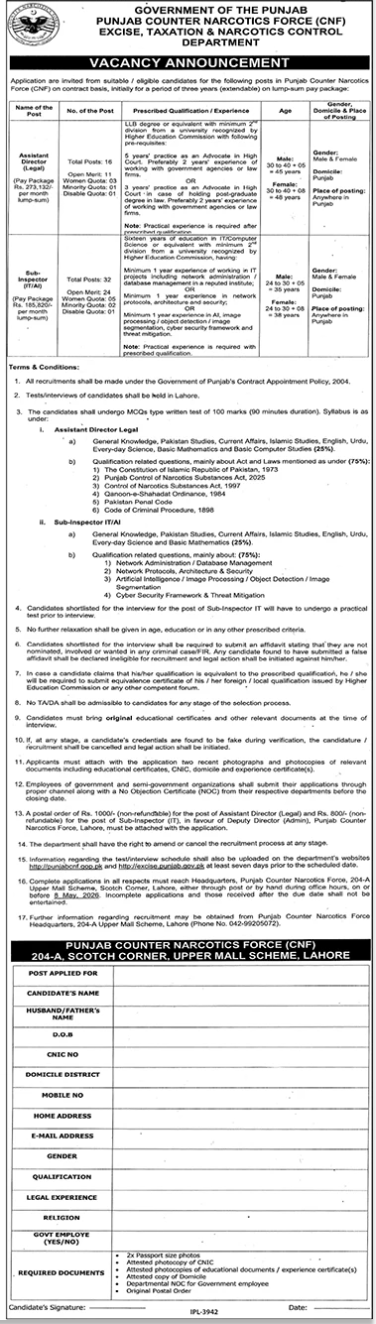
- Job Announced Assistant Director Sub Inspector
- Apply for this job
- Prepare for this job
- Share this job
- Have a question about this job? Ask in the discussion area.
-
24 Apr 26 Excise and Taxation Department
-
Constable
-
198 Jobs
-
Last Date
11-May-26
-
-
17 Mar 26 Excise and Taxation Department
-
Inspector
-
248 Jobs
-
Last Date
17-Apr-26
-
-
04 Jan 26 Excise and Taxation Department
-
Assistant Director
-
16 Jobs
-
Last Date
27-Jan-26
-
Excise and Taxation Department: Career Opportunities for 2026
The Excise and Taxation Department across Pakistan's provinces is entering a significant phase of digital transformation and capacity expansion, directly influencing its hiring trajectory for the coming year. In 2026, the department's strategic focus is on enhancing revenue automation and improving taxpayer facilitation services, which will create a demand for professionals skilled in modern technology alongside traditional tax administration. This shift is not just about filling vacant posts but about building a future-ready workforce capable of managing integrated tax management systems and data analytics platforms that are currently being rolled out in phases. The overarching goal is to streamline operations, reduce manual intervention, and increase transparency, making careers here more dynamic and technically oriented than ever before.
For job seekers, the 2026 career landscape within the Excise and Taxation Department is expected to be robust, driven by provincial development agendas that require substantial revenue generation. Major metropolitan areas like Lahore, Karachi, Islamabad, and Peshawar will see concentrated hiring efforts to staff new and modernized regional offices. The department's annual recruitment plans are closely tied to the provincial budget cycles, with announcements typically following the release of new fiscal year budgets in June. Prospective candidates should prepare for a competitive process that will likely emphasize competencies in financial software, legal interpretation of tax statutes, and customer service, reflecting the department's evolving public-facing role.
Anticipated Job Openings in 2026
The spectrum of job opportunities in 2026 is anticipated to be diverse, catering to both fresh graduates and experienced professionals. While core positions like Excise and Taxation Officers (ETOs) and Inspectors will remain fundamental, there is a clear, growing demand for specialists in IT, data analysis, and audit. Specific vacancies may include roles such as Database Administrators for the new Excise, Taxation, and Narcotics Control (ETNC) software modules, Risk Assessment Analysts to identify tax evasion patterns, and Legal Assistants to handle the increasing volume of appellate work. Furthermore, to support field operations, positions for Motor Vehicle Examiners and Property Tax Assessors with proficiency in GIS-based mapping tools are expected to be advertised, particularly in developing urban zones and along new motorway corridors where property valuation is rapidly changing.
To successfully secure these Excise and Taxation Department jobs, candidates must adopt a proactive approach. Regular monitoring of official portals like the Punjab Public Service Commission (PPSC) and the Sindh Public Service Commission (SPSC) is non-negotiable, as is reviewing the dedicated career pages on provincial Excise and Taxation Department websites. The application process will rigorously test both academic knowledge and practical aptitude. For most technical and officer-level posts, a written examination conducted by the relevant public service commission will be the first major hurdle, followed by a detailed interview and often a psychological assessment. Aspirants are advised to thoroughly study the relevant provincial finance acts, motor vehicle ordinances, and general accounting principles, while also developing strong digital literacy skills to meet the department's modern operational standards.