









11th Class Urdu Book Punjab Board New Syllabus PDF
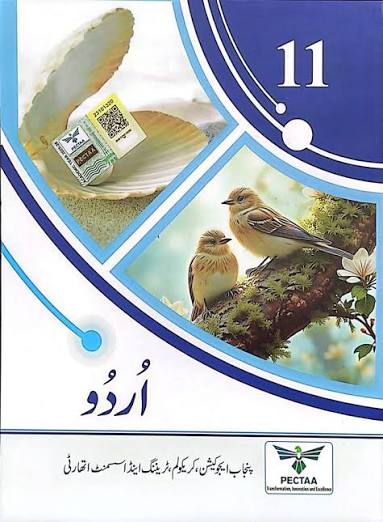
11th Class Urdu Book (Urdu Medium)
Urdu Medium
About the Punjab Board Class 11 Urdu Book
The Class 11 Urdu (اردو) textbook helps students build a strong base in the language through prose, poetry, and writing practice. It introduces writers and poets, explains literary ideas in simple steps, and trains students to read carefully and express themselves clearly.
The book is in Urdu medium and works well for classroom lessons, home revision, academy preparation, and board exam practice. Students usually find it by searching for the PECTAA Urdu Book, PCTB Urdu Book, PTB Urdu Book, Punjab Textbook Board Urdu, or Punjab Curriculum and Textbook Board Urdu PDF. All of these names point to the same Punjab Board textbook.
PECTAA, PCTB and PTB Names
Punjab Board textbooks are now linked with the PECTAA curriculum reforms. PCTB and PTB are the older names that many students and teachers still use. Whichever name you know, you can read or download the Class 11 Urdu book on this page.
Why This Book Matters for Intermediate Students
Urdu is a compulsory subject at the intermediate level, so students from every group, including FSc, ICS, I.Com, and FA, study it in Class 11. Its lessons improve reading, vocabulary, and writing, and these skills also help in other subjects and in future exams.
To get the most from the book, read each lesson slowly and note the meanings of difficult words. Then practice the exercises, short questions, long questions, and MCQs. Regular reading and writing practice also helps with essays, letters, and comprehension in the board paper.
11th Class Urdu PDF Book Punjab Board
| Chapters | Chapter Name | Medium |
|---|---|---|
| 1 | Chapter 1 | Urdu Medium |
| 2 | Chapter 2 | Urdu Medium |
| 3 | Chapter 3 | Urdu Medium |
| 4 | Chapter 4 | Urdu Medium |
| 5 | Chapter 5 | Urdu Medium |
| 6 | Chapter 6 | Urdu Medium |
| 7 | Chapter 7 | Urdu Medium |
| 8 | Chapter 8 | Urdu Medium |
| 9 | Chapter 9 | Urdu Medium |
| 10 | Chapter 10 | Urdu Medium |
| 11 | Chapter 11 | Urdu Medium |
| 12 | Chapter 12 | Urdu Medium |
| 13 | Chapter 13 | Urdu Medium |
| 14 | Chapter 14 | Urdu Medium |
| 15 | Chapter 15 | Urdu Medium |
| 16 | Chapter 16 | Urdu Medium |
| 17 | Chapter 17 | Urdu Medium |
| 18 | Chapter 18 | Urdu Medium |
| 19 | Chapter 19 | Urdu Medium |
| 20 | Chapter 20 | Urdu Medium |
| 21 | Chapter 21 | Urdu Medium |
| 22 | Chapter 22 | Urdu Medium |
Who Can Use This Book
- Class 11 (HSSC Part 1) students of the Punjab Board
- FSc, ICS, I.Com, and FA students
- Urdu medium students
- Teachers planning Urdu lessons
- Students studying on their own
- Tuition academies
- Anyone revising for the board exam
- Learners who want to improve their Urdu reading and writing
What the Class 11 Urdu Book Covers
The book has four parts: hamd and naat, prose (نثر), poetry (نظم), and ghazal (غزل). Each lesson opens with a short introduction to the writer or poet and ends with exercises. A glossary (فرہنگ) in alphabetical order comes at the end of the book.
Hamd and Naat (حمد و نعت)
- حمد (Hafeez Tā'ib): a poem in praise of Allah and His greatness.
- نعت (Syed Nafees-ul-Hussaini Nafees): a poem in praise of the Holy Prophet ﷺ.
Prose (حصہ نثر)
3. اخلاقِ نبوی ﷺ (Shibli Nomani): a look at the noble character and habits of the Holy Prophet ﷺ.
4. فاقہ میں روزہ (Khwaja Hasan Nizami): a short story about a Delhi family facing hunger and hardship, which builds sympathy and social awareness.
5. مکاتیبِ غالب (Mirza Asadullah Khan Ghalib): selected letters by Ghalib, known for their simple, conversational style.
6. ایک استاد عدالت کے کٹہرے میں (Ashfaq Ahmad): a teacher's real-life experience told in a lively, story-like way.
7. چارپائی (Rasheed Ahmad Siddiqui): a well-known humorous essay on the everyday charpai.
8. اور پاکستان بن گیا (Khadija Mastoor): an extract from her novel showing family life around the creation of Pakistan.
9. نیا قانون (Saadat Hasan Manto): a famous short story about hope and disappointment in colonial India.
10. دہلیز (Amjad Islam Amjad): a drama that introduces students to the form and its characters.
11. تاریخ کا کفن (Amar Jaleel): a short story translated from Sindhi, showing the richness of regional literature.
12. پاکستانی زبانیں اور ان کا باہمی رشتہ (Dr. Mumtaz Mangloori): an essay on Pakistan's languages and how they are connected.
Poetry (حصہ نظم)
13. اے وادیِ لولاب! (Allama Muhammad Iqbal): a poem on nature, the land, and freedom.
14. او دیس سے آنے والے بتا (Akhtar Shirani): a poem full of love and longing for the homeland.
15. آزادی (Ehsan Danish): a poem on the value of freedom.
16. اخلاص (Rehman Baba, translated by Prof. Muhammad Taha Khan): a poem on sincerity, translated from Pashto.
17. کھڑا ڈنر (Syed Muhammad Jafri): a humorous poem that pokes fun at buffet-style dining.
Ghazal (حصہ غزل)
18. پتا پتا بوٹا بوٹا، حال ہمارا جانے ہے (Meer Taqi Meer): a classic ghazal of love and pain.
19. سر میں سودا بھی نہیں، دل میں تمنا بھی نہیں (Firaq Gorakhpuri): a ghazal of loneliness in a modern voice.
20. بے چین بہت پھرنا، گھبرائے ہوئے رہنا (Muneer Niazi): a ghazal about restlessness and unease.
21. سلسلے توڑ گیا وہ سبھی جاتے جاتے (Ahmad Faraz): a ghazal about parting and broken ties.
22. بادباں کھلنے سے پہلے کا اشارہ دیکھنا (Parveen Shakir): a fresh, modern ghazal in her own style.
Lesson order follows the standard Punjab Board Class 11 Urdu syllabus. The passages marked "for extra reading" at the end of some lessons are not part of the exam.
How to Read or Download the Book
- Read online: Open the PDF viewer at the top of the page and scroll through any lesson in your browser.
- Download: Tap the Download PDF button above the viewer to save the full book for offline study.
- Share: Send this page to classmates, teachers, or friends who need the book.
This book is shared for free educational use only, not for resale or commercial copying.
FAQ
Is PECTAA the same as PCTB?
PECTAA is the newer name linked with Punjab's curriculum reforms. PCTB and PTB are the older names for the Punjab textbook board, and students still use them in searches.
Is this book in Urdu or English medium?
This Class 11 Urdu book is in Urdu medium.
Which class and groups is it for?
It is for Class 11 (HSSC Part 1) students of the Punjab Board, across all intermediate groups.
11th Class Books Punjab Board
 Chemistry
  Biology
  Computer Science
  Math
Math  Economics
  Civics
  Statistics
  Physics
  English
  Punjabi
  Education
  Arabic
  Geography
  Philosophy
  Physical Education
  Psychology
  Ethics
  Persian
  Principles of Accounting
  Business Mathematics
  Tarjuma ul Quran
  Urdu Optional
  Home Economics
  English Grammar
  Urdu Grammar
  Human Geography
  Islamiat
Tags:
11th class urdu book, class 11 urdu book punjab board, urdu book 11th class pdf, 11th class urdu book punjab board pdf, punjab board urdu book, PECTAA urdu book, PCTB urdu book, PTB urdu book, punjab textbook board urdu, punjab curriculum and textbook board urdu pdf, 1st year urdu book, FSc part 1 urdu bookDisclaimer:
This Class 11 Urdu book is shared for free educational use only. The textbook belongs to its original publisher and copyright holder, and all rights remain with them. This page does not claim ownership of the book and does not offer it for resale or commercial use. We are not the official website of the Punjab Curriculum and Textbook Board (PCTB), PECTAA, or any Punjab education authority. Textbook editions and syllabi may change, so students and teachers should check the latest version with their school, board, or the official Punjab Board website. If you are a copyright holder and want this material updated or removed, please contact us and we will respond promptly.


More on 11th class
