




 Home
Home
 National
 International
 Merit list
 Date Sheet
 Result
 Admission
 Study Abroad




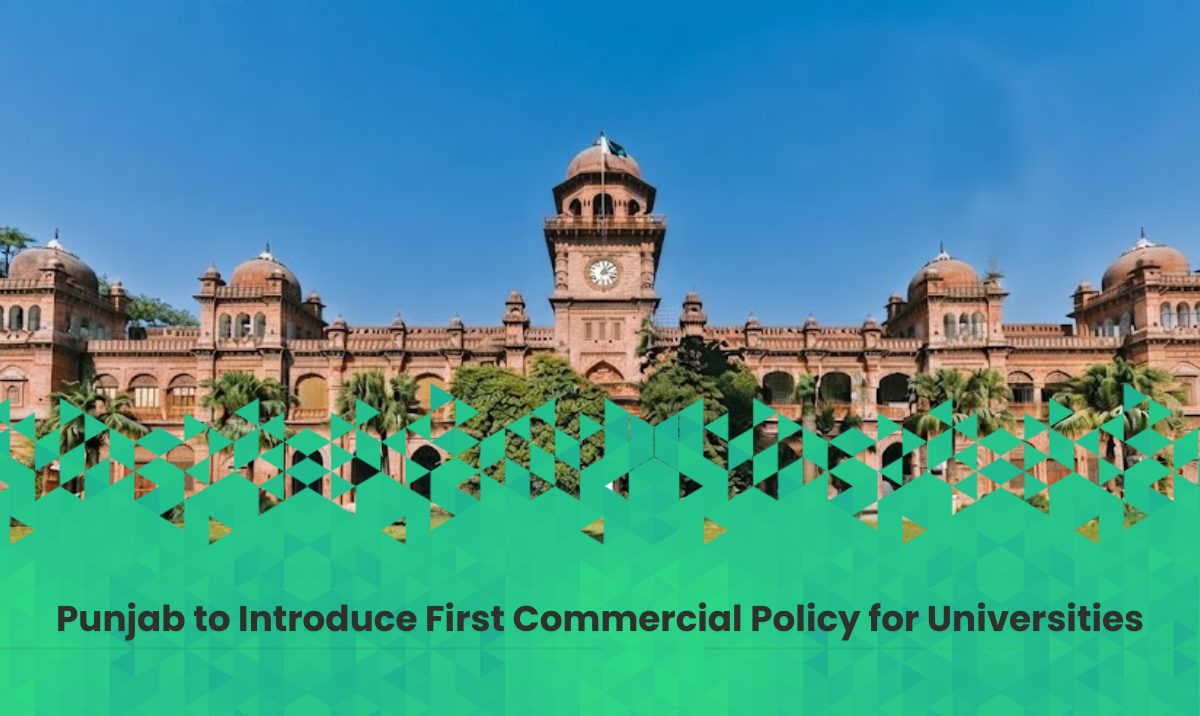
Punjab to Introduce First Commercial Policy for Universities to Overcome Financial Crises
In a landmark move set to reshape the landscape of higher education, the Punjab government has announced plans to introduce its first commercial policy for universities. Provincial Minister for School and Higher Education Rana Sikandar Hayat made the historic announcement, stating that the policy will officially take effect following formal approval from the provincial Cabinet.
This strategic initiative aims to tackle long-standing fiscal challenges, eliminate operational deficits, and steer public sector universities toward sustainable financial independence. Alongside this commercial framework, the government has confirmed a substantial increase in institutional funding for the current fiscal year to relieve immediate financial strains across various campuses.
Addressing Deep-Seated Financial Challenges in Higher Education
For years, public sector universities in Punjab have grappled with mounting financial liabilities, shrinking developmental grants, and escalating operational costs. These fiscal pressures have frequently compromised academic quality, research outputs, and infrastructural maintenance.
By introducing a dedicated commercial policy for universities, the provincial administration is creating a legal and administrative framework that enables higher education institutions (HEIs) to explore alternative revenue streams. Rather than relying solely on government grants and student tuition fees, universities will be empowered to monetize assets, leverage commercial partnerships, and commercialize academic research.
Minister Rana Sikandar Hayat emphasized that the government is fully committed to revitalizing the academic sector. He noted that the newly proposed policy will provide universities with the structural flexibility needed to manage commercial ventures, attract corporate investment, and build resilient internal economies.
Success Story: A Blueprint for Provincial Reform
The announcement was made during an inaugural ceremony for a modern water filtration plant at the School of Chemistry, University of the Punjab (PU). Speaking to an audience of faculty members, administrators, and students, the minister highlighted the remarkable turnaround achieved by the University of the Punjab as a prime example of effective financial management.
According to Rana Sikandar Hayat, the financial stability of Punjab University has improved drastically over the past two years. Through targeted administrative reforms and prudent asset management spearheaded by Vice Chancellor Prof. Dr. Muhammad Ali, the university's revenue skyrocketed by an unprecedented 1,200 percent. Furthermore, the university successfully expanded its managed agricultural land footprint and largely overcame its historical financial deficit.
The minister lauded the Vice Chancellor's leadership, presenting the institution's recovery model as a template for other provincial campuses struggling with similar economic bottlenecks.
Public-Private Partnerships and Student Welfare
A cornerstone of the forthcoming commercial policy for universities is the promotion of robust public-private partnerships (PPPs). The government believes that bridging the gap between academia and corporate entities is essential for modernizing campus facilities and driving student-centric welfare initiatives.
The inauguration event itself served as a testament to successful collaboration. The newly installed state-of-the-art water filtration plant at the School of Chemistry was established with the financial and logistical support of Savour Foods. Savour Foods CEO Muhammad Naeem assured attendees that the company will shoulder long-term maintenance responsibilities, ensuring uninterrupted access to clean, safe drinking water for thousands of students, faculty members, and administrative staff.
Minister Rana Sikandar Hayat praised this collaboration, noting that expanding such welfare projects through corporate social responsibility (CSR) and public-private frameworks significantly improves the quality of campus life without putting additional pressure on public exchequers.
Boosting Funding and Restructuring Oversight
In addition to commercial empowerment, the Punjab government is injecting fresh capital into the higher education sector. Increased budgetary allocations for the current fiscal year are expected to provide immediate relief to cash-strapped institutions, allowing them to clear pending liabilities, upgrade laboratories, and enhance digital learning infrastructure.
This financial injection is part of a broader administrative overhaul. Earlier, the province established a high-level committee supervised by the provincial finance minister to oversee the commercial, legal, and operational alignment of higher education institutions under the Public-Private Partnership framework. While these reforms encourage commercialization and corporate alignment, the government will maintain core administrative and regulatory oversight to protect public interest, academic integrity, and affordable access to education.
Transforming Research into Economic Value
A crucial element anticipated within the new commercial framework is the formalization of research commercialization and innovation policies—similar to frameworks adopted by progressive institutions like Punjab University's Office of Research, Innovation, and Commercialization (ORIC).
By empowering faculty members to establish spin-off companies, patent academic breakthroughs, and secure equitable royalty shares (ranging between 50% to 80% for creators), the policy transforms traditional lecture-hall theory into market-ready commercial applications. This transition not only generates independent revenue streams for universities but also stimulates local economic growth, encourages technological entrepreneurship, and positions Punjab's academic sector on the global innovation map.








Share your comments & questions here
No comments yet. Be the first to comment!