


 Home
Home
 National
 International
 Merit list
 Date Sheet
 Result
 Admission
 Study Abroad
.jpg)


PMDC Imposes Rs 1.8 Million Annual Fee Cap for Private MBBS and BDS Programs in Pakistan
The Pakistan Medical and Dental Council (PMDC) has officially set a strict annual fee cap for MBBS and BDS programs in all private medical and dental colleges across the country. This regulatory intervention is set to bring significant financial relief to thousands of medical students and their families.
The Official Mandate: A Ceiling on Tuition Fees
According to an official notification issued by the PMDC, the maximum annual tuition fee for both MBBS and BDS programs, inclusive of all ancillary and mandatory charges, has been fixed at Rs 1.8 million (18 lakh Pakistani rupees) . This decision is based on the recommendations of a high-level committee formed on the direct directives of the Prime Minister of Pakistan.
The council clarified that this fee cap is effective immediately and applies to all academic sessions for the 2024-25 academic year . This means all students currently enrolled, from first-year to final-year students in the ongoing session, will benefit from this ceiling. Private institutions charging above this mandated limit are required to adjust their fees accordingly.
Future Fee Adjustments: A Transparent Mechanism
The PMDC notification also provides clarity on future fee structures. A previously announced revised fee of Rs 1,890,000 , which incorporates a standard five percent increase, will take effect from the 2025-26 academic session . This adjusted rate will apply to all years of study for students enrolled in that session and beyond.
Crucially, the regulator has established a transparent and predictable mechanism for any potential fee increases after 2026 . The notification states that any subsequent rise in tuition fees, including all subsidiary charges, will be solely linked to the Consumer Price Index (CPI) – Pakistan’s primary measure of inflation. The PMDC has committed to issuing separate notifications at the relevant time to authorize any CPI-based adjustments, preventing institutions from arbitrarily hiking fees.
Strict Compliance and Enforcement
The PMDC has issued a stern directive to all private medical and dental colleges, instructing them to strictly comply with these new fee regulations. The council has warned that any institution found in violation of the mandated fee cap will face strict disciplinary action . While the specific penalties were not detailed in the public notification, they could potentially include fines, warnings, or even the suspension of recognition for the offending program or college.
Industry and Student Response
This decision by the PMDC is widely seen as a response to long-standing grievances from students and parents about the exorbitant and often unpredictable cost of private medical education in Pakistan. Many private colleges have been accused of imposing steep annual increases and numerous hidden charges, placing a severe financial burden on middle-class families.
Representatives of private medical colleges, while acknowledging the notification, have hinted at concerns regarding operational sustainability. Some argue that rising operational costs, including faculty salaries, equipment, and infrastructure maintenance, need to be considered. The linkage to CPI after 2026 is likely a compromise to address these sustainability concerns while protecting students from arbitrary hikes.
Broader Implications for Medical Education in Pakistan
This regulatory move has several broader implications:
-
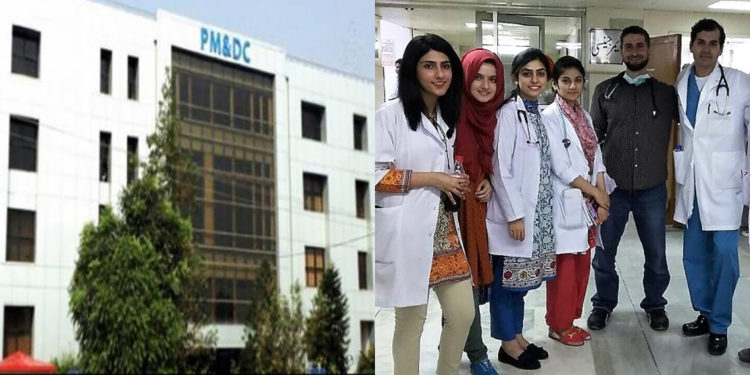
Increased Access: By capping fees, the PMDC aims to make medical and dental degrees more accessible to a broader socioeconomic spectrum, potentially diversifying the future healthcare workforce.
-
Standardization: The move brings a degree of uniformity to the fee structures of private institutions, making it easier for students to compare options.
-
Regulatory Authority: It reinforces the PMDC’s role as the central regulator, asserting its authority to control not just academic standards but also the financial aspects of medical education.
-
Focus on Quality: With revenue from tuition now capped, private colleges may be incentivized to compete on the basis of educational quality, faculty, and facilities rather than purely on commercial models.
Looking Ahead
The immediate focus will now shift to enforcement and compliance . All eyes will be on the PMDC to ensure that private colleges adhere to the new rules. Students and parents are advised to familiarize themselves with the official notification and report any violations to the PMDC.
The establishment of a CPI-linked model for post-2026 increases is a forward-looking policy that balances the need for affordability with the economic realities of running educational institutions. This move by the PMDC marks a significant shift towards a more regulated and student-centric framework for private medical education in Pakistan, potentially setting a precedent for other professional disciplines.