


 Home
Home
 National
 International
 Merit list
 Date Sheet
 Result
 Admission
 Study Abroad
.gif)


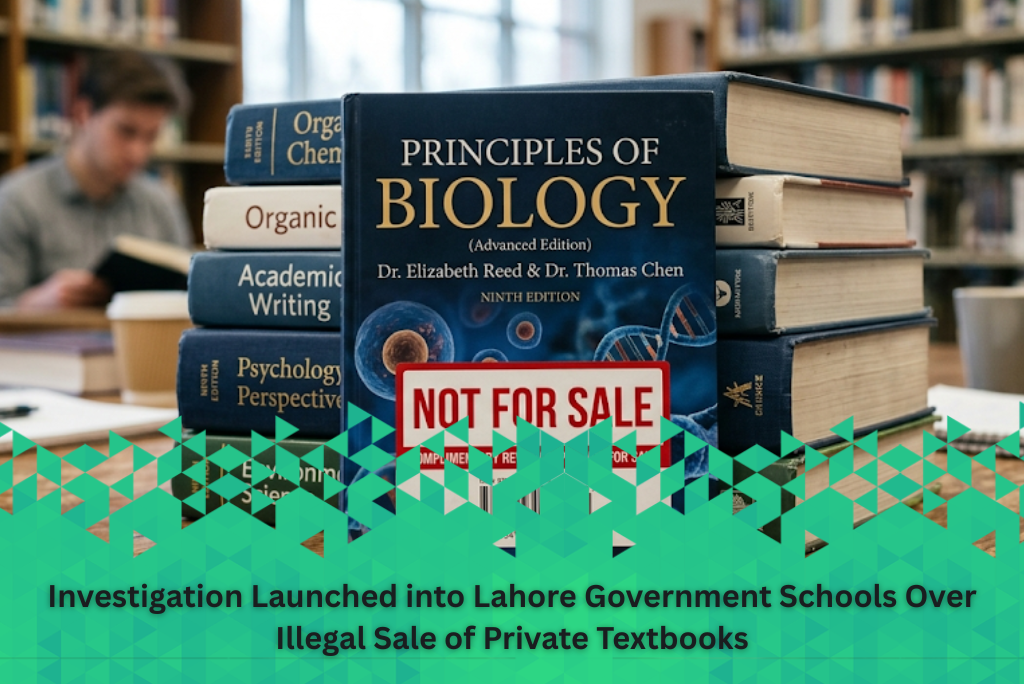
Lahore Government Schools Under Investigation Over Illegal Sale of Private Homework Books
The District Education Authority (DEA) Lahore has officially launched a high-level investigation following startling revelations that several public sector schools are forcing students to purchase summer vacation homework books from private publishers. This practice directly violates provincial educational regulations, which mandate the provision of free learning materials to all students enrolled in government institutions.
The investigative move came after senior education reporter Junaid Riaz exposed the illicit commercial activity operating within the provincial capital’s public school network during the ongoing summer break.
The Core of the Controversy: Forced Commercialization
According to internal administrative sources, a significant number of government schools in Lahore have been actively selling unapproved summer homework bundles to young students. These booklets, produced by unauthorized commercial publishers, were being retailed inside school premises for 200 PKR to 300 PKR per copy.
While the amount might seem minor to the affluent, it places an unexpected financial burden on working-class families who rely on the state's promise of free public education. Under established Punjab School Education Department protocols, public school students are strictly entitled to receive free homework guides and curriculum-aligned materials directly from the state.
The unauthorized introduction of private books not only breaches the financial trust of the community but also disrupts the centralized academic framework enforced by the provincial textbook boards.
District Education Authority Lahore Demands Fast-Track Inquiry
Taking swift notice of the media reports and parental grievances, the District Education Authority Lahore has intervened to halt the practice. The leadership of the authority has issued strict directives to all localized Assistant Education Officers (AEOs), demanding a comprehensive facts-finding report within 48 hours.
The DEA's directive requires field officers to identify:
-
Which specific schools institutionalized the sale of these private books.
-
The exact publishers involved in printing the unauthorized materials.
-
Whether financial kickbacks or commissions were distributed to school administrations.
An official spokesperson from the authority reiterated that standard operating procedures state it is against educational regulations to introduce any private reading or writing material without prior departmental evaluation.
Why This Bypasses the Punjab Educational Framework
The school education system in Punjab operates on a strictly centralized curriculum to ensure equity across various socio-economic groups. For a private entity's material to enter a public classroom or a student's vacation routine, the content must undergo rigorous evaluation.
-
The Approval Loop: Publishers must secure formal approval from the Punjab Curriculum and Textbook Board (PCTB) and the School Education Department.
-
Quality Check: This oversight ensures the content aligns with national values, does not contain biased material, and is pedagogically age-appropriate.
-
The Violation: By bypassing the department, the compromised school administrations essentially allowed unvetted, commercial content to dictate the summer learning tracks of government school students.
The Financial Burden on Working-Class Families
This developing situation has caused widespread concern among parents in Lahore. Many choose public schools specifically to escape the hyper-commercialized fee structures and mandatory book purchases typical of the private school sector.
Civil society and parental groups have voiced their anger over the situation, calling the illegal school book sales an ethical breach. Observers note that forcing vulnerable students to pay out-of-pocket for summer assignments erodes public confidence in the state-funded education system.
What Lies Ahead for School Administrators?
As the 48-hour deadline for the Assistant Education Officers approaches, school principals across Lahore are under intense scrutiny. The inquiry is expected to reveal whether this was an isolated issue managed by specific school heads or a wider network operating across multiple clusters in the city.
The District Education Authority has assured the public that the findings of the inquiry report will be made public, and institutional clean-ups will follow to prevent commercial exploitation from creeping back into the public sector.





Share your comments & questions here
No comments yet. Be the first to comment!