




 Home
Home
 National
 International
 Merit list
 Date Sheet
 Result
 Admission
 Study Abroad
.gif)


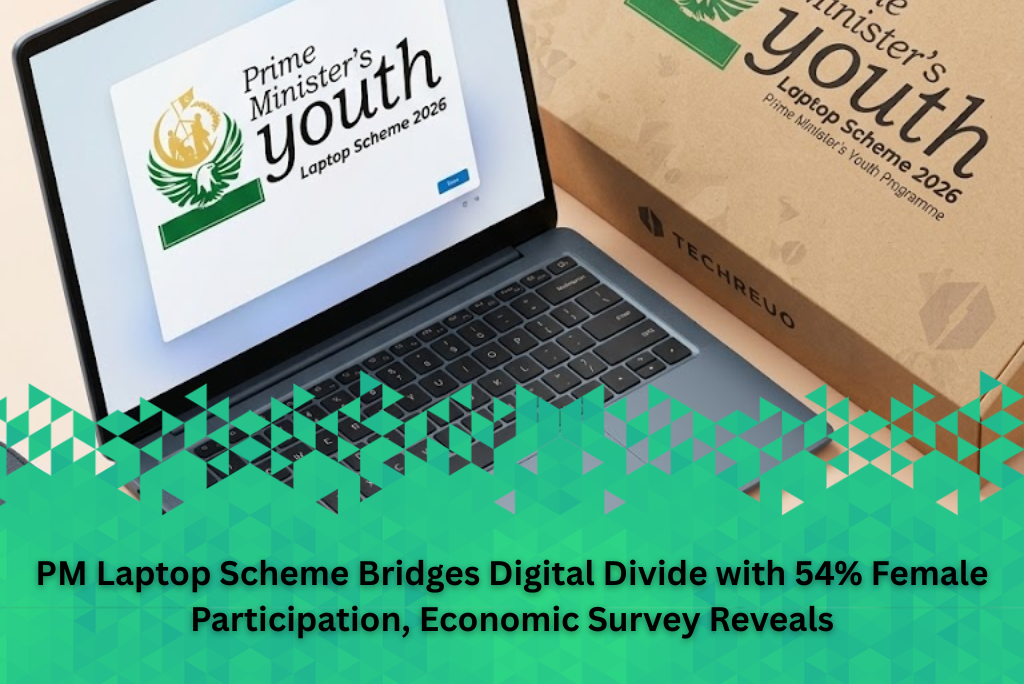
PM Laptop Scheme Bridges Digital Divide with 54% Female Participation, Economic Survey Reveals
ISLAMABAD — The PM Laptop Scheme has emerged as a crucial driver for balancing the tech landscape, recording a significant 54% female participation rate as of April 2026. This landmark statistic was officially documented in the Pakistan Economic Survey 2025-26, presented by the Ministry of Finance just a day ahead of the highly anticipated Federal Budget 2026-27 debate.
The extensive data highlights the evolving nature of digital learning in Pakistan, illustrating how targeted state interventions can actively empower young women by providing them with the necessary tools for modern academic survival.
Breaking Down the Distribution Numbers
According to the official survey, the PM Laptop Scheme successfully rolled out 74,427 advanced computing devices out of a broader roadmap allocated for 407,713 verified applicants. This extensive tech distribution network successfully penetrated 156 higher education institutions across every corner of the country.
The academic reach of the initiative spans a diverse geographical framework, ensuring inclusion across:
-
Punjab and Sindh
-
Khyber Pakhtunkhwa (KP)
-
Balochistan
-
The Federal Territory (Islamabad)
-
Azad Jammu and Kashmir (AJK)
-
Gilgit-Baltistan (GB)
By spreading the logistics across these diverse regional territories, the government aims to establish institutional equity, ensuring that students from remote and underserved regions are not left behind in the global knowledge economy.
Countering the National Literacy Gap
The revelation of 54% female participation is particularly notable when viewed against Pakistan's persistent historical educational imbalances. The same Pakistan Economic Survey 2025-26 underlines a distinct disparity in domestic foundational literacy: male literacy sits at 73.0%, while the national female literacy rate Pakistan struggles at a lower 54.0%.
The data shows that while overall female literacy lags significantly behind males at the baseline school level, women are rapidly matching and exceeding performance metrics once they enter higher tiers of academia. Securing over half of the merit-based digital assets proves that female university students are actively claiming their space in competitive educational fields.
Empowerment Through Digital Learning
Experts note that providing access to high-performance hardware helps narrow the prevailing gender digital divide. With a personal computer, female students can bypass mobility restrictions, access online research portals, and tap into global freelance marketplaces to establish financial autonomy. The initiative converts basic academic support into viable economic tools, helping women transition directly from higher education into digital entrepreneurship.
With the state survey landing directly on the eve of the federal financial planning sessions, policy analysts anticipate that robust funding for digital learning in Pakistan will become a central focus during the incoming budget sessions. Both treasury and opposition benches are expected to evaluate how expanding tech accessibility yields measurable social returns.
The Road Ahead: Beyond Free Hardware
While celebrating the 54% female participation benchmark is a step forward, the economic brief clearly signals that hardware distribution alone cannot fix systemic structural faults. To sustain long-term digital growth, public and private sectors must collaborate to build dependable internet infrastructure, modernize public university labs, provide localized digital skills training, and aggressively fix lower-tier primary school enrollment pipelines for young girls across the provinces.








Share your comments & questions here
No comments yet. Be the first to comment!