




 Home
Home
 National
 International
 Merit list
 Date Sheet
 Result
 Admission
 Study Abroad


.jpg)
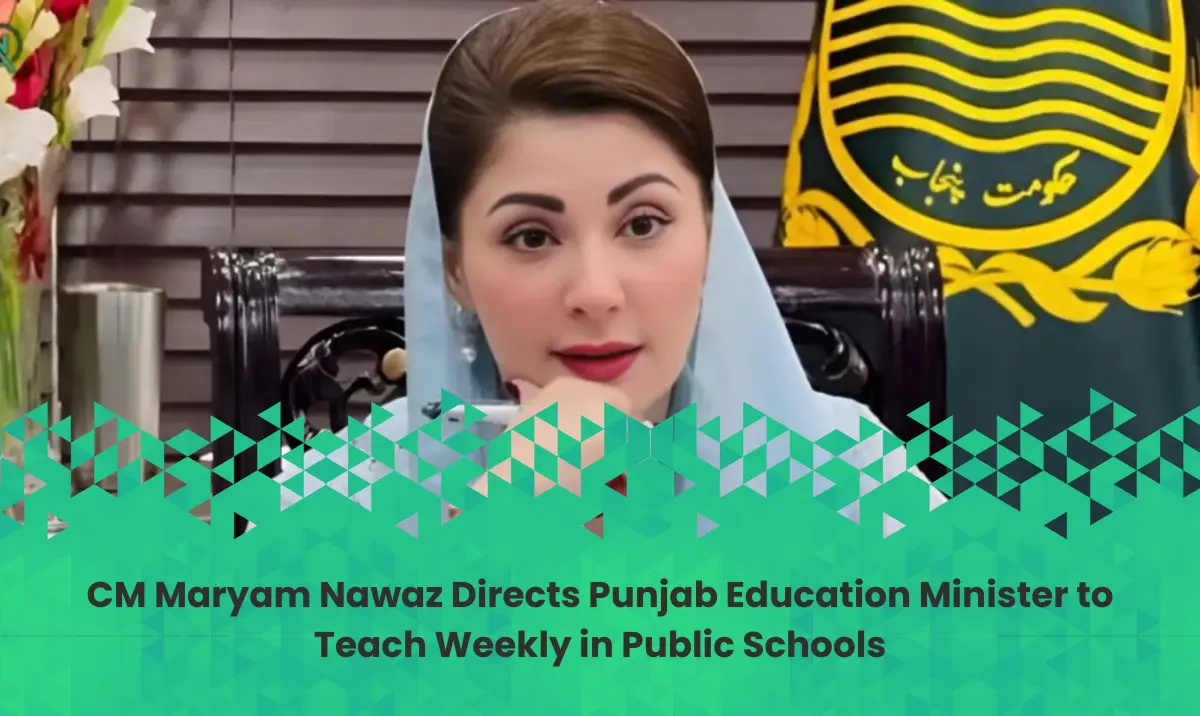
Punjab Chief Minister Maryam Nawaz Orders Education Minister to Teach Weekly Public School Classes to Boost Reforms
In an unprecedented and pathbreaking move to bridge the gap between high-level policymaking and ground-level classroom realities, Punjab Chief Minister Maryam Nawaz Sharif has officially directed the Provincial Education Minister, Rana Sikandar Hayat , to personally teach at least one class in a public school every single week.
This historic directive is designed to inject firsthand accountability into the academic sector, giving the administration direct visibility into the daily operations, infrastructure, and learning environments of public sector institutions.
The decision was finalized during a high-profile, strategic session convened in Lahore to evaluate the momentum of the Punjab School Reforms Programme (PSRP) . The meeting highlighted multiple landmark achievements, including hitting critical enrollment targets ahead of schedule, pioneering digital mapping frameworks for the private tuition sector, and approving mandatory digital salary disbursements for thousands of teachers.
Bridging the Gap: Why the Education Minister is Heading to the Classroom
The directive for Rana Sikandar Hayat —an alumnus of Lahore’s prestigious Aitchison College—to step behind the teacher’s podium represents a profound shift in governance. Instead of managing the massive system entirely from secretariat offices, the top education administrator will actively engage with the curriculum, students, and local educators on a weekly basis.
According to provincial authorities, this hands-on approach is expected to yield several key benefits:
-
Immediate Feedback Loops: Directly observing the challenges public school teachers face, such as classroom sizes, textbook availability, and basic infrastructure issues.
-
Inspiring the Workforce: Uplifting the morale of educators across Punjab by demonstrating that the highest offices of government respect and value the teaching profession.
-
Policy Calibration: Shaping future educational policies around actual classroom realities rather than theoretical datasets.
The Punjab School Reforms Programme (PSRP): Enrollment Milestones
During the comprehensive briefing, Chief Minister Maryam Nawaz Sharif was informed that the government had achieved a major milestone: enrolling 4.3 million students in public schools within a span of just two years and four months.
This represents the highest verified and genuine student enrollment level recorded in Punjab’s public school system in recent years. The PSRP represents a strategic effort to transition traditional, low-performing public schools into modern centers of learning through structured public-private partnerships (PPP). Faced with a significant population of out-of-school children (OOSC), the administration's aggressive enrollment campaigns are designed to dismantle socio-economic barriers to basic literacy.
Modernizing Oversight: Digital Registration & Mapping of Tuition Centres
Recognizing the rapid, unregulated growth of parallel learning networks, the Chief Minister directed the School Education Department to roll out comprehensive regulatory measures:
1. Digital Registration for Private Schools
The provincial government is optimizing its existing online portals to simplify and monitor the licensing and registration of private schools, minimizing bureaucratic red tape while ensuring quality standards.
2. Digital Mapping of Tuition Centres
In a major regulatory step, authorities have been tasked with designing a digital mapping system for academy networks and private tuition centres across Punjab. This geolocated mapping framework will bring these academies into a formal regulatory structure, keeping tabs on safety protocols, fee structures, and academic credentials.
Financial Transparency: Mandatory Digital Salaries for PEF Teachers
In another major move, the Punjab cabinet approved the mandatory digital payment of salaries for teachers working under the Punjab Education Foundation (PEF) .
By modernizing salary disbursements, the government is reinforcing its commitment to labor transparency, formalizing banking channels for rural teachers, and protecting educators from unfair wage deductions.
Innovative Revenue Generation for Sustainable Education
A crucial aspect of the high-level meeting was ensuring the fiscal sustainability of these ambitious reforms. Chief Minister Maryam Nawaz directed relevant authorities to formulate an innovative plan for revenue generation within the education sector.
Rather than relying entirely on traditional budget allocations, the department is exploring:
-
Public-Private Partnerships (PPP): Outsourcing administrative operations of underperforming schools to verified educational trusts to optimize per-student spending.
-
Asset Optimization: Efficiently utilizing commercial land and vacant spaces owned by the education department to build sustainable funding streams.
-
Corporate Social Responsibility (CSR): Partnering with major industries to sponsor high-tech IT labs, modern libraries, and clean energy grids in rural schools.
A Comprehensive Look at Punjab’s Education Reforms
|
Reform Initiative |
Focus Area |
Impact & Target |
|
Weekly Ministerial Teaching |
Leadership Accountability |
Direct feedback from public classrooms to the cabinet. |
|
Targeted Enrollment Drive |
Access to Education |
4.3 million verified students successfully enrolled. |
|
Tuition Centre Mapping |
Sector Regulation |
Digital database of all private tutoring setups across Punjab. |
|
PEF Salary Digitalization |
Teacher Welfare & Transparency |
138,000 bank accounts opened for direct salary transfers. |
|
Resource Optimization |
Fiscal Sustainability |
Creating innovative, non-budgetary revenue streams. |








Share your comments & questions here
No comments yet. Be the first to comment!