




 Home
Home
 National
 International
 Merit list
 Date Sheet
 Result
 Admission
 Study Abroad


.jpg)
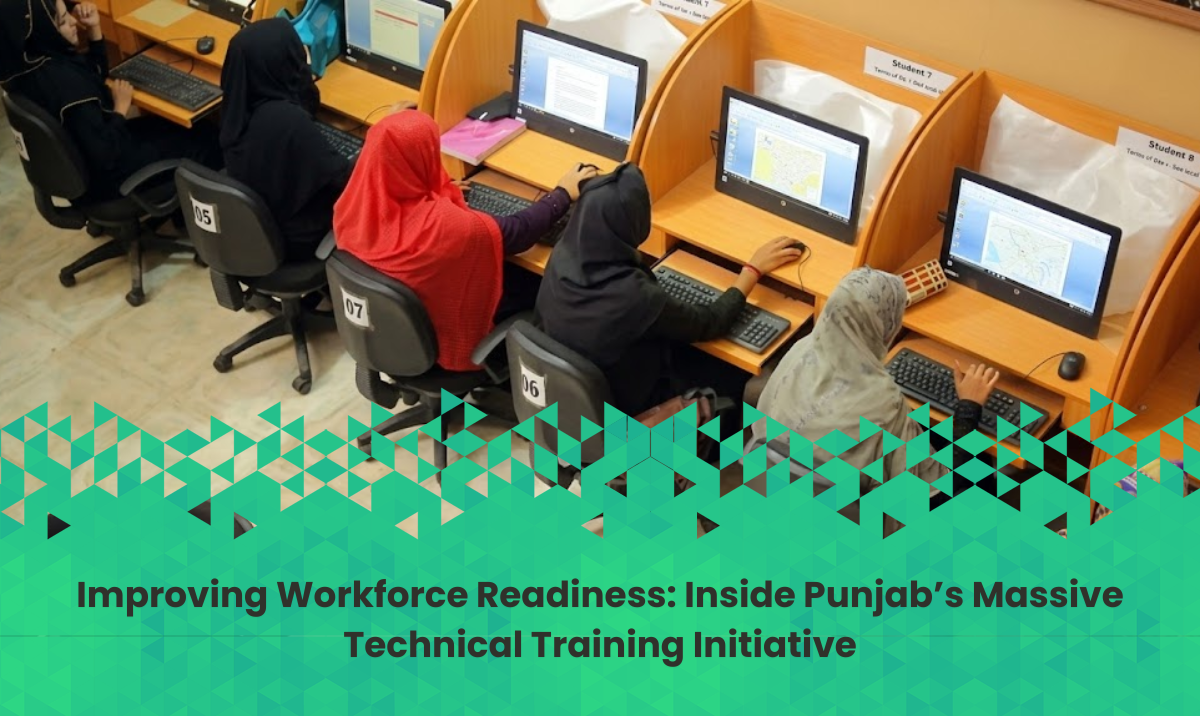
Punjab Targets 90,000 Students for Technical Skills Training in Major Economic Shift
The Punjab technical training program has officially embarked on a major mission to reform the province's labor landscape. Under the newly mobilized Improving Workforce Readiness in Punjab Project (IWRPP), the government of Punjab plans to equip approximately 90,000 students with market-relevant skills by 2029.
Valued at an estimated $110 million—with a massive $100 million in financing backed by the Asian Development Bank (ADB)—this ambitious six-year initiative is designed to bridge the historical gap between outdated classroom curricula and the rapidly evolving demands of the modern industrial sector.
Initially launched in early 2023, the project is scaling up operations in 2026 to systematically restructure how technical and vocational education is delivered in Pakistan’s most populous province. By shifting away from purely theoretical, rote-learning methodologies, Punjab aims to build a resilient, highly competitive, and future-ready workforce.
Restructuring Punjab's Technical Education Landscape
For decades, the vocational training in Punjab sector has battled systemic challenges, including low female participation, outdated machinery, and a disconnect between graduating students and actual employer requirements. The Improving Workforce Readiness in Punjab Project directly targets these bottlenecks by introducing a hands-on, competency-based training framework.
Rather than expecting students to find jobs with generic certificates, the provincial government is executing a scientific skills mapping study. Conducted in partnership with international development consultants, this research identifies real-time vacancies, rising industries, and localized skill shortages. This data is then utilized to design and update courses, ensuring that every hour a student spends in a workshop directly translates to an employable skill set in the job market.
19 Centers of Excellence: The New Pillars of TVET
A major cornerstone of this reform is the physical and structural modernization of existing infrastructure. The government is converting 19 technical and vocational institutes into state-of-the-art Centers of Excellence (COEs).
These upgraded facilities are receiving major capital injections to install advanced IT labs, modern machinery, and specialized learning zones. Out of these, 16 are overseen by the Technical Education and Vocational Training Authority (TEVTA), while the remaining three are run by the Punjab Vocational Training Council (PVTC).
These Centers of Excellence will not just teach basic trades; they are designed to offer highly specialized, industry-vetted programs. This transition ensures that the Punjab skills development initiative delivers a tier of graduates who require zero on-the-job training when hired by top companies.
Target Industries: 8 Priority Economic Sectors
To maximize the economic impact of the project, the government has narrowed its focus down to eight priority sectors that drive Punjab's GDP and hold the highest potential for employment generation:
-
Information and Communication Technology (ICT): Preparing youth for the global digital economy with high-demand software development, network administration, and IT support certifications.
-
Automotive: Upgrading mechanical skills to align with modern hybrid and electric vehicle technologies.
-
Textiles: Empowering the province's largest export sector with certified experts in advanced apparel design and production.
-
Healthcare: Training clinical, diagnostic, and laboratory technicians to support the regional healthcare system.
-
Construction: Introducing international safety and structural standards, including on-site training initiatives like the Build4Skills program.
-
Food Processing: Teaching packaging, safety, and preservation standards to scale up value-added agricultural exports.
-
Tourism: Developing hospitality, lodging, and customer service professionals to bolster regional tourism.
-
Light Engineering: Educating precision tooling, CNC machine operation, and industrial maintenance specialists.
Modernizing TVET and Labor Market Data
Building a sustainable labor pipeline requires more than just upgrading classroom buildings; it demands smart data systems.
Under the IWRPP, the government is modernizing the Technical and Vocational Education and Training (TVET) management system. By integrating advanced digital tools, policymakers and institute administrators can monitor enrollment rates, track student success metrics, and ensure uniform educational quality across all districts.
Simultaneously, the provincial government is strengthening the Labor Market Information System (LMIS). This platform acts as a bridge connecting employers, job seekers, and training institutes.
-
For Employers: It provides a direct portal to find certified, skilled graduates.
-
For Policymakers: It offers predictive analytics on emerging labor market trends and impending skill shortages.
-
For TVET Centers: It triggers automated curriculum reviews when a specific trade's demand starts to decline or mutate in the real world.
Bridging the Skills Gap for Long-Term Growth
Punjab's youth bulge represents an immense economic opportunity, with over 60% of the population under the age of 25. However, without proper technical interventions, this demographic asset risks remaining underemployed.
The Improving Workforce Readiness in Punjab Project addresses this exact paradox. By directly connecting youth employability with robust industrial feedback loops, the province is not just handing out diplomas; it is constructing a sustainable pipeline of high-earning, skilled human capital.
As the project works toward its 2029 completion target, the successfully trained 90,000 students will form the backbone of Punjab’s modernized industrial and services sectors—driving domestic productivity and elevating Pakistan's competitiveness on the global stage.







Share your comments & questions here
No comments yet. Be the first to comment!