



 Home
Home
 National
 International
 Merit list
 Date Sheet
 Result
 Admission
 Study Abroad
.jpg)


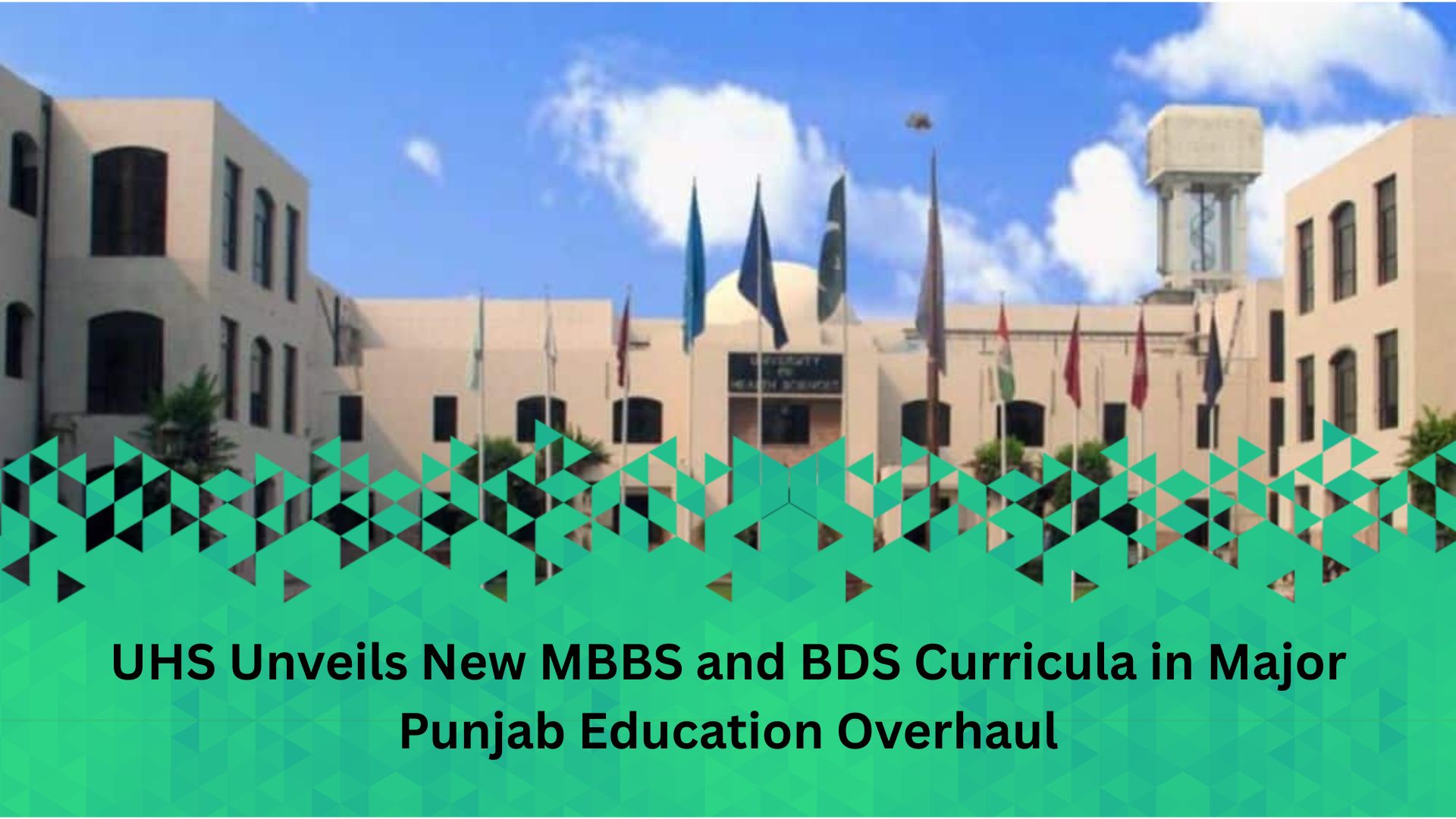
UHS MBBS 2025‑26 Closing Merit Announced: KEMU Tops at 94.88%, Hundreds of Seats Vacant as Career Trends Shift
The University of Health Sciences (UHS) Lahore has officially declared the closing merit percentages for MBBS and BDS admissions in public medical and dental colleges across Punjab for the 2025‑26 academic session. This announcement follows the publication of the consequential 6th Merit List , finalizing the admission cycle for this year. However, the data reveals a paradoxical scenario: while top-tier institutions maintain fiercely high cut-offs, hundreds of seats in the private sector are lying vacant a trend experts attribute to a growing apprehension about the medical profession's future in Pakistan.
UHS Announces Final MBBS Merit for 2025-26: KEMU, AIMC, SIMS Lead Rankings
As anticipated, the historic King Edward Medical University (KEMU) in Lahore secured the highest closing merit for MBBS at a formidable 94.8838% . It is closely followed by Allama Iqbal Medical College (AIMC), Lahore at 94.4636% , and Services Institute of Medical Sciences (SIMS), Lahore at 94.2379% .
The list of premier institutions continues with other major public sector colleges, reflecting the unwavering competition for a limited number of seats:
-
Nishtar Medical College, Multan: 94.1667%
-
Ameer‑ud‑Din Medical College, Lahore: 94.0253%
-
Rawalpindi Medical College, Rawalpindi: 93.9525%
Several other government medical colleges, including those in Faisalabad, Gujranwala, and Sargodha, reported closing merits above the 93% threshold, underscoring the academic excellence required to secure a public medical seat.
Reserved Category Cut-offs: A Detailed Breakdown
UHS also released the closing merits for various reserved quotas, which were predictably lower than the open merit but still highly competitive in key categories:
-
Reciprocal Seats: 93.5636%
-
Cholistan Development Authority Quota: 93.2293%
-
Disabled Candidates Quota: 89.9414%
For students hailing from underdeveloped districts of Punjab, the closing merit stood at 75% , providing crucial access to medical education. Other specialized reserved categories witnessed cut-offs slightly higher than this benchmark.
Unprecedented Vacancies: 426 Private MBBS Seats Remain Unfilled
The most striking revelation from this admission cycle is the significant number of unfilled seats. According to official reports and analyses, a total of 426 MBBS seats in private medical colleges across Punjab remain vacant after the conclusion of the merit list process.
The breakdown of this figure is telling:
-
109 candidates who were offered seats did not accept admission.
-
317 students , after initially enrolling and securing seats, chose to withdraw their admission.
This phenomenon of vacancies, particularly in the private sector, is being described as "significant" and "notable" by academic observers. It marks a departure from past years when every single medical seat, regardless of institution or high tuition fees, would be filled by the end of the merit lists.
Analyzing the Shift: Why Are Aspiring Doctors Hesitant?
Education analysts and industry insiders point to a confluence of factors behind this emerging trend. The primary driver appears to be growing anxiety over career prospects and unemployment within the medical profession.
"The aspirational value of an MBBS degree is undergoing a critical reassessment," an education policy analyst. "For years, parents and students saw it as a guaranteed path to prestige and financial security. Today, the reality of tens of thousands of qualified doctors struggling to find stable employment, complete house jobcies, or secure postgraduate training slots is sinking in."
Reports from Pakistan Medical Commission (PMC) and physician associations estimate that a staggering number of doctors figures often cited in the tens of thousands are either unemployed, underemployed, or seeking opportunities abroad due to a saturated market and limited job creation in the public health sector.
The high cost of private medical education, often exceeding PKR 1.5 million per annum, is now being weighed against this uncertain return on investment. Many middle-class families are reportedly encouraging their children to consider alternative high-demand fields like computer science, engineering, data analytics, and fintech, which are perceived to offer more immediate and lucrative career pathways both domestically and internationally.
The Road Ahead: Implications for Medical Education in Pakistan
This year's admission data sends a clear signal to policymakers, medical educators, and the healthcare administration. The traditional assumption of an inexhaustible demand for medical seats is being challenged.
For private medical colleges, the vacancies may prompt introspection on fee structures and the quality of education and clinical exposure they provide relative to their cost.
The UHS MBBS 2025-26 closing merit list, therefore, is more than just a set of numbers. It is a snapshot of a pivotal moment where the aspirations of Pakistan's youth are visibly shifting, driven by pragmatic career calculations. The onus is now on the health and education sectors to adapt to this new reality.




Share your comments & questions here
No comments yet. Be the first to comment!