

 Home
Home
 National
 International
 Merit list
 Date Sheet
 Result
 Admission
 Study Abroad
.jpg)



Financial Crisis Deepens in Punjab as 20,000 Teachers Await Three Months of Salary Arrears
A severe financial crisis is brewing in the Punjab education sector as nearly 20,000 teachers across the province have reportedly not received their salaries for the last three months. The payment delays, which cover January, February, and March, have plunged educators into financial uncertainty and threaten to disrupt the academic year for approximately 600,000 students.
The affected teachers are employed in over 4,300 schools operating under the umbrella of the Punjab Education Initiatives Management Authority (PEIMA) . These institutions, established to provide quality education in under-served areas, rely on government subsidies to meet operational costs and payroll. However, teachers and school administration officials have confirmed that the flow of funds has been halted, leaving staff members without a steady income since the beginning of the year.
A Struggle to Make Ends Meet
For educators like Amina Bibi, a primary school teacher at a partner school in Kasur, the situation has become desperate. "It has been three months with no salary. We have families to feed and bills to pay. We are being forced to borrow money just to survive," she told reporters. "We love teaching, but if this continues, we will have no choice but to look for other work. The uncertainty is unbearable."
School administrations are equally strained. Partner schools, which operate as non-state entities partnered with PEIMA, are responsible for disbursing salaries. With subsidies pending, they are unable to meet payroll demands or cover basic operational expenses such as utilities and rent.
"We are stuck in the middle," said a school principal in Lahore who wished to remain anonymous. "The government expects us to maintain quality education, but how can we retain qualified teachers when we cannot pay them? If we lose our staff, the students will suffer the most."
Potential Academic Disruption
Education experts have sounded alarms over the potential long-term impact of the crisis. The delay comes at a critical juncture in the academic calendar, and a mass exodus of teachers could lead to classroom shortages, increased student-teacher ratios, and a decline in learning outcomes.
"If 20,000 teachers are considering leaving their posts, it is not just a financial issue; it is a humanitarian and educational emergency," said education sector analyst Tariq Mehmood. "The 600,000 children enrolled in these programs are mostly from low-income backgrounds. Disrupting their education now could push them out of the school system entirely."
Teachers' unions and welfare bodies have begun mobilizing, warning of widespread protests if the issue is not resolved immediately. With the Islamic festival of Eid approaching, the urgency has intensified.
"The government must realize that we have families to provide for during Eid," a teacher from a Multan-based PEIMA school stated. "If the payments are not released within the next few days, we will be forced to take to the streets. This is not a threat, it is a plea for survival."
Government Response: Assurance of Payments
In response to the escalating concerns, PEIMA Chief Executive Officer Imtiaz Shahid Gondal addressed the media to clarify the financial situation and reassure the teaching community.
Mr. Gondal confirmed that the authority is aware of the hardships being faced by teachers. He clarified the payment schedule, stating that the financial mechanism involves subsidies provided to partner schools, which are then responsible for distributing salaries to their staff.
"Payments for the month of January have already been processed and released to the partner schools," Gondal stated. "We understand the concerns regarding February and March. I want to assure the teachers that the payments for February are currently in the pipeline and are expected to be credited within the next five to seven days."
He attributed the delays to administrative processing times rather than a shortage of funds, emphasizing that the government remains committed to the PEIMA project and the welfare of its teachers. Regarding March salaries, he indicated that they would be processed in due course following the standard financial cycle.
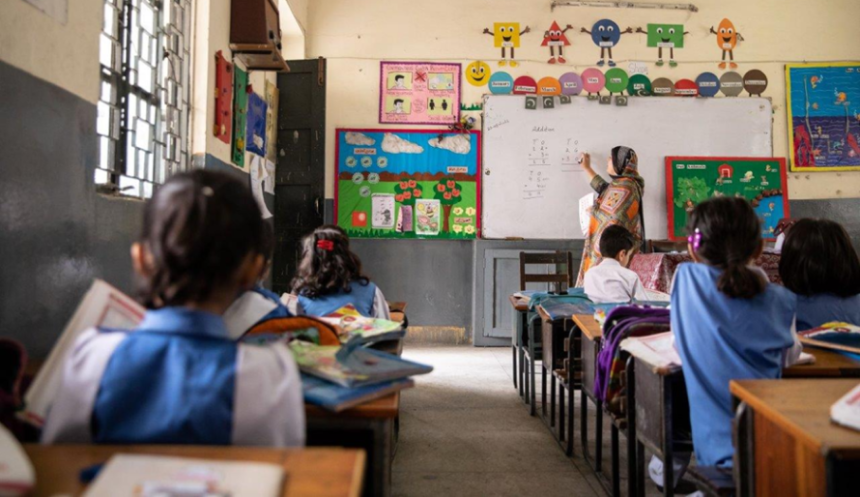
The Role of PEIMA in Punjab's Education
The Punjab Education Initiatives Management Authority (PEIMA) was established to run schools through public-private partnerships, aiming to improve access to education, particularly in rural and marginalized areas of Punjab. By partnering with private sector schools and organizations, PEIMA subsidizes education costs to keep them affordable while maintaining quality standards.
However, this model relies heavily on the timely release of government funds. The current delay highlights a vulnerability in the system, where bureaucratic lag can directly impact the livelihoods of thousands and the education of hundreds of thousands of children.
As the week progresses, all eyes are on the PEIMA headquarters and the provincial finance department. Teachers are waiting with bated breath for the February payments to materialize. For now, the threat of protests looms large, casting a shadow over the province's education landscape just before the holiday season.