




 Home
Home
 National
 International
 Merit list
 Date Sheet
 Result
 Admission
 Study Abroad



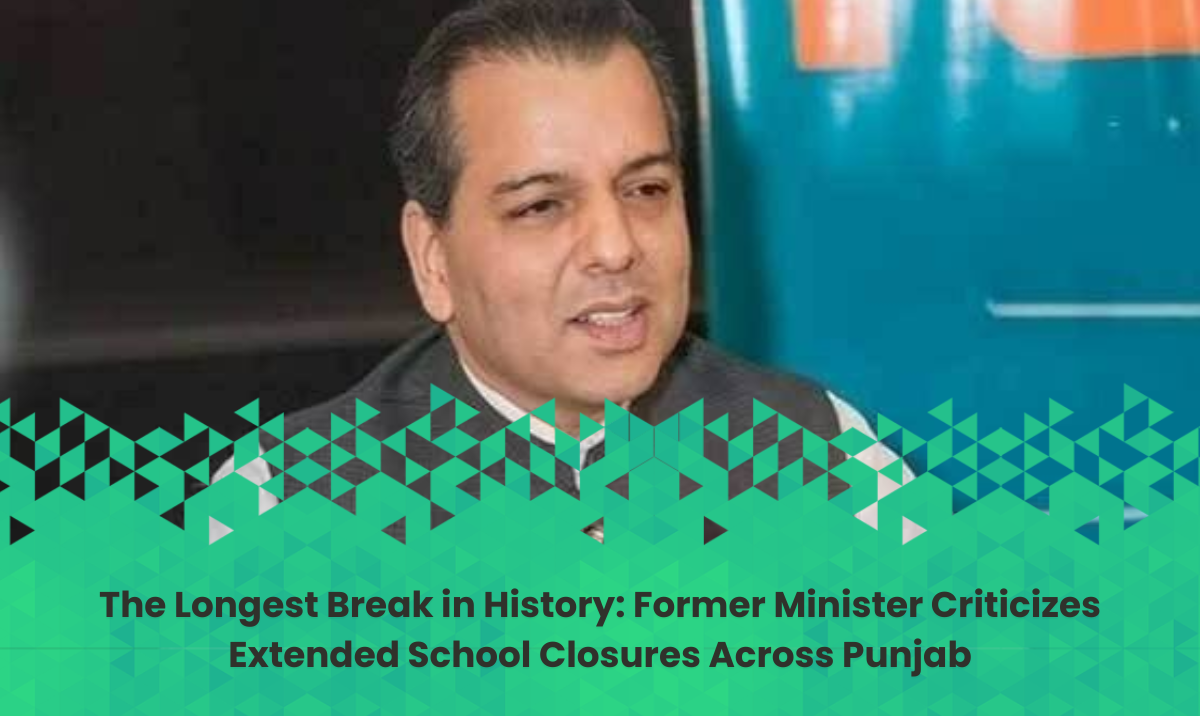
Former Punjab Education Minister Criticizes Extended Summer Holidays for Students
The education sector in Pakistan's most populous province has once again found itself at the center of a heated debate. Former Punjab Education Minister Murad Raas has voiced strong opposition to the province’s extended summer holidays, sparking a widespread conversation among parents, educators, and policymakers. Raas has openly questioned the rationale behind keeping both public and private educational institutions closed for an unusually long period, drawing sharp comparisons with the operational status of other prominent schooling systems across the country.
As students and families navigate the final weeks of the break, the critique has brought long-standing questions regarding academic calendar management, policy consistency, and student learning loss to the forefront of public discourse.
The Controversy Behind the Extended Break
The core of the criticism revolves around the timeline set for the current academic year. According to announcements made by education authorities, students across Punjab have been facing what Murad Raas has termed the "longest summer vacation" of his tenure and observation. Educational institutions across the province closed their doors starting May 21, with an official reopening schedule slated for August 24.
This timeline means that children have been kept away from formal classroom environments for more than three months. For growing minds, a hiatus of this magnitude raises critical concerns about academic regression, loss of study habits, and delays in completing the mandated curriculum for the academic year.
In his public statements, Raas expressed deep frustration over the decision-making process, questioning the logic that justifies shutting down the entire public and private school network for such an extended timeframe. He argued that prolonged closures disproportionately harm children, particularly those from underprivileged backgrounds who rely heavily on schools not just for education, but for structured daily routines and social development.
The Comparison: Public/Private Schools vs. APS and PAF Systems
One of the most compelling arguments raised by the former education minister involves a direct comparison with other institutional frameworks operating within the same geographical and climatic conditions. Murad Raas pointed out a glaring inconsistency: while standard public and private schools under the provincial government's purview remain completely shuttered, Army Public Schools (APS) and Pakistan Air Force (PAF) schools continue to function normally according to their respective schedules.
This disparity has left many parents and educationists bewildered. The weather patterns, environmental conditions, and heatwaves that prompt closures in regular institutions affect children in military-run or specialized federal-system schools equally. Yet, institutions like APS and PAF schools manage to adapt, regulate their timings, or structure their calendars to ensure minimal disruption to the academic year.
-
Uniform Climate Conditions: The weather constraints faced by public school students are identical to those experienced by students attending defense-managed institutions.
-
Academic Continuity: While regular students experience a multi-month pause, APS and PAF students maintain a steady pace of learning.
-
Administrative Disconnect: Critics argue that the disparity highlights a lack of synchronization and strategic planning within provincial education governance.
The Impact on Student Learning and Welfare
Education experts and child psychologists have long warned about the severe consequences of extended school closures. Following disruptions from previous years, including smog-related closures and regional emergencies, adding a massive summer break further eats into crucial instructional hours.
Prolonged breaks often lead to the "summer slide"—a phenomenon where students lose academic retention, particularly in mathematics and reading skills. For teachers, the beginning of the new term is invariably spent on extensive revision rather than moving forward with new concepts, compressing the academic calendar and placing undue stress on both educators and learners.
Furthermore, schools serve as safe havens for children. Extended holidays mean prolonged exposure to unmonitored environments, reduced physical activity during peak hot months, and a widening gap for children who lack access to alternative summer learning programs or digital educational tools at home.








Share your comments & questions here
No comments yet. Be the first to comment!