




 Home
Home
 National
 International
 Merit list
 Date Sheet
 Result
 Admission
 Study Abroad



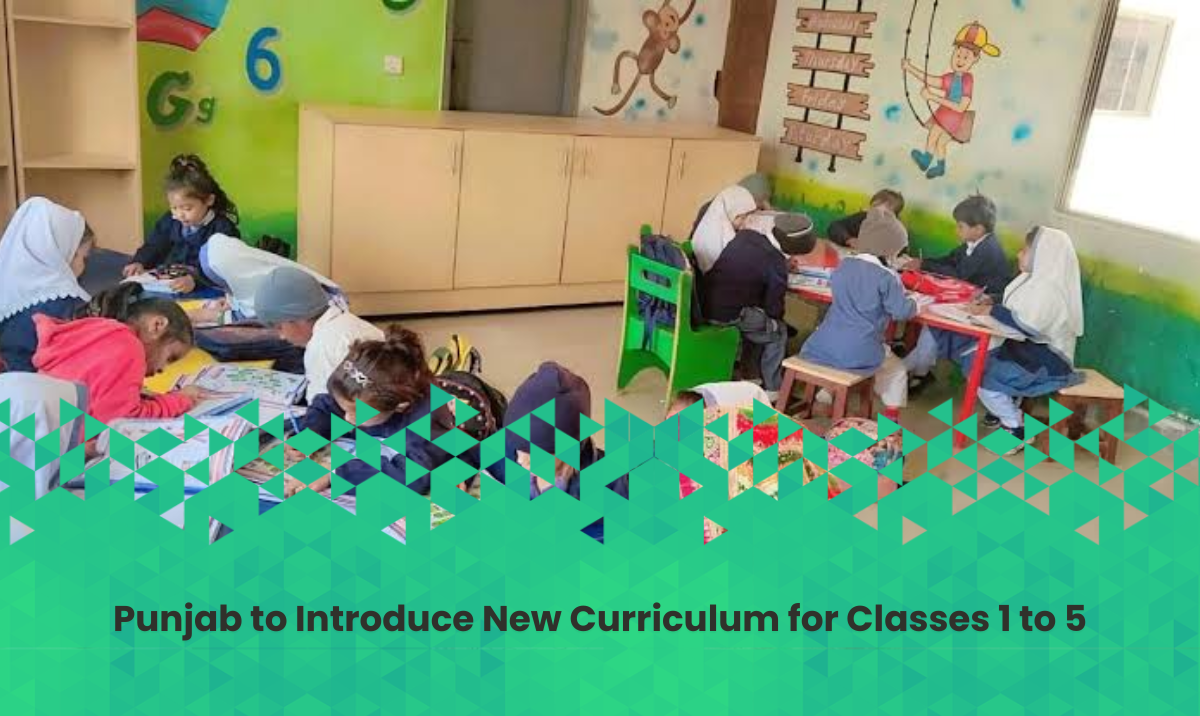
Punjab to Introduce New Curriculum for Classes 1 to 5 to Eliminate Rote Learning
In a monumental shift toward modernizing foundational learning, the government of Punjab has officially prepared a brand-new, activity- and concept-based Punjab new curriculum for Classes 1 to 5. This progressive update serves as the cornerstone of major structural changes being introduced across the primary education system in Pakistan's most populous province.
Provincial Education Minister Rana Sikandar Hayat formally announced the development, emphasizing that the updated framework is designed to transition young learners permanently away from traditional, outdated methods of memorization. Under the newly charted academic blueprint, classrooms will transform into dynamic spaces driven by interactive activities, practical engagement, and deeper intellectual development.
Shifting Focus from Rote Memorization to Conceptual Understanding
For decades, the academic landscape across public and private institutions has heavily relied on rote learning—forcing young minds to memorize complex texts without fully grasping underlying concepts. Education experts have long warned that this approach stifles critical thinking, creativity, and analytical skills during a child's most formative years.
With the launch of the primary education system Punjab overhaul, policymakers aim to reverse this trend. The newly drafted material targets children aged 5 to 10, ensuring that basic sciences, mathematics, languages, and social studies are taught through real-world applications.
Minister Rana Sikandar Hayat highlighted that students will no longer be burdened with passive textbook learning. Instead, the curriculum emphasizes experiential learning, where children understand concepts through hands-on activities, project work, and interactive classroom discussions. This transition is expected to build a strong cognitive foundation, making learning an enjoyable and stimulating experience rather than a stressful chore.
The Role of PECTAA and Institutional Overhaul
To streamline these historic academic reforms, the provincial government established the Punjab Education, Curriculum, Training and Assessment Authority (PECTAA). PECTAA integrates multiple crucial bodies—including the Punjab Curriculum and Textbook Board, the Quaid-i-Azam Academy for Educational Development, and the Punjab Examination Commission—under a single unified umbrella.
By centralizing curriculum design, teacher training, and student assessment, PECTAA ensures that the new activity-based curriculum Classes 1 to 5 is executed seamlessly across all districts of Punjab. Officials noted that educator training programs are running concurrently to equip teachers with modern pedagogies required to deliver activity-oriented lessons effectively. Teachers are being trained to manage interactive environments, encourage student participation, and evaluate conceptual growth rather than grading mechanical memorization.
Addressing Challenges and Ensuring Smooth Implementation
While the broader educational community and parents have overwhelmingly welcomed the shift toward a modern education system Pakistan, the transition has faced minor transitional hurdles, including discussions with local publishing stakeholders regarding textbook updates. Nonetheless, the education ministry remains steadfast in its execution timeline, ensuring that the necessary pedagogical tools and updated learning materials are rolled out efficiently.
The government's long-term vision extends beyond merely printing new books; it aims to create an inclusive, equitable academic environment where every child—regardless of socioeconomic background—receives world-class foundational training. Aligning local standards with international best practices ensures that Punjab's students will be better prepared for global academic challenges as they progress into middle and high school tiers.







Share your comments & questions here
No comments yet. Be the first to comment!