

 Home
Home
 National
 International
 Merit list
 Date Sheet
 Result
 Admission
 Study Abroad
.jpg)


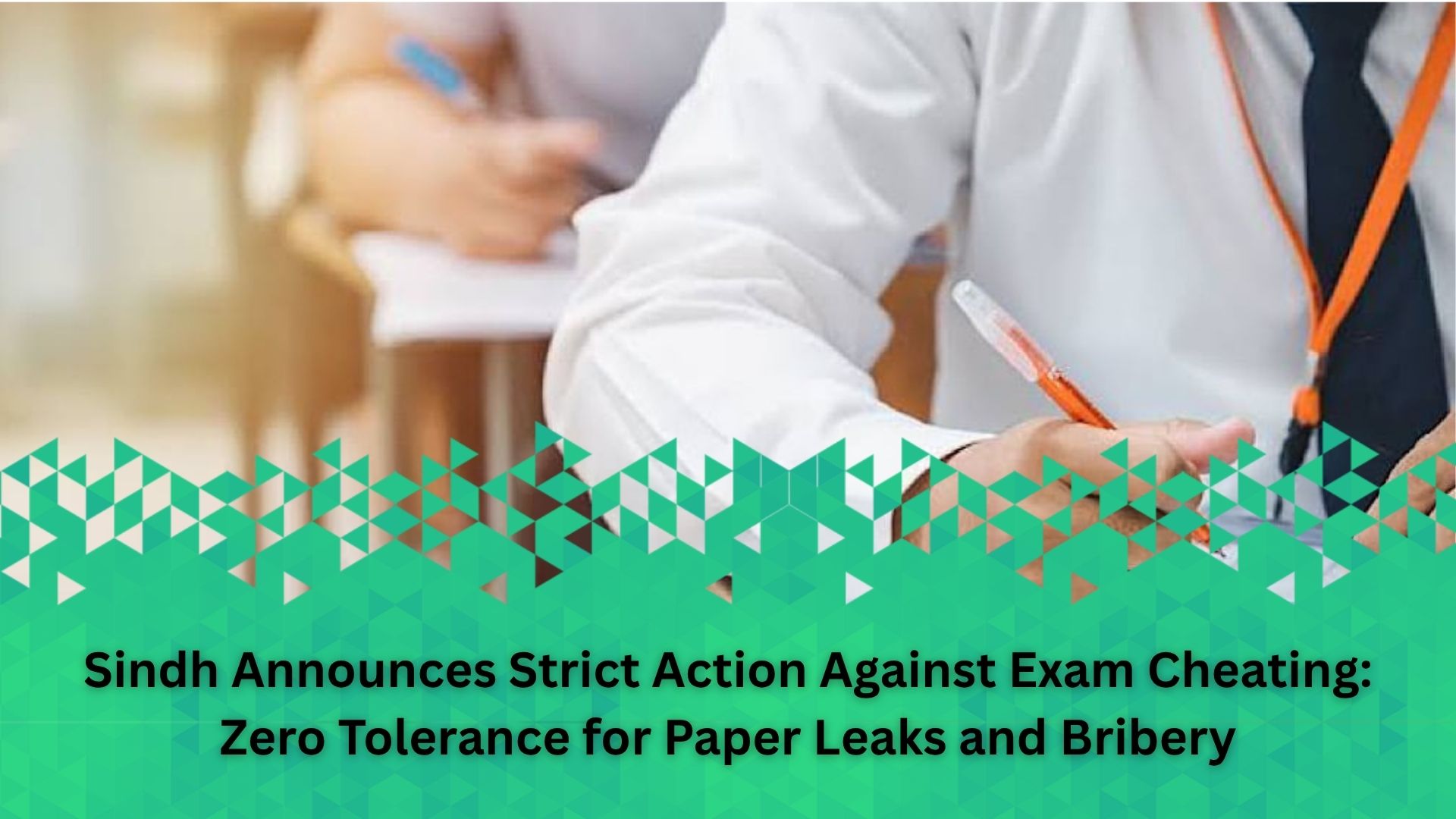
Sindh Announces Strict Action Against Exam Cheating: Zero Tolerance for Paper Leaks and Bribery
In a major crackdown aimed at restoring the credibility of the secondary education system, the Sindh government has announced strict action against exam cheating following widespread allegations of paper leaks, bribery, and dishonest practices during the ongoing matriculation examinations in Karachi.
The decision comes amid growing public outcry over compromised examinations, which have raised serious questions about the fairness and transparency of board exams across the province. In response, top education officials have unveiled a zero-tolerance policy targeting both students and examination staff involved in malpractices.
Ministers Declare Zero-Tolerance Policy
In a rare joint statement issued from the Sindh Education Department, Sindh Education Minister Syed Sardar Ali Shah and Minister for Universities and Boards Muhammad Ismail Rahu made it unequivocally clear that cheating will no longer be overlooked.
“The examination system is the foundation of our educational integrity. Any attempt to undermine it will be met with the full force of administrative and legal action,” said Minister Shah.
Minister Rahu added, “We have received alarming reports of organized cheating rings, mobile phone usage inside exam halls, and even facilitation by staff. This ends now.”
The ministers confirmed that a comprehensive monitoring mechanism is being deployed immediately across all examination centers in Karachi and other districts of Sindh.
Severe Consequences for Students
Under the new enforcement guidelines, students caught cheating will face immediate and severe consequences:
-
Instant expulsion from the examination hall without any warning.
-
Cancellation of all papers for the current examination session.
-
A ban from appearing in any current or future board examinations, effectively ending their academic year.
The government has particularly warned about the possession of mobile phones or any electronic devices inside exam centers. Any student found with a phone, smartwatch, or pre-written cheating material will be instantly disqualified , regardless of whether the device was in use.
“Ignorance will not be accepted as an excuse. Students have been notified repeatedly. From now on, carrying a mobile phone into the hall is equivalent to admitting intent to cheat,” a senior official of the Board of Intermediate Education Karachi (BIEK) told reporters.
Strict Action Against Examination Staff
In a parallel move, the Sindh government has also announced strict action against examination staff found complicit in cheating. The crackdown targets invigilators, internal and external examiners, center superintendents, and administrative officials.
Penalties for staff include:
-
Departmental proceedings and blacklisting.
-
Immediate dismissal from service for those found facilitating cheating, leaking papers, or accepting bribes.
-
Potential criminal charges under the Sindh Examination Ordinance.
“We have evidence that some staff members have been acting as intermediaries for cheating mafias. They will not be spared,” warned Minister Rahu.
The government has also ordered the installation of surveillance cameras at sensitive examination centers and announced unannounced flying squads to conduct raids during exam hours.
Why the Crackdown Now?
The urgency stems from the ongoing matriculation examinations in Karachi , where multiple subjects have reportedly been compromised. Social media platforms were flooded with images of leaked question papers hours before scheduled exams, triggering protests from parents and civil society.
Education watchdogs have long criticized the examination system in Sindh for being opaque and prone to manipulation. The latest move is seen as a direct response to mounting pressure from the judiciary and the federal education ministry.
Reactions from Stakeholders
Parents and educational experts have largely welcomed the decision, though some expressed concerns about the psychological impact on students.
“It is a necessary step. Cheating devalues the hard work of honest students,” said Parveen Akhtar, a parent of a matriculation student in Karachi’s Gulshan-e-Iqbal area.
However, she added, “The government must also improve teaching standards and examination logistics. Students often cheat out of fear or lack of preparation.”
Teachers’ associations have urged the government to ensure that the crackdown does not lead to false accusations. “Due process must be followed. The monitoring systems should be transparent,” said a representative of the Sindh Teachers’ Union.
Strengthening Monitoring Systems
As part of the long-term strategy, the Sindh government announced that monitoring systems at examination centres will be strengthened through:
-
Deployment of provincial task forces for random checks.
-
A toll-free helpline for students and parents to report cheating anonymously.
-
Digital attendance systems to prevent impersonation.
-
Surprise audits of examination centers without prior notice.
The government has also warned that any form of interference or malpractice —including political pressure on board officials—will be dealt with firmly. “No one is above the rules. We will not allow anyone to compromise the future of Sindh’s youth,” Minister Shah asserted.

The Road Ahead
With nearly 500,000 students appearing in the current matriculation and intermediate examinations across Sindh, the success of this crackdown will be closely watched. Education boards in Karachi, Hyderabad, Sukkur, and Mirpurkhas have been directed to submit daily reports on cheating incidents.
The Sindh government has also hinted at legislative reforms, including stricter penalties under the examination act, to deter repeat offenses.
For now, the message from Karachi is clear: Cheating will no longer be tolerated. Whether the new measures will succeed in eradicating decades-old malpractices remains to be seen, but the province has taken its most aggressive step yet toward examination integrity.