




 Home
Home
 National
 International
 Merit list
 Date Sheet
 Result
 Admission
 Study Abroad
.gif)


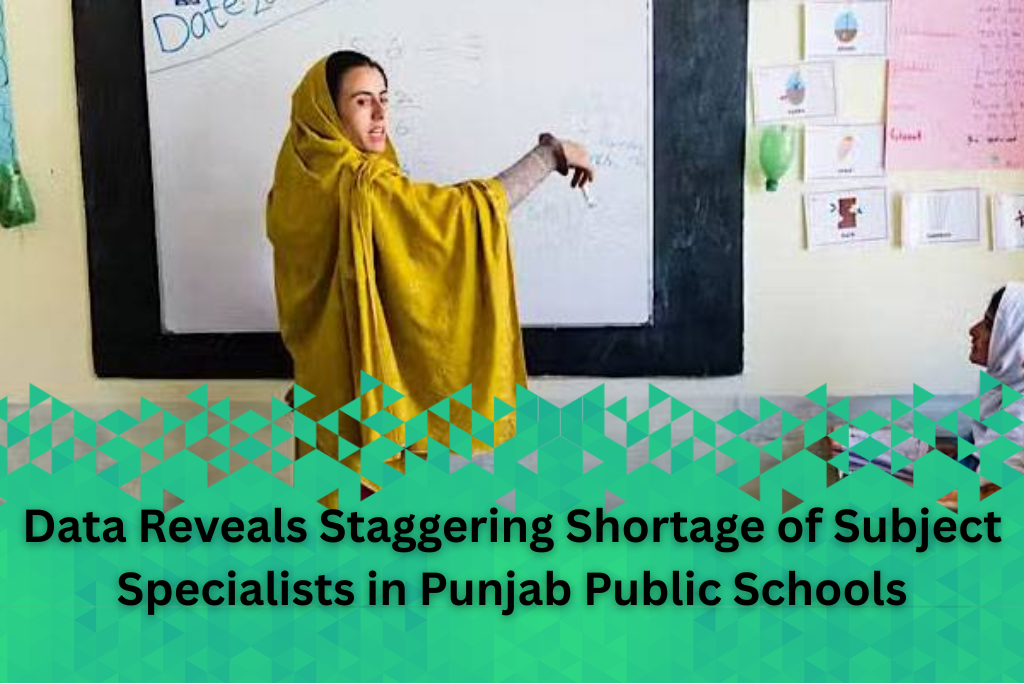
Data Reveals Staggering Shortage of Subject Specialists in Punjab Public Schools
A startling report has emerged regarding the public education sector in Punjab, exposing a critical shortage of subject specialists and administrative heads across the province’s high and higher secondary schools. The statistical breakdown, compiled by journalist Juneid Riaz, paints a concerning picture of the structural gaps currently plaguing the government-run schooling system, which impacts millions of students.
According to the newly released data, Punjab houses over 7,000 high and higher secondary institutions, yet the number of highly qualified teachers assigned to specific fields is drastically low. Currently, a mere 482 subject specialists are actively serving across the entire province. This scarcity means that thousands of students preparing for critical board examinations are potentially lacking specialized guidance in core disciplines such as science, mathematics, and advanced languages.
Senior Faculty and Leadership Gaps
The crisis extends beyond entry-level specialist roles. The data reveals that the headcount for Senior Subject Specialists (SSS) has plummeted to just 2,811. With over 7,000 senior institutions operating across Punjab, the mathematics of the current faculty distribution highlights a severe deficit.
Furthermore, administrative leadership in Punjab schools is facing a parallel vacuum. Out of these thousands of institutions, only 3,157 public schools operate with permanent, fully appointed school headmasters and principals. The remaining institutions are reportedly being managed through temporary look-after charges, additional assignments given to senior teachers, or vacant administrative slots. Educational experts argue that the lack of permanent leadership severely hampers the daily governance, discipline, and long-term planning required to maintain academic standards.
Shifting Demographics of the Teaching Workforce
On a positive note, the report indicates a significant rise in the baseline academic qualifications of the workforce. The number of teachers holding only a matriculation degree has dwindled to just 20 individuals across the entire province, signaling that older, underqualified cadres have largely retired or upgraded their skills.
The current workforce structure is distributed as follows:
-
Senior School Teachers (SSTs): Approximately 43,000 educators are currently serving at the high school level.
-
Primary and Middle School Teachers: Roughly 250,000 teachers are deployed to handle younger demographics.
-
Primary and Middle School Infrastructure: The total number of primary and middle institutions in Punjab stands at nearly 30,000.
The Push for School Outsourcing
Faced with mounting administrative and financial hurdles, the Government of Punjab has increasingly leaned toward public-private partnerships. The report confirms that over 11,000 public schools have already been outsourced or handed over to the Punjab Education Foundation (PEF) under contract agreements.
While the outsourcing strategy aims to improve management efficiency and reduce the direct burden on the national exchequer, it has sparked ongoing debates among educational unions regarding the long-term privatization of public sector assets and the job security of government teachers.
This statistical revelation underscores an urgent need for the Punjab Education Department to initiate large-scale recruitment drives. Addressing the severe deficit of subject specialists and securing permanent leadership for every high school remains paramount if the province hopes to elevate the quality of public sector education and bridge the gap between public and private schooling standards.





Share your comments & questions here
No comments yet. Be the first to comment!