

 Home
Home
 National
 International
 Merit list
 Date Sheet
 Result
 Admission
 Study Abroad
.jpg)


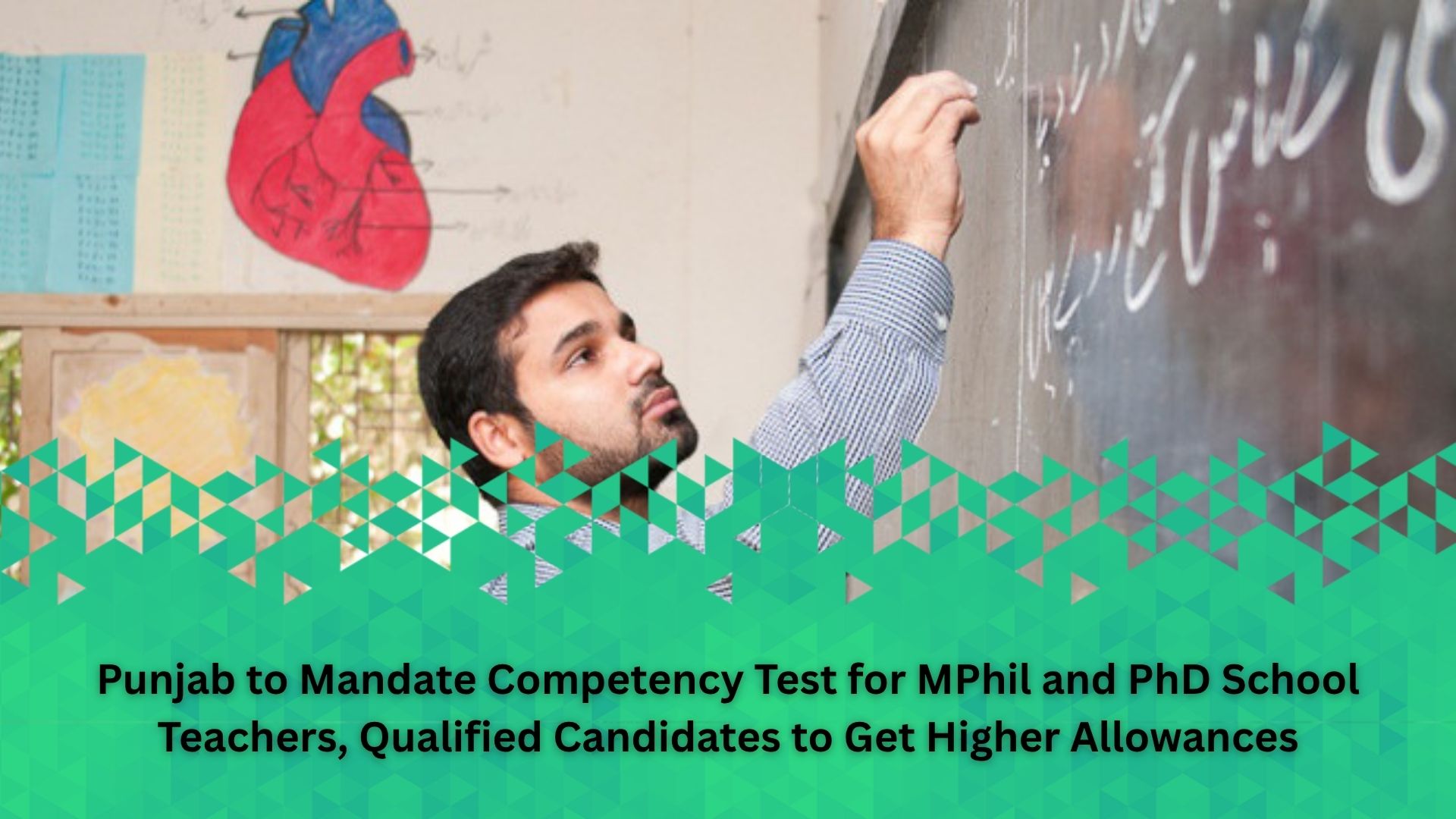
Punjab to Mandate Competency Test for MPhil and PhD School Teachers
In a significant policy shift aimed at improving educational standards, the Punjab government has announced a new plan to introduce a mandatory competency test for MPhil and PhD-qualified teachers currently working in public schools across the province. The decision seeks to optimize the utilization of highly qualified educators and restructure the staffing hierarchy of primary, middle, high, and higher secondary schools.
According to official sources, the move addresses a long-standing concern that a large number of doctorate and MPhil-level faculty members are not being deployed according to their advanced qualifications. The government believes that reassigning these teachers to higher-level institutions will enhance the quality of secondary and higher secondary education in Punjab.
Test for MPhil and PhD Teachers: A Gateway to Better Postings
Under the new plan, all teachers holding MPhil and PhD degrees will be required to appear for a standardized proficiency test. Those who successfully qualify will be eligible for posting to high schools and higher secondary schools across the province. Officials emphasized that the test is designed to assess subject matter expertise and pedagogical skills appropriate for senior classes.
A senior education department official, speaking on condition of anonymity, stated, “The goal is to ensure that students in grades 9 through 12 benefit from the deep subject knowledge that MPhil and PhD teachers possess. However, we must first verify that these teachers have maintained their academic rigor and teaching competencies.”
Financial Incentives: Additional Allowances for Qualified Teachers
In a move to boost morale and attract top talent to secondary-level institutions, the Punjab government has confirmed that teachers who pass the competency test and are posted to high or higher secondary schools will receive additional allowances on top of their existing salary and benefits package.
While the exact percentage of the allowance is yet to be notified, sources indicate that the financial incentive will be significant enough to encourage qualified teachers to prepare for the test. This component of the policy is expected to reduce resistance from teachers who may otherwise be reluctant to undergo reassessment.
Restructuring School Staffing: PSTs and ESTs to Lead Primary and Middle Schools
As part of the broader arrangement, the government has clarified the future staffing model for elementary education. Following the successful posting of MPhil and PhD teachers to higher-level institutions, primary and middle schools will be exclusively staffed by Primary School Teachers (PSTs) and Elementary School Teachers (ESTs) .
Officials explained that this restructuring aligns with global best practices, where teachers with specialized training in early childhood and elementary education handle foundational years. The move is expected to create a clear career progression pathway for PSTs and ESTs while ensuring that overqualified teachers are not underutilized in primary settings.
Outsourcing of Primary and Middle Schools Accelerates Realignment
The decision to test and reassign highly qualified teachers comes amid a parallel government initiative to outsource primary and middle schools in Punjab. Sources indicate that as private or semi-private entities take over the management of these lower-level institutions, the government is prioritizing the transfer of its most academically distinguished staff MPhil and PhD degree holders to government-run high and higher secondary schools.
“We cannot afford to have PhD teachers delivering lessons at the primary level when there is a dire need for subject specialists at the matriculation and intermediate levels,” an education department spokesperson said. “This testing mechanism ensures that only the most competent among them are elevated.”
Current Statistics: Over 1,800 Highly Qualified Teachers in Punjab Schools
According to official data cited by authorities, there are currently more than 1,800 teachers across Punjab who hold MPhil and PhD degrees. These teachers are spread across various districts and school types. Under the current system, many of them have been teaching at the primary or middle level—a situation the government now deems inefficient.
The forthcoming test will cover these 1,800+ educators initially, with plans to include future hires under the same framework. The government has not yet announced the test date or syllabus, but education experts expect the examination to include advanced subject knowledge, teaching methodologies, and general pedagogical principles.
Reactions from the Education Community
The announcement has elicited mixed reactions. Some educationists have praised the Punjab government for introducing a merit-based, competency-driven approach. “Finally, there is a mechanism to ensure that PhD teachers are not wasted in roles that a PST could perform. This will elevate the entire system,” said Prof. Sajid Mir, a retired education administrator.
However, teachers’ unions have raised concerns about the testing process, demanding transparency and asking whether the government will provide preparatory support. “We welcome the allowances, but the test must be fair and based on the curriculum these teachers have been hired to teach,” said a representative from the Punjab Teachers’ Union.
Looking Ahead
The Punjab government has indicated that formal notifications regarding the test schedule, registration process, and allowance structure will be released within the coming weeks. School education department officials have been directed to compile updated lists of all MPhil and PhD teachers currently on payroll to ensure no eligible candidate is left out.
As the province moves toward a more streamlined and qualification-appropriate staffing model, all eyes are now on the implementation details. If successful, the policy could serve as a blueprint for other provinces in Pakistan facing similar challenges of teacher underutilization.