

 Home
Home
 National
 International
 Merit list
 Date Sheet
 Result
 Admission
 Study Abroad
.jpg)


Punjab Mandates Biometric Verification for All Matric & Inter 2026 Exams in Major Overhaul
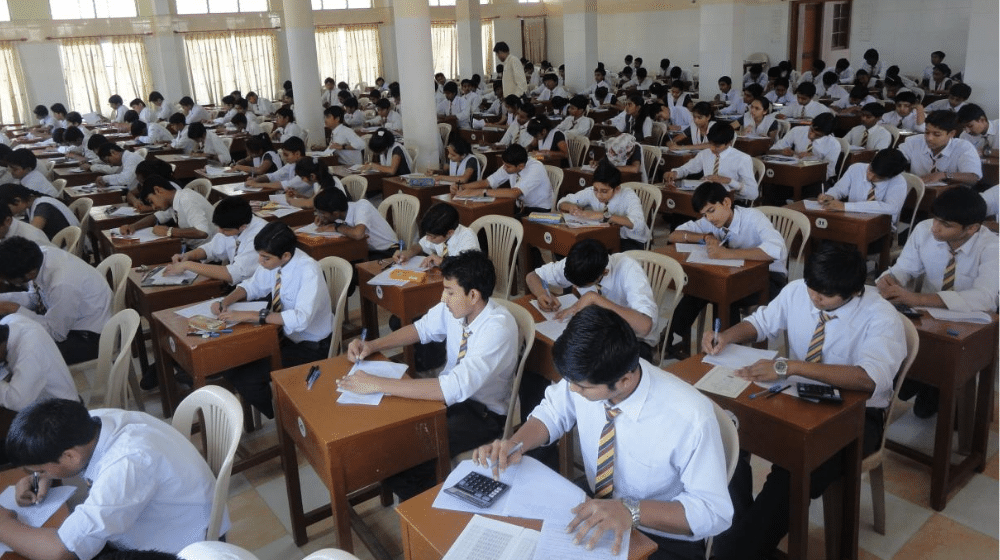
The Punjab government has announced that all students appearing for their Matriculation and Intermediate annual examinations in 2026 will be required to undergo digital biometric attendance verification before entering exam halls. This forms the cornerstone of a sweeping set of reforms approved to restore credibility and transparency to the province’s sprawling board examination system.
The decisive policy was finalized during a high-level strategic meeting convened at the Board of Intermediate and Secondary Education (BISE) Lahore . Chaired by Muzammil Mehmood, Chairman of the Task Force Committee on Boards , the session brought together top education officials from across Punjab, signalling a unified provincial approach.
A High-Level Meeting for Systemic Change
The meeting featured key stakeholders in Punjab’s educational administration. In attendance were Additional Secretary Higher Education Boards Nauman Jameel, Lahore Board Secretary Rizwan Nazeer, Controller of Examinations Tauseef ur Rehman , alongside the secretaries and controllers from all nine educational boards operating across Punjab.
The consensus among officials was clear: the existing system required urgent modernization to address long-standing vulnerabilities. The newly approved measures target the exam process from entry to evaluation, aiming to ensure that merit and hard work are the sole determinants of success.
Biometric Verification: Blocking Fake Candidates
The flagship initiative, biometric verification for exam entry , is designed to eliminate the perennial issue of proxy test-takers. Under this system, students’ identities will be digitally authenticated at examination centres using fingerprint or thumbprint scanners linked to a central database.
“This technological intervention will ensure that only the genuinely registered candidate is allowed to sit for the paper,” explained an official present at the meeting. “It creates a formidable barrier against fake candidates and is a significant step toward fair examinations.”
Overhauling the Practical Exam System
Recognizing widespread criticism, the meeting dedicated substantial focus to reforming the practical examination system . For years, practical exams have been plagued by complaints of inconsistent marking, favouritism, and lax oversight , undermining their integrity.
Under the new reforms, practical exams will be conducted with the same level of scrutiny as theory papers . Authorities have proposed introducing standardized assessment criteria to ensure uniform marking practices across all nine boards, reducing the room for subjective or biased grading.
To further bolster oversight, a proposal for the mandatory installation of CCTV cameras in all examination laboratories was discussed. Video surveillance is expected to deter cheating, prevent unauthorized external interference, and curb the entrenched “culture of recommendations.”
Digital Marking and Enhanced Compensation
In a bid to modernize the evaluation process, a digital marking system is under active consideration. This system would see both theory and practical examination marks entered electronically, minimizing physical handling of answer scripts.
Officials believe this shift will reduce manual errors, prevent tampering with marks, and streamline the result compilation process , making it more efficient and secure.
Acknowledging the human element, the meeting also reviewed proposals to increase the compensation for examination supervisors and staff . The rationale is that better remuneration will reduce financial vulnerability to bribes and pressures, encouraging officials to perform their duties with greater integrity and accountability.
Zero-Tolerance Policy and Legal Warnings
Chairman Muzammil Mehmood underscored the administration’s resolve, stating that these reforms are backed by a strict zero-tolerance policy . He issued a stern warning that legal action would be pursued against anyone attempting to manipulate exam outcomes through bribery, political pressure, or personal connections .
“The era of influence peddling is over,” Mehmood asserted. “These measures are for the silent majority of hardworking students and parents who believe in merit. We are determined to provide them a level playing field.”
Implementation Timeline and Next Steps
Education officials expressed confidence that these collective measures would usher in a more transparent and credible examination cycle for 2026 , marking a new era for Punjab’s educational boards.
The reforms have been broadly welcomed by educators and parents’ associations, who have long advocated for systemic changes to protect the sanctity of board examinations. As Punjab prepares to roll out these digital and procedural safeguards, all eyes will be on the 2026 exam session to gauge the effectiveness of this ambitious crackdown on malpractice.