
 Home
Home
 National
 International
 Merit list
 Date Sheet
 Result
 Admission
 Study Abroad



Punjab Implements CCTV & Biometric Monitoring to Secure 2026 Board Exams
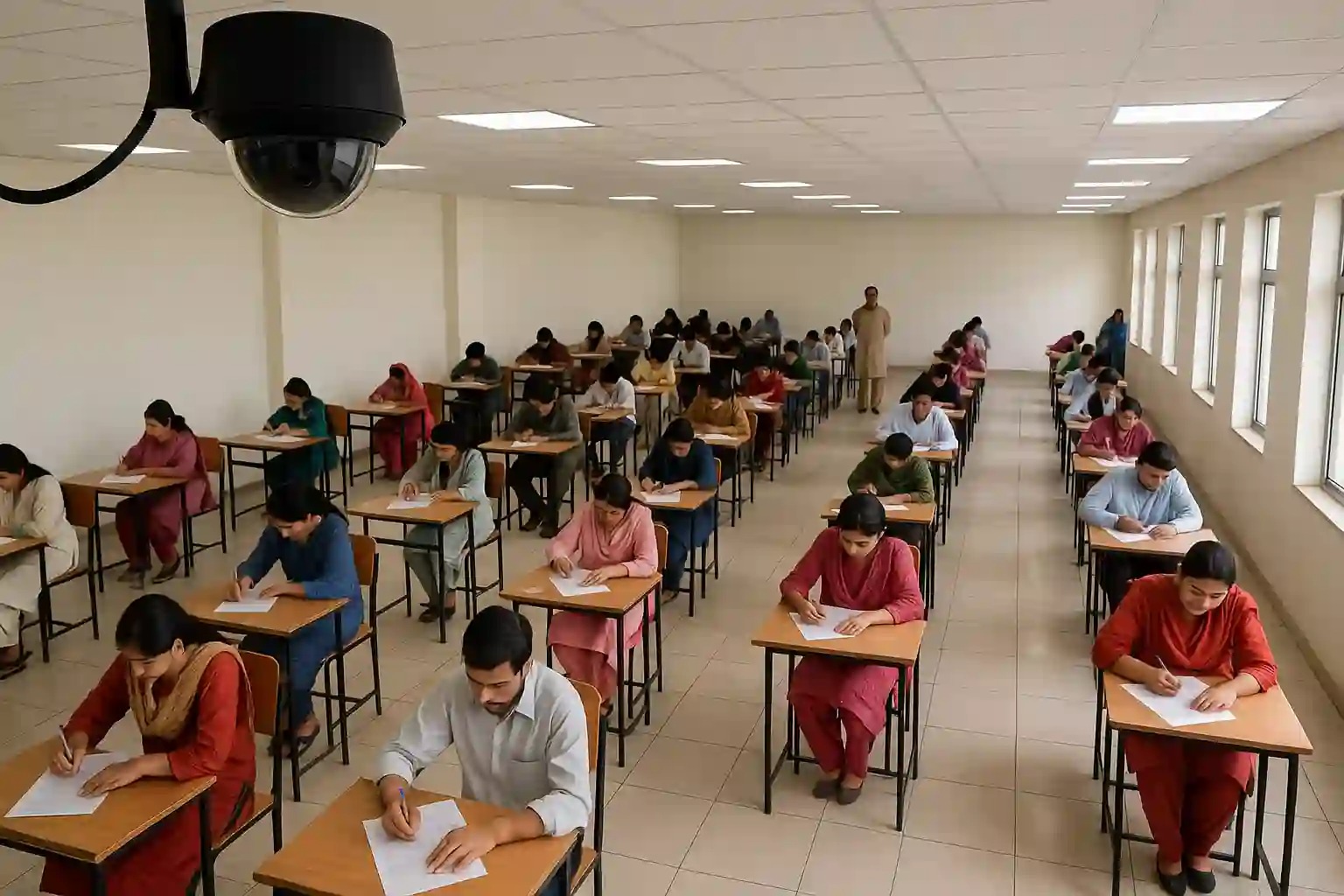
In a decisive move to restore integrity to the secondary education examination system , the Punjab government has mandated comprehensive electronic surveillance for all major board exams in 2026 . The initiative, announced today, targets widespread concerns over paper leaks, cheating, and administrative corruption.
Acting Chairman of the Board of Intermediate and Secondary Education (BISE) Rawalpindi , Commissioner Aamir Khattak , has issued strict directives for the installation of complete CCTV camera coverage at sensitive examination centers. Simultaneously, a biometric attendance system will be enforced at all marking centers to prevent ghost marking and favoritism.
Zero-Tolerance Policy Against Negligence and Irregularities
Chairing his first governing body meeting at the Commissioner’s Office after assuming the acting charge, Commissioner Khattak declared a zero-tolerance policy. The policy explicitly targets negligence, examination irregularities, paper leaks, and any form of favoritism.
“Transparency and discipline in the examination process are non-negotiable,” stated Khattak. “We will not compromise on the credibility of our assessment system. These technological measures are crucial first steps to deter malpractice and ensure a level playing field for all candidates.”
The acting chairman’s post had been vacant since October 17, following the completion of former chairman Mohammad Adnan Khan’s term. While the Punjab government deliberates on a permanent appointment, Commissioner Khattak has taken immediate interim action.
Key Directives for a Transparent Examination Process
The high-level meeting, attended by senior board and district administration officials, resulted in several key operational directives:
-
CCTV Surveillance Mandate: All sensitive examination halls and centers under BISE Rawalpindi’s jurisdiction must have functional CCTV cameras. The footage will be monitored to prevent cheating and ensure proper conduct by supervisory staff.
-
Biometric Verification for Examiners: Marking centers will implement a foolproof biometric attendance system for all examiners and staff involved in paper checking. This aims to eliminate proxy attendance and ensure accountability.
-
Expedited Disciplinary Resolutions: All pending disciplinary cases against staff or officials must be resolved within a strict one-week timeframe.
-
Dedicated Control Room: Officials were instructed to establish a dedicated examination control room for the 2026 exams. This hub will enable real-time monitoring and rapid response to any incidents.
-
Modernized Administrative Systems: A new online bill-receiving system for examination staff will be introduced to reduce delays and increase transparency in payments.
Scale of the 2026 Examinations
Officials briefed the commissioner on the monumental task ahead for the 2026 examination session. The numbers underscore the critical need for a robust and fraud-proof system:
-
SSC-I (Matric) Annual Examination 2026 : An estimated 243,064 candidates are expected to appear.
-
HSSC-I (Intermediate) Annual Examination 2026 : Approximately 157,856 candidates are slated to take the exams.
This brings the total number of examinees under BISE Rawalpindi’s purview to over 400,000 students , whose academic futures hinge on the fairness of the process.
Comprehensive Measures Beyond Surveillance
While CCTV and biometrics form the cornerstone of the new strategy, board authorities outlined additional steps to fortify the examination ecosystem:
-
Enhanced Monitoring of Practical Labs: Special monitoring systems will be deployed for practical examinations to ensure standardized assessment.
-
Pre-Exam Training for Staff: All supervisory and invigilation staff will undergo compulsory pre-exam training to clarify protocols and emphasize ethical conduct.
-
Strict Action for Marking Errors: Examiners found guilty of consistent or deliberate marking errors will face strict disciplinary action, including legal consequences where applicable.
Public and Expert Reaction
The announcement has been met with cautious optimism by parents and educators. “For years, we’ve heard stories of paper leaks and unfair marking. If implemented honestly, this can be a game-changer for our children’s future,” said Asma Khalid, a parent from Rawalpindi.
Education policy analysts have praised the intent but stress the importance of execution. “Technology is a powerful tool, but it is not a silver bullet,” commented Dr. Faisal Sultan, an educationist. “The success of this initiative will depend on the integrity of the personnel managing the control rooms, the maintenance of the systems, and a truly independent oversight mechanism. The one-week deadline for disciplinary cases is a particularly positive signal of urgency.”
Looking Ahead: A Test of Implementation
The directive from Commissioner Aamir Khattak sets a clear and ambitious agenda for BISE Rawalpindi. As the board prepares for the massive logistical challenge of installing and monitoring surveillance systems across its territory, the focus will now shift to implementation.
The move also sets a potential precedent for other educational boards across Punjab and Pakistan, which have grappled with similar issues of examination malpractice. The effectiveness of Rawalpindi’s tech-driven crackdown in the 2026 exam session will be closely watched as a national case study in examination reform.
The ultimate goal, as stated by the commissioner, is uncompromising: to ensure that every student’s result is a true and fair reflection of their hard work and ability, restoring public faith in one of the nation’s most critical academic milestones.