


 Home
Home
 National
 International
 Merit list
 Date Sheet
 Result
 Admission
 Study Abroad
.jpg)


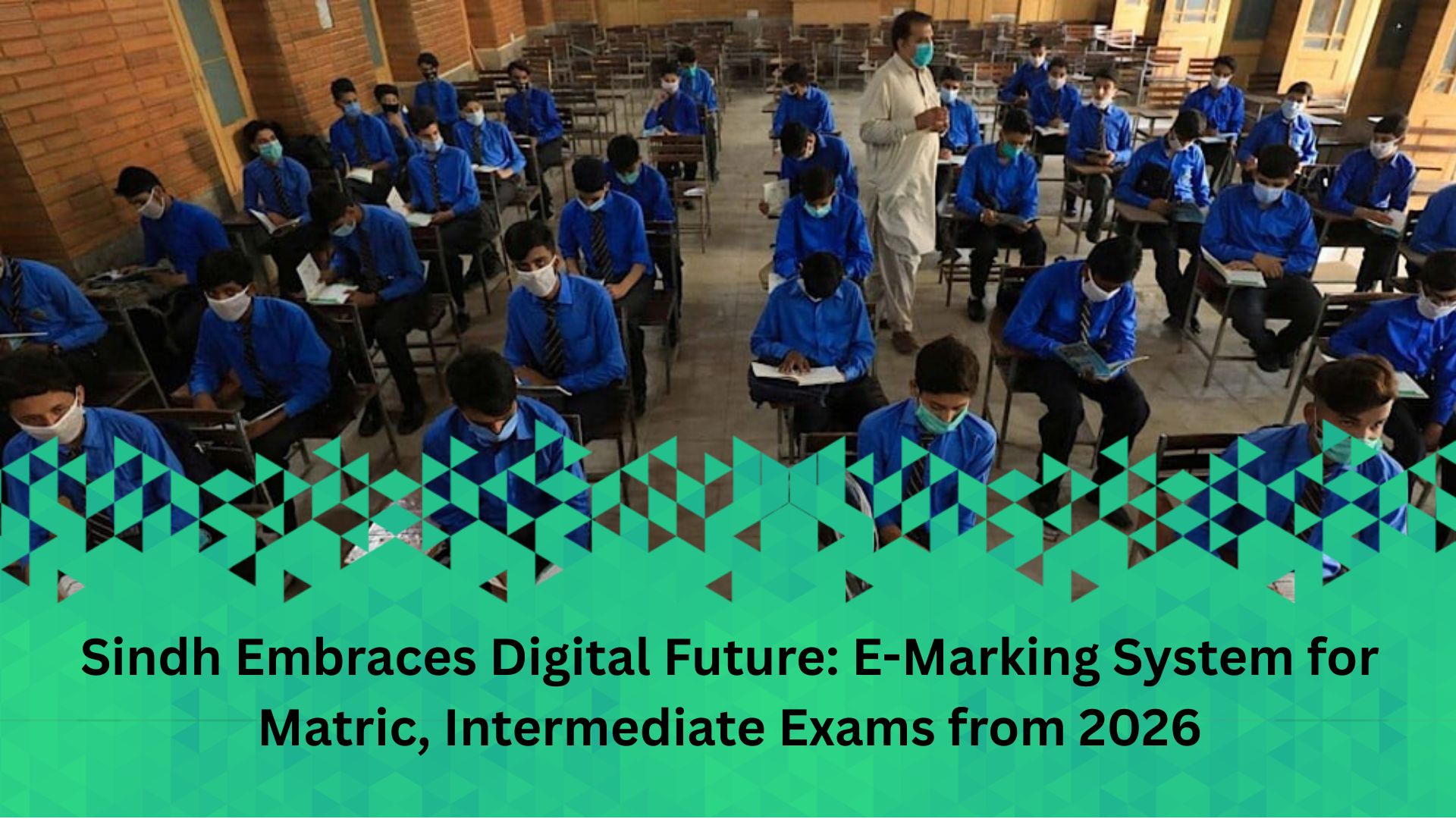
Sindh Embraces Digital Future: E-Marking System for Matric, Intermediate Exams from 2026
In a landmark move aimed at revolutionizing educational assessment, all provincial education boards in Sindh have finalized plans to implement a comprehensive e-marking system for the annual matriculation ( 9th & 10th ) and intermediate ( 11th & 12th ) examinations, commencing in 2026. This decisive shift towards digital evaluation promises to enhance transparency, speed, and fairness in one of Pakistan's largest examination processes.
A Phased Digital Overhaul of Examination Assessment
According to official announcements confirmed by multiple board authorities, the upcoming submission period for examination forms for Classes 9 and 10 will precede a significantly altered assessment framework for the 2026 exams.
Under the revised plan, two to three subject papers in the annual Secondary School Certificate (SSC) and Higher Secondary School Certificate (HSSC) examinations will be evaluated using the new electronic marking technology. This initiative represents the most substantial modernization of Sindh's examination system in decades.
Federal Collaboration Fuels Provincial Transition
The transition is being facilitated through crucial inter-provincial cooperation. The Federal Board of Intermediate and Secondary Education (FBISE) has already provided the necessary e-marking software to the Sindh Department of Universities and Boards . This technology transfer is considered pivotal for ensuring a smooth rollout across Sindh's nine regional boards.
"This provision of software and technical support by the Federal Board is a major step toward achieving transparency and fairness in our examinations," stated a senior official from one of Sindh's largest education boards, who spoke on condition of anonymity. "It fosters a collaborative national approach to educational reform."
IBCC Outlines a Fully Integrated IT-Based System
Echoing the sentiment of transformation, Dr. Ghulam Ali Mallah , Executive Director of the Inter Board Coordination Committee (IBCC) in Islamabad, provided a broader vision. He confirmed that both the conduct of examinations and the checking of answer scripts would increasingly be managed through integrated, IT-based e-marking systems.
"The direction is clear," Dr. Mallah noted. "Digital integration minimizes human error, reduces processing times, and creates a robust audit trail for every assessment. This protects the integrity of the results for millions of students."
Building on a Successful Pilot: The 2025 Mathematics Paper
The decision for a full-scale rollout in 2026 follows a successful pilot program conducted during the current 2025 examination cycle. In a test case that laid the groundwork for expansion, the Mathematics paper for both Classes 9 and 10 across Sindh was assessed using the e-marking system.
Education officials have hailed the pilot as a success, demonstrating the system's viability and providing valuable operational insights. "The Mathematics paper experiment was our proof of concept," explained an official from the Board of Secondary Education, Karachi (BSEK). "It allowed us to train examiners, test the software infrastructure, and build confidence in the process. The stage is now set for a wider implementation."
How E-Marking Works: A Leap in Efficiency and Security
The e-marking system fundamentally changes how answer scripts are assessed. Instead of physical booklets being transported to examiners, scanned images of student answer sheets are securely uploaded to a centralized digital platform.
Trained examiners then access these anonymized scripts online from designated marking centers. They evaluate responses on-screen using specialized software tools, with marks digitally recorded into the system. This process eliminates risks associated with the physical handling and transportation of scripts, such as loss or tampering.
Key benefits highlighted by board officials include:
-
Enhanced Transparency: Every mark awarded is digitally logged.
-
Standardized Assessment: Tools like rubric-based scoring ensure greater consistency among different examiners.
-
Faster Results: Digital compilation drastically reduces the time between the last exam and the result announcement.
-
Reduced Costs: Savings on the logistics of physical script distribution and storage.
Public and Educator Response: Cautious Optimism
While the official response has been overwhelmingly positive, some educators and parents have expressed cautious optimism. Concerns primarily revolve around the training of a vast examiner workforce and ensuring reliable IT infrastructure, particularly in rural and remote areas of Sindh.
"We welcome any step that brings fairness and speed," said Ayesha Khan, a private school principal in Hyderabad. "Our hope is that the boards will conduct extensive training workshops for teachers who will become examiners. The human element of understanding context in answers must also be preserved within the digital system."
The Road Ahead: Submission Deadlines and Wider Implementation
With examination form submissions for the 2026 matriculation exams expected to open soon, boards are entering a critical phase of logistical preparation and public communication. The focus will now shift to onboarding examiners, finalizing the specific subjects for e-marking, and ensuring all participating examination centers are technologically equipped.
The move by Sindh's education boards aligns with a growing global trend towards digitized assessment. It marks a significant chapter in Pakistan's educational history, aiming to restore public trust in examination systems by leveraging technology for integrity and efficiency. The success of the 2026 rollout will be closely watched, potentially serving as a model for other provinces to follow.