

 Home
Home
 National
 International
 Merit list
 Date Sheet
 Result
 Admission
 Study Abroad
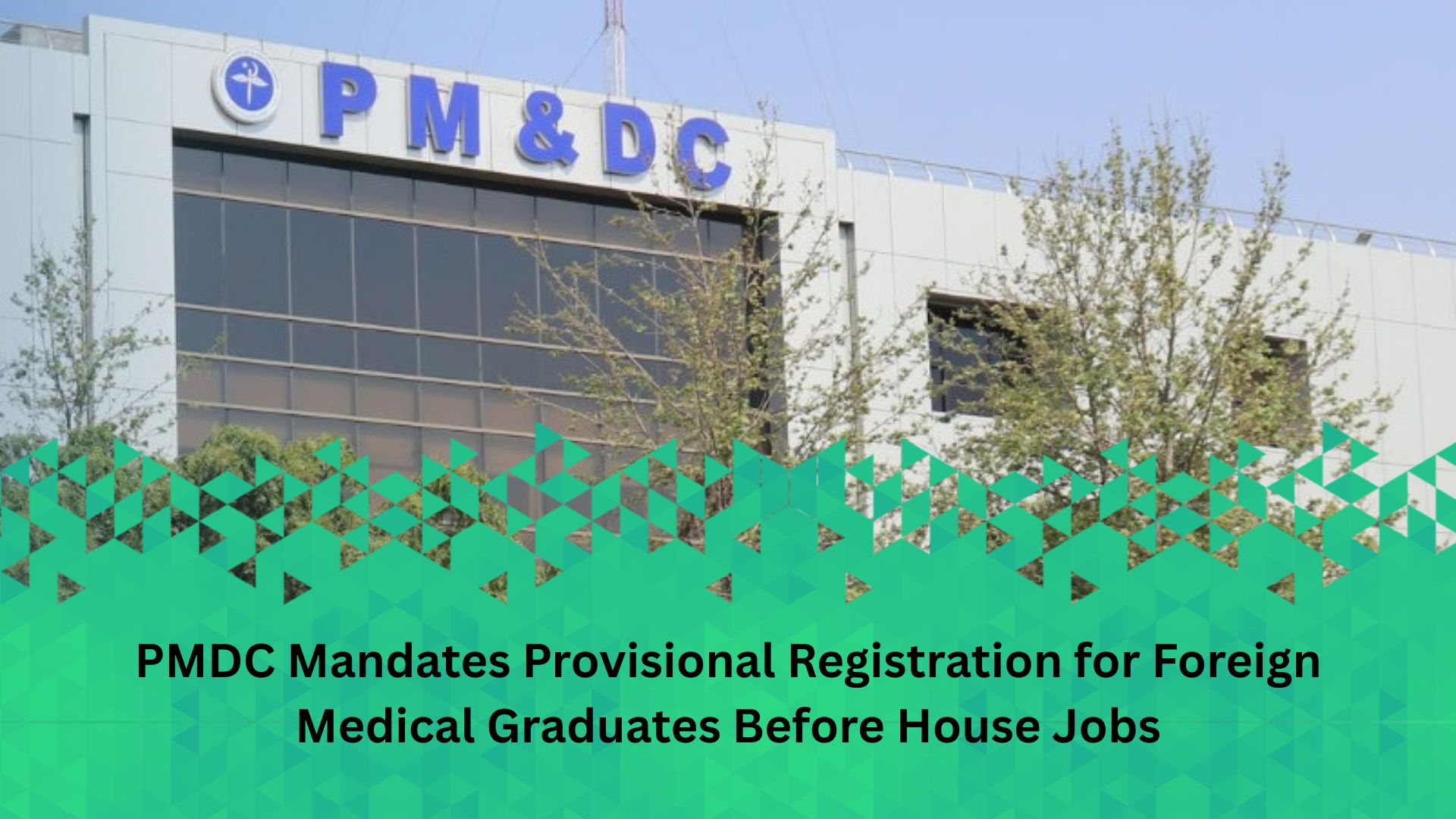
PMDC Mandates Provisional Registration for Foreign Medical Graduates Before House Jobs
The Pakistan Medical and Dental Council (PMDC) has announced that provisional registration is now mandatory for all foreign medical graduates before they can commence their compulsory house job training within Pakistan. The directive, aimed at standardizing medical practice entry, has immediate effect and impacts hundreds of graduates returning from abroad each year. You can also view MBBS & BDS Guides .
Immediate Enforcement of New Rule
According to an official notification circulated to all public and private medical colleges and teaching hospitals nationwide, no foreign medical graduate is permitted to undertake a house job without first securing provisional registration from the PMDC. The council has issued a strict compliance order, warning institutions that any house job currently being performed without this registration "must be stopped immediately."
This policy shift is designed to ensure that all practitioners beginning clinical training meet a consistent baseline standard before engaging in patient care, even under supervision. The PMDC states the measure protects public health and maintains the integrity of medical training pathways.
Two Tracks: Recognized vs. Non-Recognized Universities
The application of the rule differs based on the accreditation status of the foreign institution attended.
For graduates from PMDC-recognized foreign medical universities , the path involves applying directly for provisional registration with the council, submitting necessary documentation including final degree, transcript, and internship completion certificate, before being cleared to start their house job.
However, for graduates from institutions not recognized by the PMDC , the requirement is more stringent. These individuals must first pass the National Registration Examination (NRE) , a licensing exam conducted by the PMDC. Only upon successful completion of the NRE will they become eligible for provisional registration and, consequently, a house job position in Pakistan.
This distinction underscores the council's focus on verifying the competency of graduates from educational systems not pre-vetted for equivalence with Pakistani standards.
Impact on Graduates and Hospitals
The sudden enforcement is expected to create initial logistical challenges. Numerous foreign graduates, particularly those who have recently returned to Pakistan, often begin applying for house jobs while simultaneously processing their PMDC registration paperwork. Under the new directive, hospitals are now barred from allowing them to start training until the registration is formally granted.
Medical administrators across major hospitals have confirmed receipt of the notification. "We are adjusting our intake procedures immediately," said a spokesperson from a major teaching hospital in Lahore. "All appointment letters for foreign graduates will now be contingent upon proof of provisional registration."
The move has received mixed reactions from stakeholders. Proponents argue it eliminates ambiguity and ensures no one practices without council oversight. "This is a patient safety issue. House officers are not mere observers; they perform clinical duties. This step ensures they are properly vetted first," commented a senior PMDC official on condition of anonymity.
Conversely, some graduates and medical associations express concern over potential delays. "The PMDC registration process can be time-consuming. This could leave graduates in limbo, delaying their career progression if the council's processing isn't expedited to match this new prerequisite," noted a representative from the Pakistan Medical Association.
Broader Context of Medical Regulation
This announcement is part of a series of reforms by the PMDC to tighten regulation over medical education and practice in Pakistan. The council has increasingly focused on standardizing the qualifications of both local and foreign-trained doctors, amidst public concerns over healthcare quality and instances of fraudulent degrees.
The National Registration Examination (NRE) for graduates of non-recognized institutions has been a particularly contentious point, seen as a necessary barrier by regulators but a challenging hurdle by some students.
Clear Instructions for Compliance
The PMDC notification leaves little room for interpretation. It instructs all medical institutions to:
-
Verify the provisional PMDC registration of every foreign medical graduate prior to allowing them to begin house job training.
-
Immediately terminate the house job of any foreign graduate found to be without such registration.
-
Integrate this verification into their standard hiring and credentialing protocol.
Failure to comply by institutions could result in disciplinary action from the PMDC, including potential sanctions against the hospital's training program accreditation.
Next Steps for Affected Graduates
Foreign medical graduates affected by this change are advised to:
-
Graduates from Recognized Universities: Prioritize submitting a complete application for provisional registration to the PMDC at the earliest opportunity, even before securing a house job slot.
-
Graduates from Non-Recognized Universities: Focus on preparing for and passing the NRE as the critical first step toward eligibility.
The PMDC website is expected to publish updated guidelines and FAQs regarding the provisional registration process in light of this new mandate.
A New Era of Scrutiny
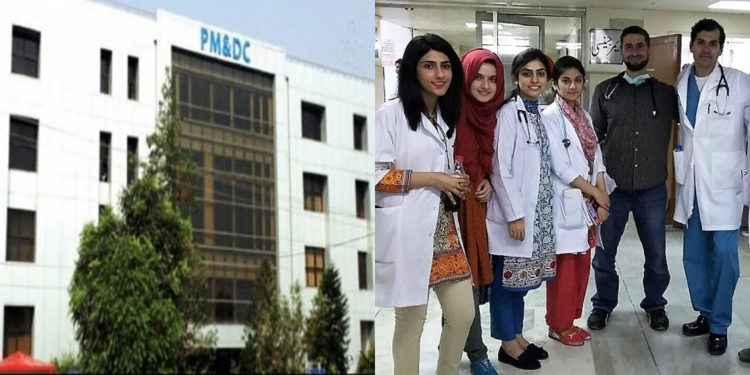
The PMDC's directive marks a definitive shift toward a more controlled and verified entry into the medical profession for foreign-trained doctors in Pakistan. By making provisional registration a non-negotiable prerequisite, the council aims to fortify the first line of clinical training with assured regulatory compliance. While aimed at elevating standards, its successful implementation will depend heavily on the efficiency of the registration process itself, ensuring that well-qualified graduates are not unduly sidelined. The coming months will reveal the practical impact of this policy on hospital staffing, graduate trajectories, and the overall regulatory landscape of Pakistan's healthcare sector.