




 Home
Home
 National
 International
 Merit list
 Date Sheet
 Result
 Admission
 Study Abroad
.jpg)


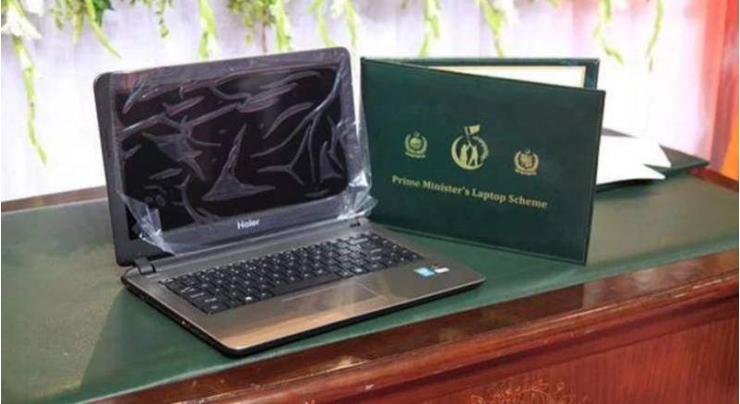
The Federal Government has officially relaunched the Prime Minister’s Laptop Scheme across Sindh, marking a major step toward strengthening digital education and youth empowerment in Pakistan. The formal launch ceremony was held at NED University of Engineering and Technology, Karachi, where officials announced that 20,000 laptops will be distributed among eligible students across the province.
The revival of the laptop scheme comes as part of the government’s broader strategy to promote technology-driven education, enhance digital literacy, and bridge the gap between students and modern learning tools. The initiative is expected to benefit students enrolled in public sector universities, colleges, and higher education institutions throughout Sindh.
Focus on Youth Education and Digital Inclusion
Speaking at the launch event, Federal Government Spokesperson for Sindh Affairs Raja Khaliq Zaman Ansari emphasized that investing in youth education is essential for national progress. He stated that access to technology is no longer a luxury but a necessity in today’s rapidly evolving digital world.
“The Prime Minister’s Laptop Scheme is designed to equip students with modern tools, enabling them to compete globally in education, research, and innovation,” Ansari said. He added that empowering students with laptops will significantly enhance their ability to acquire digital skills, conduct research, and engage in advanced learning.
Scheme Revived After Years of Suspension
The Prime Minister’s Laptop Scheme was initially launched to promote merit-based access to technology for students but was discontinued in 2018. Its restoration by the current federal government reflects a renewed commitment to education-focused policies and youth development.
According to officials, the revived scheme places special emphasis on transparency, merit, and fair distribution. Clear eligibility criteria and digital verification systems have been introduced to ensure that laptops reach deserving students without political or administrative influence.
Role of the Prime Minister’s Youth Programme
Ansari credited the leadership of the Prime Minister’s Youth Programme for playing a key role in bringing the scheme back to life. He noted that the programme aims to provide young people with practical support rather than symbolic initiatives.
“This is not just about distributing laptops; it is about creating opportunities,” he said. “Students will be able to use these devices for online courses, research work, skill development, and participation in the global knowledge economy.”
Boost for Research, IT, and Higher Education
Education experts believe the laptop scheme will significantly support students pursuing degrees in information technology, engineering, medical sciences, business studies, and social sciences. With increasing reliance on digital platforms for education, laptops have become essential for accessing online lectures, academic journals, virtual labs, and learning management systems.
University faculty members at the launch event welcomed the initiative, stating that many talented students struggle due to lack of access to personal computing devices. The scheme is expected to reduce this digital divide, particularly for students from low- and middle-income backgrounds.
Ensuring Sindh’s Inclusion in National Initiatives
Raja Khaliq Zaman Ansari highlighted that the federal government is taking concrete steps to ensure that students in Sindh are fully included in national education and technology programmes. He reiterated that Sindh’s youth will receive equal opportunities under federal initiatives, including scholarships, skill development projects, and technology-based learning schemes.
The distribution of 20,000 laptops across Sindh is seen as a strong signal of the government’s intent to promote inter-provincial equity in education and development.
Positive Response From Students
Students attending the ceremony expressed optimism about the scheme’s return. Many described the initiative as a “game changer,” particularly for those engaged in research work or enrolled in technology-related disciplines.
“This laptop will help me access online resources and improve my research skills,” said a final-year engineering student at NED University. Others noted that rising inflation has made it difficult for families to afford laptops, making government support even more valuable.
Government’s Long-Term Commitment to Education
Concluding his address, Ansari reaffirmed the government’s commitment to continuing education-centered policies and supporting young people through practical, long-term measures. He stressed that initiatives like the Prime Minister’s Laptop Scheme are investments in Pakistan’s future workforce.
“The progress of any nation depends on educated, skilled, and empowered youth,” he said. “By providing students with access to technology, we are laying the foundation for innovation, economic growth, and national development.”
The Prime Minister’s Laptop Scheme is expected to roll out in phases, with further announcements regarding eligibility criteria, application procedures, and distribution timelines to be made in the coming weeks.










Share your comments & questions here
No comments yet. Be the first to comment!