




 Home
Home
 National
 International
 Merit list
 Date Sheet
 Result
 Admission
 Study Abroad
.gif)


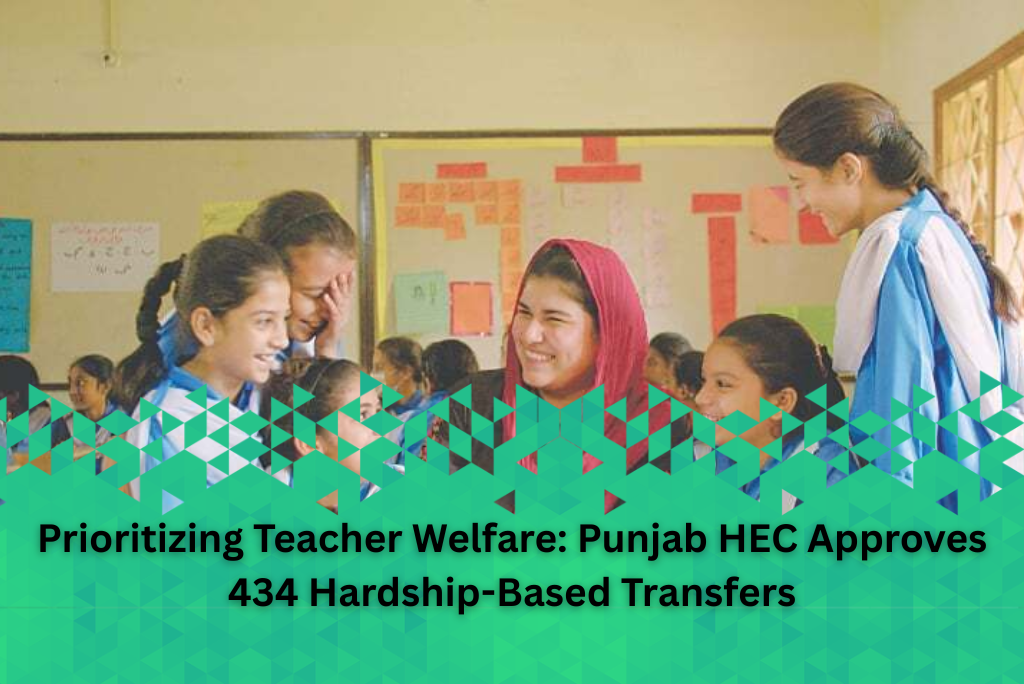
Prioritizing Teacher Welfare: Punjab HEC Approves 434 Hardship-Based Transfers
In a major administrative move aimed at facilitating the provincial teaching faculty, the Higher Education Commission Punjab (HEC) has officially issued the college teacher transfer notification for hundreds of educators across the province. A total of 434 college teachers—including both lecturers and assistant professors—have been reassigned to new stations exclusively on humanitarian, medical, and family-related grounds.
According to official sources, this extensive HEC Punjab teacher transfer cycle was executed following formal approval from the provincial Minister for Education. The initiative is being hailed as a critical step toward mitigating the personal vulnerabilities of public sector educators while simultaneously ensuring structural balance within the province's higher education infrastructure.
Breakdown of the Hardship Transfers
The latest administrative directives reveal a structured efforts by the Higher Education Commission Punjab to balance gender representation and accommodate emergency humanitarian requests. The strategic redistribution of the teaching staff includes:
| Faculty Cadre Affected | Male Faculty Members | Female Faculty Members | Total Transferred |
| Lecturers & Assistant Professors | 167 | 267 | 434 |
The statistical data highlights a higher concentration of female faculty members receiving reassignments. Departmental officials noted that a vast majority of these female educators had applied under specific humanitarian criteria, such as the dynamic wedlock policy, single-parent responsibilities, or caregiving duties for immediate family members.
Understanding the "Hardship Basis" Criteria
Public sector employment transfers in Pakistan are frequently constrained by strict structural regulations and tenure policies. However, the clause for hardship basis transfers Punjab serves as a vital safety valve for civil servants facing extreme adversity. According to the commission's operational guidelines, the 434 approvals fell under three main pillars:
1. Severe Medical Ground & Health Issues
A significant portion of the applicants presented authenticated medical documentation detailing chronic illnesses, severe physical disabilities, or the need for ongoing specialized therapies (such as chemotherapy or dialysis) only available in specific urban centers like Lahore, Multan, or Rawalpindi. Educators suffering from debilitating spinal conditions or cardiovascular disorders were prioritized to minimize taxing daily commutes.
2. Family Reintegration and the Wedlock Clause
For married female educators, operating in a separate district from their spouse poses massive psychological and economic strain. The HEC Punjab teacher transfer prioritized merging families under the provincial wedlock policy. Additionally, single parents, divorced individuals, and widowed faculty members requesting transfers to their native districts for family support networks were heavily favored during this scrutiny cycle.
3. Acute Circumstantial Hardship
This category addressed unique, urgent crises, such as the sudden death of a primary caregiver, family dependency issues, or instances where safety and logistical threats compromised the teacher's ability to perform their duties objectively.
The Strategic Shift to Digital Governance
The completion of this transfer cycle marks another successful deployment of Punjab's modernized e-transfer ecosystem. Historically, public sector teacher transfers were notorious for administrative red tape, arbitrary delays, and vulnerability to political nepotism.
To rectify these systemic inefficiencies, the government transitioned to a centralized e-Transfer framework managed through a dedicated secure portal. While general transfers are automated based on mathematical merit matrices, the hardship basis transfers Punjab undergo a specialized hybrid evaluation.
This meticulous multi-tiered vetting framework guarantees that only authentic cases bypass standard rotational tenure metrics. The issuance of the final college teacher transfer notification is fully digitalized, with QR-coded orders dispatched instantly to the applicants to eliminate bureaucratic delays.
Impact on Punjab's Higher Education System
Beyond providing personal relief to the teaching community, this comprehensive lecturer transfer Punjab campaign plays a vital role in optimizing institutional performance. When educators grapple with unmanageable personal or health crises, institutional morale drops, which directly correlates with rising employee absenteeism and declining academic output.
By systematically addressing these deep-rooted domestic anxieties, the provincial government aims to achieve several structural improvements across public sector colleges:
-
Minimized Absenteeism: Placing teachers closer to their medical care facilities or immediate families naturally stabilizes daily attendance patterns.
-
Optimized Teacher-to-Student Ratios: The reassignments assist the commission in tactically filling unexpected vacancies in rural or semi-urban colleges without relying on forced postings.
-
Enhanced Classroom Focus: Resolving intense domestic hardships allows educators to channel their complete focus back into lecturing and scholastic research.
Official Stance from the Education Ministry
Senior representatives from the Higher Education Commission Punjab have emphasized that these measures balance compassion with strict administrative merit.
With the official notifications now fully dispatched, the transferred lecturers and assistant professors are directed to complete their relieving and joining protocols via the digital portal within the mandated timeframe. This ensures a seamless transition that avoids any disruption to ongoing college academic terms.







Share your comments & questions here
No comments yet. Be the first to comment!