




 Home
Home
 Education
 Technology
 Relationship
 History
 Business
 Career
 Religion


.jpg)
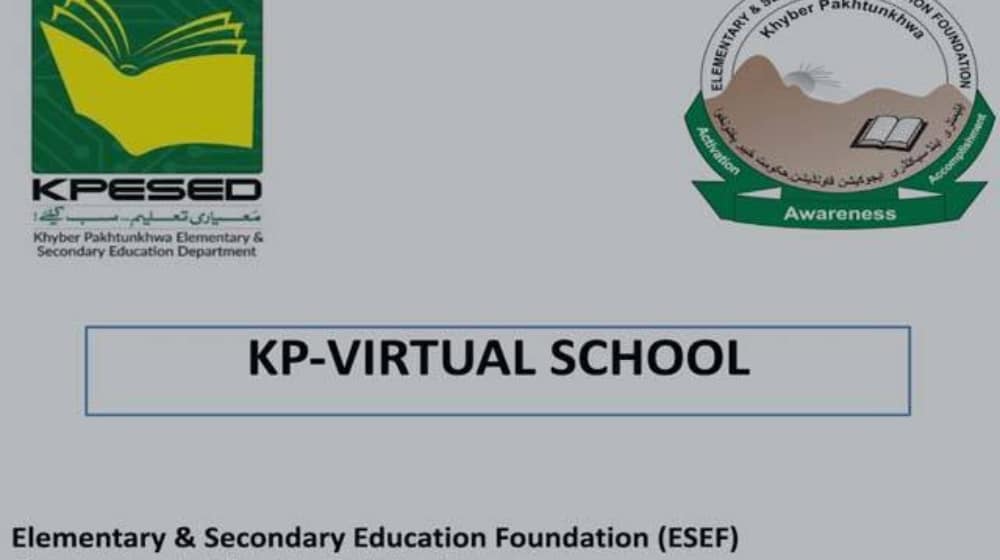
KP Launches First Virtual School with AI Teacher: A New Era for Pakistani Education
In a landmark decision for educational technology in Pakistan, Khyber Pakhtunkhwa (KP) has officially launched the country’s first public sector virtual school with an AI teacher. The initiative, approved by Chief Minister Sohail Afridi, aims to modernize learning across the province, especially for students in remote areas, overseas Pakistanis, and out-of-school children.
The move positions KP as a pioneer in EdTech innovation within Pakistan, leveraging artificial intelligence to bridge long-standing gaps in educational access and quality.
CM Sohail Afridi Approves AI Education Authority
Chairing a high-level meeting of the elementary and secondary education department, Chief Minister Sohail Afridi not only greenlit the virtual school project but also granted in-principle approval to establish an AI Education Authority. This body will oversee the integration of artificial intelligence into the province’s academic framework.
Officials have been directed to complete all legal and administrative formalities swiftly. The establishment of a dedicated authority signals a long-term commitment to AI-driven learning, moving beyond pilot projects into systemic change.
Virtual Students Granted Regular Status
One of the most groundbreaking aspects of the policy is the official recognition of virtual learners. Students enrolled through the virtual school including overseas Pakistanis and children who have never attended a physical classroom will be granted the status of regular students.
This provision ensures that distance learning is no longer seen as a secondary option. It allows these students to appear in board examinations, receive official transcripts, and transfer credits just like their peers in traditional schools.
Pilot Phase Already Underway with 46 Schools
According to education department officials, the project has already entered its pilot phase. A total of 46 government schools have been transitioned to an online education system. Of these:
-
33 schools are located in settled districts of KP.
-
13 schools are in the newly merged tribal districts (formerly FATA).
Authorities have outlined ambitious expansion plans, aiming to convert an additional 175 government schools into virtual institutions in the next phase. This rapid scaling reflects the province’s confidence in the model.
Central Digital Teaching Studio & Live Classes
At the heart of the initiative is a central digital teaching studio equipped for live interactive classes and lecture recordings. This studio serves as the broadcast hub where AI-generated lessons and human-led sessions are produced and streamed to students across the province.
The studio allows for two-way interaction, enabling students to ask questions in real time. Recorded lectures are stored in a cloud-based library, accessible anytime—a crucial feature for learners in areas with intermittent internet connectivity.
AI Teacher: Subjects, Languages, and 24/7 Availability
The most talked-about feature of the KP virtual school is its AI-powered teacher. Currently, the AI system is teaching five core subjects:
-
English
-
Mathematics
-
Physics
-
Chemistry
-
Biology
To ensure inclusivity, the AI teacher operates 24/7 in three languages: Urdu, English, and Pashto. This multilingual capability is a game-changer for Pashto-speaking students in merged districts who previously faced language barriers in digital content.
The AI system enables personalized learning by adapting to each student’s pace. It identifies weak areas, offers remedial exercises, and reduces teachers’ workload by handling repetitive tasks like grading and attendance tracking.
Project Cost: Rs153.8 Million for a Smarter Future
The total approved cost of the virtual school project stands at Rs153.8 million. A significant portion Rs 44.85 million has been allocated exclusively for establishing a tele-education hub, which includes the digital studio, servers, and backup connectivity systems.
Given the scale of the initiative (reaching 46 schools initially, with plans for 175 more), the budget is remarkably lean. Officials attribute the cost efficiency to the use of open-source AI models and existing government infrastructure.
A Game-Changer for Remote Areas and Out-of-School Children
Officials describe the initiative as a game-changer, particularly for students in far-flung areas like Upper Chitral, Kohistan, and North Waziristan. Many of these regions suffer from a shortage of qualified teachers, especially for science and mathematics.
With the virtual school with AI teacher, a student in a remote village can receive the same quality of instruction as someone in Peshawar. Moreover, out-of-school children estimated at over 2 million in KP now have a flexible, cost-free pathway back into education.
Challenges and the Road Ahead
While the project is historic, challenges remain. Reliable electricity and internet connectivity in merged districts need continuous improvement. Teacher training for hybrid classrooms is another priority. However, with the proposed AI Education Authority, KP has created a governance structure to address these issues systematically.
Conclusion: A Blueprint for Pakistan’s Digital Education Future
KP’s launch of Pakistan’s first public sector virtual school with an AI teacher is not just a provincial achievement it is a national blueprint. If successful, this model could be replicated in Punjab, Sindh, Balochistan, and at the federal level.
By combining AI personalization, multilingual access, and regular student status for virtual learners, KP has addressed three core barriers to education: quality, language, and recognition. The world is watching, Pakistan is finally ready to teach.







Share your comments & questions here
No comments yet. Be the first to comment!