









9th Class Punjabi Optional Book Punjab Board New Syllabus PDF
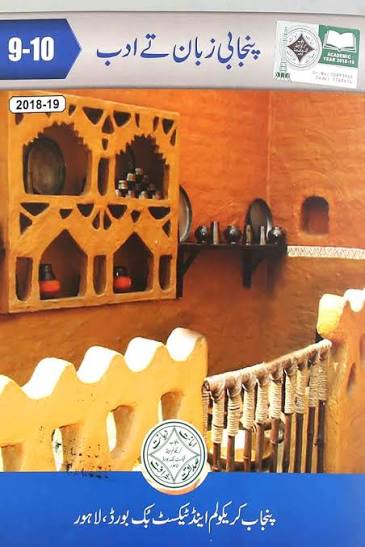
9th Class Punjabi Optional Book (Urdu Medium)
Urdu MediumThe 9th class Punjabi ikhtiari book is the optional Punjabi textbook published by the Punjab Textbook Board (PCTB) for students who choose Punjabi as an elective subject in matric. It covers poetry, prose, and grammar, and is followed by all BISE boards across Punjab, including Lahore, Gujranwala, Multan, Faisalabad, Rawalpindi, and Sargodha.
What Does "Ikhtiari" Mean in 9th Class Punjabi?
In the Punjab matriculation system, students study a mix of compulsory (lazmi) and optional (ikhtiari) subjects. Punjabi ikhtiari is one of the elective choices available alongside subjects like Computer Science or General Science. Students who pick it study Punjabi as a full subject — with its own textbook, syllabus, and exam paper — rather than as a passing familiarity with the language.
This is different from the Punjabi taught informally in earlier classes. At the 9th class level, ikhtiari Punjabi is structured, graded, and counts toward the final matric result just like any other subject.
9th Class Punjabi Ikhtiari Book – Chapter-Wise Overview
The textbook is divided into three broad sections, a structure that's fairly standard across Punjab board Punjabi books:
Poetry Section
This portion introduces students to classical and modern Punjabi poets. Students are expected to understand the meaning, central theme, and literary devices used in each poem, not just memorize verses.
Prose Section
The prose chapters include essays, short stories, and narrative pieces written by well-known Punjabi writers. These chapters build reading comprehension and are usually a strong scoring area if studied with understanding rather than rote memorization.
Grammar Portion
Grammar covers sentence structure, parts of speech, translation exercises, and letter or application writing in Punjabi. This section is often where students lose easy marks simply because it's treated as less important than poetry or prose — worth giving equal attention.
9th Class Punjabi Book Urdu Medium
| Chapters | Chapter Name |
Urdu Medium |
|
|---|---|---|---|
| 1 | Chapter-1 | View/Download | |
| 2 | Chapter-2 | View/Download | |
| 3 | Chapter-3 | View/Download | |
| 4 | Chapter-4 | View/Download | |
| 5 | Chapter-5 | View/Download | |
| 6 | Chapter-6 | View/Download | |
| 7 | Chapter-7 | View/Download | |
| 8 | Chapter-8 | View/Download | |
| 9 | Chapter-9 | View/Download | |
| 10 | Chapter-10 | View/Download | |
| 11 | Chapter-11 | View/Download | |
| 12 | Chapter-12 | View/Download | |
| 13 | Chapter-13 | View/Download | |
| 14 | Chapter-14 | View/Download | |
| 15 | Chapter-15 | View/Download | |
| 16 | Chapter-16 | View/Download | |
| 17 | Chapter-17 | View/Download | |
| 18 | Chapter-18 | View/Download | |
| 19 | Chapter-19 | View/Download | |
| 20 | Chapter-20 | View/Download | |
| 21 | Chapter-21 | View/Download | |
| 22 | Chapter-22 | View/Download | |
| 23 | Chapter-23 | View/Download | |
| 24 | Chapter-24 | View/Download | |
| 25 | Chapter-25 | View/Download | |
| 26 | Chapter-26 | View/Download | |
| 27 | Chapter-27 | View/Download | |
| 28 | Chapter-28 | View/Download | |
| 29 | Chapter-29 | View/Download | |
| 30 | Chapter-30 | View/Download | |
| 31 | Chapter-31 | View/Download | |
| 32 | Chapter-32 | View/Download | |
| 33 | Chapter-33 | View/Download | |
| 34 | Chapter-34 | View/Download | |
| 35 | Chapter-35 | View/Download | |
| 36 | Chapter-36 | View/Download | |
| 37 | Chapter-37 | View/Download | |
| 38 | Chapter-38 | View/Download | |
| 39 | Chapter-39 | View/Download | |
| 40 | Chapter-40 | View/Download | |
| 41 | Chapter-41 | View/Download | |
| 42 | Chapter-42 | View/Download | |
| 43 | Chapter-43 | View/Download | |
Punjabi Ikhtiari Book PDF Download
Since the book is published by the Punjab Textbook Board, it's available as a free PDF rather than something students need to purchase separately in most cases. When downloading, it's worth checking that the copy matches the current academic session, since PCTB does periodically revise textbook content, and using an outdated edition can mean missing added or removed chapters.
Punjabi Ikhtiari vs Punjabi Lazmi – What's the Difference?
A common point of confusion is how ikhtiari Punjabi differs from the Punjabi taught as a compulsory subject in earlier grades. The short answer: at the 9th class level, there is no separate "Punjabi lazmi" subject — Urdu and English are the compulsory languages, while Punjabi appears only as an elective. So when people search for "Punjabi lazmi vs ikhtiari," they're usually really asking how Punjabi as an elective compares to other elective options like Computer Science, not to a compulsory Punjabi course.
Paper Pattern and Marks Distribution
Like other elective subjects in the Punjab board system, the Punjabi ikhtiari exam paper is typically split between objective (multiple-choice) and subjective (short and long answer) portions, with weightage given to poetry, prose, and grammar roughly in proportion to how much space each occupies in the textbook. Exact mark splits can vary slightly by board and by year, so it's worth checking the current paper scheme released by your specific BISE board (Lahore, Gujranwala, Multan, etc.) closer to exam time.
Who Should Choose Punjabi as an Elective?
Punjabi ikhtiari tends to suit students who are comfortable reading and writing in the language and who prefer literature-based subjects over technical ones. It's a reasonably scoring option for students with a strong grasp of Punjabi, though students weighing it against Computer Science should factor in their own interests and future subject choices, not just perceived ease.
5. FAQs
What does "ikhtiari" mean in the 9th class Punjabi subject context?
Ikhtiari means "optional" or "elective." It indicates that Punjabi is a subject students choose rather than one required of everyone.
Is the Punjabi ikhtiari book the same across all Punjab boards?
Yes. Since it's published by the Punjab Textbook Board, the same book and syllabus apply across BISE Lahore, Gujranwala, Multan, Faisalabad, Rawalpindi, Sargodha, and other Punjab boards.
How can I download the 9th class Punjabi ikhtiari book PDF?
It's available for free through the Punjab Textbook Board's official resources and various educational platforms. Make sure the edition matches your current academic year.
Who publishes the 9th class Punjabi ikhtiari textbook?
The Punjab Curriculum and Textbook Board (PCTB), formerly known as the Punjab Textbook Board.
How many chapters are in the 9th class Punjabi ikhtiari book?
The book is organized into poetry, prose, and grammar sections rather than a single flat chapter count; the exact number can vary slightly between editions.
Is Punjabi ikhtiari a scoring subject for matric students?
Many students find it manageable if they're comfortable with the language, since it's largely comprehension and writing-based rather than heavily technical.
What is the difference between Punjabi lazmi and Punjabi ikhtiari?
At the 9th class level, there isn't a separate compulsory Punjabi subject — Punjabi only appears as an elective, so the real comparison is between Punjabi and other elective options.
Can students choose Punjabi ikhtiari instead of Computer Science in 9th class?
Yes, in schools where both are offered as elective options, students can choose either based on their interest and strengths.
What topics are covered in the Punjabi ikhtiari syllabus?
Poetry (classical and modern poets), prose (essays and stories), and grammar (sentence structure, translation, and writing tasks).
Is the syllabus the same every year or does it change?
The Punjab Textbook Board periodically revises textbooks, so it's worth confirming you have the current session's edition rather than assuming continuity.
What is the paper pattern for Punjabi ikhtiari?
It typically includes both objective and subjective portions, with marks distributed across poetry, prose, and grammar. Exact splits should be confirmed with your board's current paper scheme.
Are past papers available for Punjabi ikhtiari 9th class?
Yes, most BISE boards publish past papers for elective subjects, which are useful for understanding question patterns.
Can private or self-study students opt for Punjabi ikhtiari?
Generally yes, though eligibility for private candidates depends on each board's specific rules, which are worth checking directly with the relevant BISE board.








Related Disciplines of 9th Class




More on 9th class
