









9th Class English Grammar Book Punjab Board New Syllabus PDF
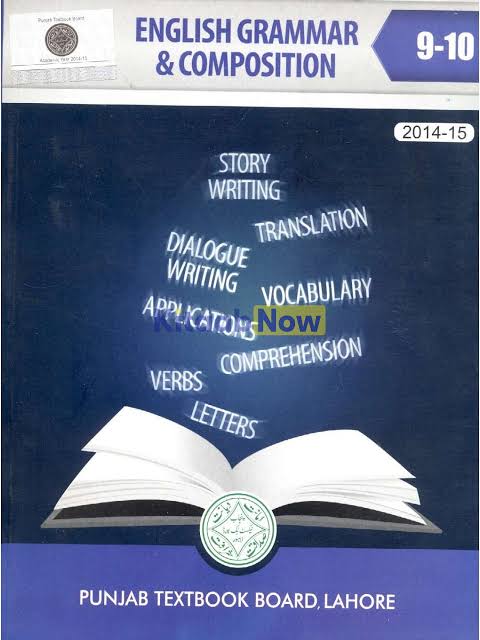
9th Class English Grammar Book (English Medium)
English Medium
The 9th class English grammar book covers core topics like parts of speech, tenses, active and passive voice, direct and indirect narration, and punctuation. It forms a major part of the English paper for Matric (SSC Part-I) students across Pakistani boards, and understanding it well directly affects the grammar section's marks in the annual exam.
Grammar makes up a fixed, predictable portion of the class 9 English paper, which is exactly why so many students search for clear, chapter-wise notes instead of flipping through the entire textbook. This guide breaks down what the book actually contains, how it's structured, and how to use it efficiently for exam preparation.
What the 9th Class English Grammar Portion Covers
The grammar section for class 9 English, prescribed by provincial textbook boards such as the Punjab Textbook Board (PTB) and its counterparts in Sindh and Khyber Pakhtunkhwa, builds directly on what students studied in class 8. It's not a separate book in most cases — grammar is usually a defined portion within the English course book, though many students and teachers refer to it informally as the "grammar book" because it's taught and revised as its own unit.
The core areas include:
- Parts of Speech – nouns, pronouns, verbs, adjectives, adverbs, prepositions, conjunctions, and interjections
- Tenses – present, past, and future forms, along with their correct usage in sentences
- Active and Passive Voice – converting sentences between the two and recognizing when each is appropriate
- Direct and Indirect Narration – reporting speech accurately, including changes in tense, pronouns, and time expressions
- Punctuation and Sentence Correction – capitalization, commas, full stops, and fixing grammatically incorrect sentences
These topics aren't isolated. A question on narration, for instance, often depends on a solid grasp of tenses first, which is why teachers usually recommend covering the book in the order it's presented rather than jumping around.
9th Class English Grammar PDF Book Punjab Board Chapter Wise
| Chapters | Chapter Name | English Medium | |
|---|---|---|---|
| 1 | Vocabulary | View/Download | |
| 2 | Forms of Verb | View/Download | |
| 3 | Tenses | View/Download | |
| 4 | Parts of Speech | View/Download | |
| 5 | Story Writing | View/Download | |
| 6 | Letters, Applications and Invitations | View/Download | |
| 7 | Dialogue Writing | View/Download | |
| 8 | Comprehension of a Passage | View/Download | |
| 9 | Paragraph Writing | View/Download | |
| 10 | Writing an Essay | View/Download | |
Parts of Speech: The Foundation
Every other grammar topic in class 9 builds on parts of speech. Students need to identify and correctly use the eight parts of speech, with particular attention to distinguishing between similar categories — like adjectives versus adverbs, or prepositions versus conjunctions — since exam questions often test this distinction directly rather than asking for a plain definition.
Tenses: Where Most Marks Are Lost
Tenses tend to be the trickiest part of the grammar portion, mainly because English tense structures don't map neatly onto Urdu sentence patterns. The book covers all three main tenses with their four aspects (simple, continuous, perfect, and perfect continuous), and exam papers typically ask students to identify a given tense or convert a sentence from one tense to another. Practicing with varied example sentences, rather than memorizing rules in isolation, tends to help more here than anywhere else in the grammar syllabus.
Active and Passive Voice
This topic asks students to rewrite sentences by shifting the subject and object, adjusting the verb form accordingly. The class 9 syllabus generally sticks to simple and continuous tenses for voice conversion, keeping it a manageable topic once the underlying tense rules are clear. A common mistake is forgetting to adjust the "by" phrase or the helping verb correctly when converting.
Direct and Indirect Narration
Narration combines several earlier concepts — tense, pronouns, and punctuation — into one question type. Students are expected to convert reported speech accurately, which includes shifting tense backward, adjusting pronouns to match the new subject, and changing time and place references (like "today" becoming "that day"). This is often considered the most layered topic in the book because a small error in tense or pronoun can affect the whole answer.
Punctuation and Sentence Correction
This section is comparatively shorter but still scoring, covering capitalization rules, the correct use of commas and full stops, and identifying/correcting grammatically flawed sentences. It's a good area to revise quickly before the exam since the rules are fixed and don't require extensive practice compared to tenses or narration.
How Grammar Fits Into the English Paper Pattern
Grammar questions in the class 9 English annual exam are typically a fixed, separate section rather than mixed into essay or comprehension questions. Boards generally test grammar through short conversion or identification questions — for example, converting a sentence's tense, voice, or narration, or correcting a given sentence. Because the question types repeat in a predictable pattern year after year, practicing past paper-style grammar questions is often more useful than reading grammar rules in isolation.
Punjab, Sindh, and KPK: Are the Grammar Topics the Same?
The core grammar concepts — parts of speech, tenses, voice, narration, and punctuation — remain broadly consistent across provincial boards, since they follow the national curriculum framework for English. What can differ slightly is the textbook's example sentences, exercise formatting, and the specific board's past paper style. Students should always confirm which textbook board's book they're using (PTB, Sindh Textbook Board, or KPK Textbook Board) since exercise numbering can vary even when the underlying grammar rules don't.
FAQs
What topics are included in the 9th class English grammar book?
The main topics are parts of speech, tenses, active and passive voice, direct and indirect narration, and punctuation with sentence correction.
Is the 9th class English grammar book the same for all provincial boards in Pakistan?
The core grammar concepts are broadly the same, but the textbook itself may differ slightly by province — Punjab, Sindh, and KPK each publish their own board-specific version with variations in example sentences and exercises.
Which grammar topic is most difficult for class 9 students?
Tenses and narration are generally considered the most challenging, since narration depends on a correct understanding of tense changes and pronoun shifts.
How is grammar tested in the 9th class English exam?
It's usually tested through a separate section with short questions asking students to convert sentences (tense, voice, or narration) or correct grammatically flawed sentences.
Do I need to memorize grammar rules, or practice sentences?
Practicing sentence conversion and correction is more effective than memorizing rules alone, since exam questions are application-based rather than definition-based.
Is the grammar portion a separate book or part of the English course book?
In most boards, grammar is a defined section within the main English textbook rather than a completely separate book, though it's often studied and referred to as its own unit.
What should I revise last before the exam?
Punctuation and sentence correction rules are quick to revise and are best left for final review, since they require less practice time than tenses or narration.
9th Class Books Punjab Board








Related Disciplines of 9th Class




More on 9th class
