




 Home
Home
 Studyabroad
 Guides
 Consultants
 Top Scholarship



Law & Legal Fellowship South Asia 2026: An Opportunity for Emerging Legal Professionals
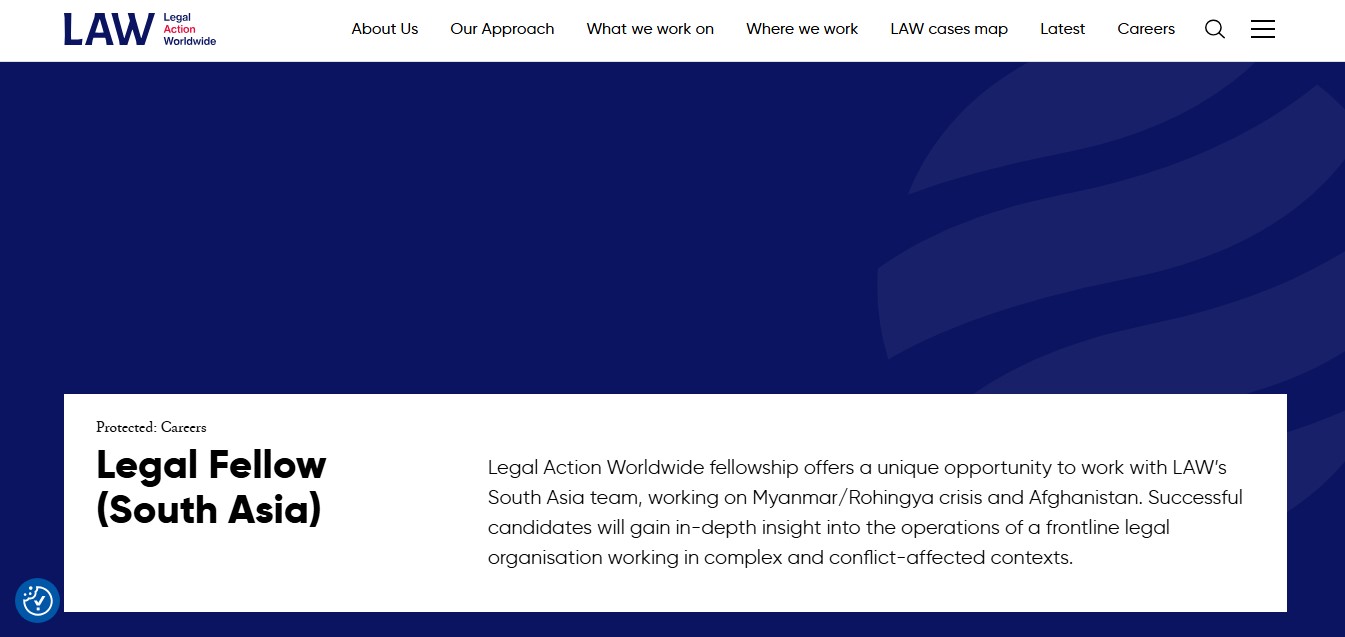
The Law & Legal Fellowship South Asia 2026 offers an important professional development opportunity for talented individuals interested in law, legal research, human rights, governance, and justice-related issues across the South Asian region. The fellowship is designed to support emerging legal professionals and researchers by providing opportunities to strengthen their knowledge, expand their professional networks, and engage with important legal and social challenges.
South Asia is home to diverse legal systems and complex social issues that require informed legal professionals capable of understanding both national and regional perspectives. Fellowship programs of this nature provide participants with an opportunity to learn from experienced professionals while developing practical skills that can contribute to stronger legal institutions and more inclusive societies.
For law students, early-career legal professionals, researchers, and individuals working in related fields, the fellowship can provide valuable exposure to regional legal discussions and professional networks.
About the Law & Legal Fellowship South Asia
The fellowship focuses on strengthening the capacity of emerging professionals working in law and related areas. Participants can gain exposure to contemporary legal issues while developing a deeper understanding of the relationship between law, society, governance, and human rights.
The program is particularly relevant to individuals who want to contribute to legal reform, public policy, access to justice, and institutional development. By connecting participants with peers and experienced professionals, the fellowship can create opportunities for knowledge sharing and long-term collaboration.
South Asia's changing political, economic, and social landscape makes legal expertise increasingly important. Professionals with strong analytical and research skills can play an important role in addressing challenges related to justice, equality, governance, and the protection of rights.
Key Benefits of the Fellowship
The Law & Legal Fellowship South Asia 2026 provides participants with opportunities that can strengthen both their academic and professional profiles. Depending on the fellowship arrangements, selected participants may receive support related to participation, training, networking, and professional development.
The major advantages of participating in a regional legal fellowship include exposure to legal experts, opportunities to build professional connections, enhanced research capabilities, and a better understanding of regional legal challenges.
Participants can also gain experience communicating their ideas, analyzing complex legal questions, and engaging with professionals from different backgrounds. These skills can be particularly valuable for individuals planning careers in legal practice, academia, research, policy, human rights, or public service.
Areas of Interest
The fellowship is relevant to a broad range of legal and policy-related areas. Participants may explore topics connected with human rights, constitutional law, international law, access to justice, governance, public policy, gender and equality, legal reform, and social justice.
The interdisciplinary nature of contemporary legal work means that knowledge of economics, politics, technology, social sciences, and international relations can also be valuable. Applicants with an interest in connecting legal knowledge with broader social challenges may find the fellowship particularly relevant.
Eligibility Criteria
The fellowship is intended for motivated individuals with an academic or professional interest in law and related disciplines. Eligibility requirements may vary according to the specific fellowship category and applicant background.
Applicants should carefully review the official requirements before submitting an application. Candidates may be expected to demonstrate academic achievement, professional experience, research interests, or involvement in legal and social issues.
A strong understanding of the fellowship's objectives is also important. Applicants should clearly explain their motivation for participating and how the opportunity connects with their academic or professional goals.
Required Application Materials
Applicants should prepare their supporting documents before beginning the application process. Depending on the requirements, these may include an updated CV, academic records, statement of purpose, motivation letter, recommendation letters, and other relevant materials.
A strong application should clearly communicate the candidate's background, achievements, interests, and future objectives. Applicants should also demonstrate how their participation could contribute to their professional development and to the broader legal community.
Carefully reviewing the application instructions can help candidates avoid missing important information or submitting incomplete materials.
Application Process
Interested candidates should submit their applications through the designated application platform before the stated deadline. Applicants should review the eligibility requirements and prepare all supporting materials according to the instructions provided by the fellowship organizers.
The selection process may consider academic qualifications, professional experience, motivation, leadership potential, and the applicant's interest in legal and social issues. Because competitive fellowships receive applications from talented candidates across the region, applicants should ensure that their application presents a clear and convincing profile.
A well-written personal statement can be particularly useful for explaining why the fellowship is important to the applicant's career and how the experience will be used after completion of the program.
Career Development Opportunities
Participation in a legal fellowship can contribute significantly to professional growth. Fellows can develop stronger research, communication, analytical, and networking skills while gaining exposure to new perspectives on regional legal issues.
The professional relationships developed during the fellowship may also create opportunities for future collaboration. Alumni networks can connect participants with lawyers, researchers, academics, policymakers, and civil society professionals working in different parts of South Asia.
For individuals considering careers in legal research, international organizations, human rights institutions, academia, public policy, or legal practice, such exposure can provide valuable long-term benefits.
Why Legal Fellowships Matter in South Asia
Legal professionals have an important role in addressing many of the challenges facing South Asian societies. Issues such as access to justice, equality, governance, human rights, digital regulation, and institutional accountability require professionals who understand both legal principles and their practical application.
Regional fellowship programs help create a community of professionals who can exchange knowledge and develop collaborative approaches to these challenges. By bringing together individuals from different countries and professional backgrounds, such programs can encourage greater understanding and cooperation across the region.
Conclusion
The Law & Legal Fellowship South Asia 2026 provides an opportunity for aspiring and emerging legal professionals to strengthen their expertise, develop professional networks, and engage with important legal and social issues affecting the region.
Candidates with a strong interest in law, legal research, human rights, governance, or public policy should carefully review the official fellowship requirements and prepare their applications well before the deadline. With the right academic and professional preparation, the fellowship can become a valuable step toward a meaningful career in the legal and policy sectors. Apply Now




Related ScholarShips
-
31-Aug-2026
Commonwealth Startup Fellowship 2026-27
-
01-Oct-2026
Harvard Law School Fellowship in the USA 2027-28
-
15-Sep-2026

IIAS Asia in the World Fellowship 2027
-
02-Oct-2026

Microstructure and Defect Control Scholarship 2027 in Australia
-
18-Oct-2026

Biozentrum PhD Fellowships 2026 in Switzerland
-
30-Sep-2026

UNESCO Japan Young Researchers Fellowships Programme 2026
-
21-Aug-2026

WHO Business Operations Internship 2026 in Switzerland
-
31-Oct-2026
University of Melbourne Human Rights Scholarships 2027 in Australia
Share your comments & questions here
No comments yet. Be the first to comment!