




 Jobs Home
 Cities
 Govt Depts
 Comapnies
 Industries
 Professions




New Jobs in Board of Revenue Sindh
- Job posted on
15-Sep-2026
- Number of vacancies
1
-
Last date to apply
30-Sep-2026
- Job location
Karachi
- Job type
Temporary/Contract
- Job status
Full Time
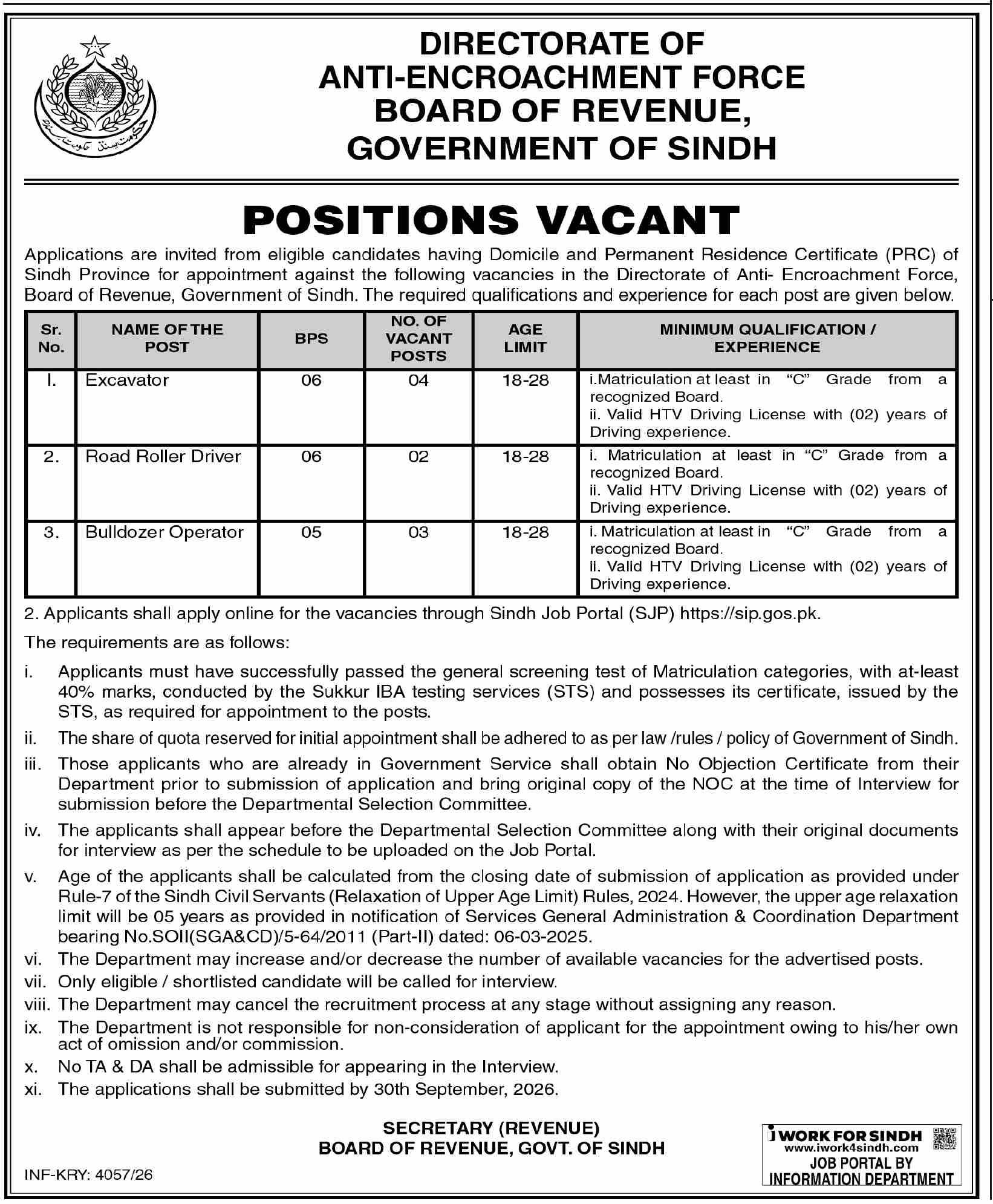
- Job Announced Excavator Driver Buildozer Operator
The Directorate of Anti-Encroachment Force, Board of Revenue, Government of Sindh, invites online applications from Sindh-domiciled eligible candidates for Excavator, Road Roller Driver, and Bulldozer Operator posts (BPS-04 to 06)
- Apply for this job
- Prepare for this job
- Share this job
- Have a question about this job? Ask in the discussion area.
Board of Revenue Sindh: A Comprehensive Guide to Careers and Opportunities
The Board of Revenue Sindh stands as a pivotal institution within Pakistan's provincial administrative framework, primarily responsible for land revenue administration, land records management, and related judicial functions. For job seekers across Sindh and beyond, a career within this esteemed board represents a unique blend of public service, stability, and professional growth. This guide delves into the structure, functions, and the pathways to securing a position within this key government body.
Understanding the Board of Revenue Sindh
Operating under the Government of Sindh, the Board of Revenue is the apex authority for all matters concerning land, agriculture, and revenue within the province. Its mandate extends from the maintenance of crucial land records (known as *fard* or *jamabandi*) to the adjudication of revenue disputes, making it an integral part of rural and urban governance. The board's work directly impacts land ownership, agricultural planning, and urban development, offering employees a chance to contribute meaningfully to the province's socio-economic fabric.
Key Departments and Their Functions
Career opportunities within the Board of Revenue are diverse, spanning several specialized departments:
- Land Revenue Administration:This core department handles the assessment, collection, and management of land revenue. Positions here involve field work, direct interaction with landowners, and the application of revenue laws.
- Record of Rights (Mukhtiarkar / Patwari Circles):Responsible for maintaining and updating land ownership records. Roles in this sector are detail-oriented and require a meticulous understanding of land measurement and documentation.
- Revenue Courts:These are quasi-judicial bodies that settle disputes related to land ownership, tenancy, and revenue. Careers here can be for those with legal acumen, serving as judges or legal assistants.
- Information Technology Wing:With the ongoing digitization of land records (e.g., the Sindh Land Record Management Information System - SLRMIS), IT professionals are in high demand to manage, secure, and modernize these critical databases.
- Administration & Finance:Supports the board's human resources, budgeting, procurement, and general administrative functions, offering roles in management, accounting, and clerical work.
Career Paths and Employment Opportunities
The Board of Revenue Sindh offers a structured career ladder. Employment typically falls into two broad categories:
1. Permanent / Regular Positions
These are government posts advertised through the Sindh Public Service Commission (SPSC) or directly by the Board of Revenue. They offer job security, pensions, and other government benefits. Common entry-level and mid-level positions include:
- Patwari:The frontline revenue official responsible for a specific circle, maintaining land records and assisting in revenue collection.
- Mukhtiarkar / Taluka Revenue Officer:Supervises Patwaris and manages revenue administration at the taluka level.
- Assistant Commissioner (Revenue):A higher-grade position often filled through competitive exams, involving supervisory and judicial functions.
- Research Officer / Land Record Officer:Focuses on policy analysis, record modernization, and technical oversight.
- IT Officer / Database Administrator:Manages the technical infrastructure for digital land records.
2. Contractual & Project-Based Positions
With various donor-funded and provincial projects aimed at land reform and digitization, the board frequently hires experts on a contract basis. These roles may involve:
- Consultantsfor legal, IT, or land management projects.
- Field SurveyorsandData Entry Operatorsfor specific digitization campaigns.
- Trainersto build capacity among existing staff on new systems and laws.
How to Apply for Jobs at the Board of Revenue Sindh
The recruitment process is transparent and merit-based. Follow these steps to navigate your application:
- Stay Updated on Job Advertisements:Regularly check the official website of theSindh Public Service Commission (SPSC)and theGovernment of Sindh's official job portal. Leading educational platforms like Ilmkidunya also aggregate and publish these advertisements.
- Understand the Eligibility Criteria:Each post has specific requirements regarding education (often a Bachelor's or Master's degree in relevant fields like Law, Agriculture, Computer Science, or Arts), age limit, domicile (must be of Sindh province), and sometimes prior experience.
- Prepare for the Selection Process:This usually involves:
- Written Examination:Conducted by SPSC for gazetted posts, testing general knowledge, relevant subject expertise, and English.
- Interview:Shortlisted candidates are called for an interview before a selection committee.
- Skill Test:For IT or clerical positions, a practical computer or typing test may be required.
- Submit a Complete Application:Ensure all required documents—educational certificates, domicile, CNIC, experience letters, and recent photographs—are attested and submitted before the deadline, either online or via postal mail as specified.
Why Choose a Career with the Board of Revenue?
- Impactful Public Service:Contribute directly to a system that secures property rights and supports agricultural development.
- Job Stability:Government positions offer unparalleled security and long-term career progression.
- Comprehensive Benefits:Enjoy attractive salary packages (as per provincial government scales), pensions, medical coverage, and other allowances.
- Diverse Work Environment:Opportunities exist in both urban centers like Karachi and Hyderabad, as well as in rural districts across Sindh.
- Professional Development:Continuous training programs and the challenge of modernizing a centuries-old system provide significant learning opportunities.
Preparing for Success
Aspiring candidates should focus on strengthening their knowledge of theSindh Land Revenue Act, current land administration policies, and basic computer literacy. For judicial posts, a strong foundation in civil and revenue law is essential. Staying informed about the board's ongoing initiatives, such as the SLRMIS, will also provide a competitive edge during interviews.
Last Updated: 2026