




 Home
Home
 National
 International
 Merit list
 Date Sheet
 Result
 Admission
 Study Abroad
.jpg)


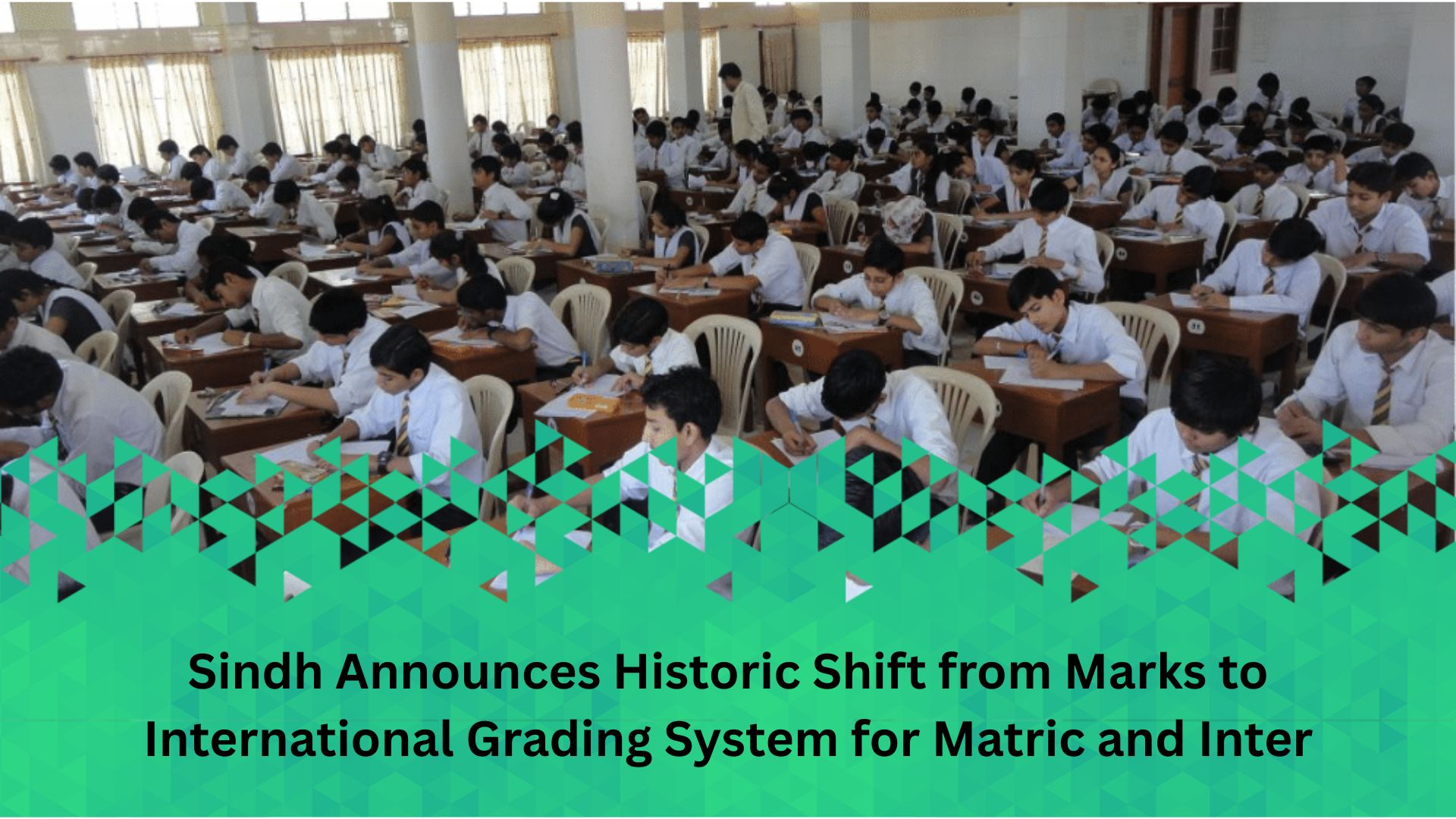
Sindh Announces Historic Shift from Marks to International Grading System for Matric and Inter
The Sindh government has officially abolished the decades old marks-based examination system and approved a new international-standard grading framework for Secondary School Certificate (Matric) and Higher Secondary Certificate (Intermediate) levels . The move, announced by Sindh Minister for Universities and Boards, Ismail Rahoo , marks a decisive step towards modernizing student assessment in line with global best practices.
The policy mandates that students securing below 40 percent will be declared unsuccessful, establishing a clear benchmark for passing. The reform aims to ensure a more fair, transparent, and holistic evaluation of student performance, moving away from the often stress-inducing focus on numerical percentages.
"This is a significant move towards modernizing our examination system," stated Minister Ismail Rahoo. "The provincial government has decided to align our assessment mechanisms with global standards. This new grading system will provide a more comprehensive picture of a student's capabilities and reduce the undue pressure associated with single-mark differentials."
Phased Implementation for a Smooth Transition
Understanding the magnitude of the change, the Sindh government has outlined a carefully structured, phased implementation plan to ensure a smooth transition for students, teachers, and educational institutions.
-
Phase 1 (2026): The new grading system will be first applied to the annual examinations of Class 9th and Class 11th .
-
Phase 2 (2027): Following the initial rollout, the system will be extended to the board examinations for Class 10th (Matric) and Class 12th (Intermediate) .
This two-year phased approach allows stakeholders to adapt to the new framework. Students currently in middle school will be the first cohort to experience the grading system throughout their Matric and Inter education.
The New Grading Structure: A Detailed Breakdown
Under the revised policy, student performance will be categorized into distinct letter grades, each corresponding to a specific percentage range. The approved grading criteria are as follows:
-
A++: 96% to 100%
-
A+: 91% to 95%
-
A: 86% to 90%
-
B++: 81% to 85%
-
B+: 76% to 80%
-
B: 71% to 75%
-
C+: 61% to 70%
-
C: 51% to 60%
-
D (Emerging): 40% to 50%
-
F (Fail): Below 40%
The introduction of an "Emerging" category (D grade) for scores between 40% and 50% is a notable feature, indicating a performance level that meets the minimum passing criteria but requires further development.
Objectives and Expected Impact of the Educational Reform
Minister Rahoo emphasized that the core objective of this reform is to align Sindh’s education system with contemporary international practices, thereby improving overall academic standards and student outcomes within the province.
Key expected benefits include:
-
Reduced Student Stress: By grouping marks into broader bands, the system diminishes the intense competition over single marks, which has long been a source of severe anxiety for students and parents.
-
Fairer Assessment: The grading system is designed to offer a more holistic view of a student's academic performance, mitigating the potential for microscopic marking discrepancies that can impact futures.
-
Global Alignment: This shift brings Sindh in line with assessment systems used in numerous countries, including GCSE and A-Levels (UK), and various systems across the world, facilitating easier evaluation for higher education institutions abroad.
-
Focus on Learning: Educators hope the change will encourage a learning environment that prioritizes conceptual understanding and skill development over rote memorization aimed at maximizing marks.

Educationists Reactions and Forward Path
Initial reactions from the educational community have been mixed but largely optimistic. Many educationists have hailed the decision as long overdue. The marks-based system created an unhealthy, hyper-competitive environment. "A grading system can help students focus more on learning and less on chasing an elusive perfect score."
However, some concerns have been raised regarding implementation. Teachers and board officials will require comprehensive training to apply the new grading criteria consistently across all nine boards of intermediate and secondary education in Sindh. Parents, accustomed to the marks system for generations, will also need clear communication to understand the new report cards.
The Sindh government has assured that detailed guidelines, teacher training workshops, and public awareness campaigns will be rolled out in the coming months to prepare all for the 2026 launch.
A New Chapter for Sindh's Education
The approval of the international grading system represents one of the most significant educational reforms in Sindh in recent decades. By replacing the traditional numerical marks with a standardized grading framework, the provincial government aims to foster a more progressive, equitable, and globally competitive academic environment. As the 2026 implementation date approaches, all eyes will be on the preparation and execution of this transformative policy, which has the potential to reshape the academic trajectories of millions of students in Sindh for years to come.








Share your comments & questions here
No comments yet. Be the first to comment!