




 Home
Home
 National
 International
 Merit list
 Date Sheet
 Result
 Admission
 Study Abroad
.gif)


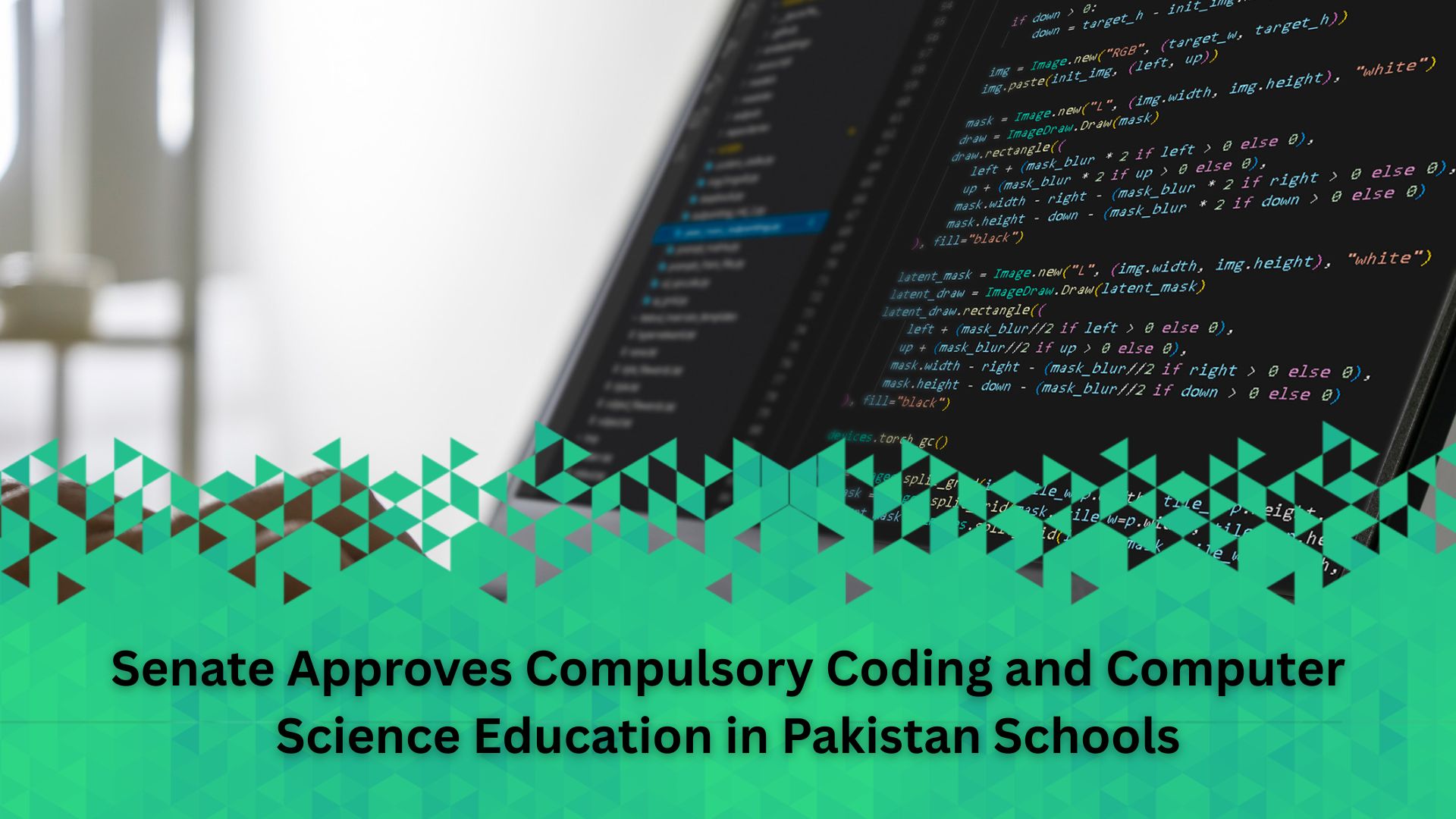
A great decision aimed at bridging the digital divide and future-proofing the nation's youth, the Senate of Pakistan passed the Free and Compulsory Education Amendment Bill 2026 on Friday. The new legislation makes coding compulsory in Pakistani schools , integrating digital literacy and programming into the core curriculum from elementary to high school level.
The bill was presented during a Senate session chaired by Senator Sherry Rehman and represents one of the most significant Pakistan school curriculum reforms in a decade. The amendment to the Right to Free and Compulsory Education Act 2012 mandates that programming and computer education will no longer be electives but essential subjects.
Immediate Effect on National Curriculum
Following the Senate’s approval, the amended law came into immediate effect. Education experts hail the move as a turning point for technology education in Pakistan schools , shifting the focus from rote learning to problem-solving and computational thinking.
Under the new rules, students at the elementary level will be introduced to basic computing logic and digital citizenship, while high school students will delve into coding and programming in schools , including languages such as Python and JavaScript. Lawmakers argued that making computer science mandatory subjects Pakistan has been a necessity, not a luxury, given the global shift toward automation and artificial intelligence.
“This step will help prepare students for the global job market and address the growing importance of technology in modern economies,” lawmakers stated during the session. The integration of programming education in Pakistan is expected to produce a generation of graduates ready for the IT industry, which remains a top sector for foreign remittances and exports.
Enhancing Digital Literacy in Pakistan Schools
A key component of the bill focuses on teacher training and infrastructure. The Ministry of Education has been directed to ensure that even rural institutions receive the resources required to teach mandatory coding subjects in schools . Officials confirmed that public-private partnerships will be leveraged to provide low-cost laptops and smart boards to underprivileged districts.
The push for digital literacy in Pakistan schools is seen as a direct response to the unemployment crisis. The Senate was informed that according to the Pakistan Labor Force Survey 2024-25, approximately 5.9 million people remained unemployed during fiscal year 2024-25, with the unemployment rate exceeding 7%. Senators believe that IT education reforms in Pakistan will lower this figure over the next decade by enabling self-employment and freelance opportunities.
Other Legislative Actions and Economic Updates
In addition to the education bill, the Senate passed the Pakistan Nursing and Midwifery Council bill after a dramatic tied 13-13 vote. Federal Health Minister Mustafa Kamal warned lawmakers that the legislation would lapse if not approved on Friday. Several senators, including Sherry Rehman, had proposed sending the nursing bill to a committee for further review. However, the presiding officer cast the deciding vote in favor of the legislation after the tie.
The upper house also discussed the ongoing financial crisis facing Federal Urdu University. Federal Minister Tariq Fazal Chaudhry reassured the house that staff salaries continued to be paid despite the university’s economic difficulties.
Infrastructure and Governance Reports
In a written reply, the communications ministry informed the Senate that Pakistan’s motorways generated 71 billion rupees in revenue between July 2024 and March 2026, with an impressive 85% collected through the M-Tag electronic toll system, showcasing the country's gradual adoption of digital systems.
The education ministry also revealed that 23 out of 163 public universities in Pakistan were operating without permanent vice chancellors, although appointments are under process. The Senate granted 12 standing committees an additional 60 days to submit pending reports after several committees failed to meet deadlines.
Political Debate on Prisoners’ Rights
The session also saw heated political debate over the treatment of jailed opposition leaders. Senator Azam Swati called for basic human rights for jailed former Prime Minister Imran Khan and his wife. Meanwhile, opposition leader Raja Nasir Abbas criticized the detention of political workers and proposed a bipartisan committee to meet political prisoners and report back to the Senate.
A Forward-Looking Approach
With the passage of the Free and Compulsory Education Amendment Bill 2026 , Pakistan joins a growing list of nations including Estonia, South Korea, and the UK, that have made coding a fundamental part of basic education. As the government moves to implement these IT education reforms in Pakistan , parents and educators anticipate a gradual but necessary shift in the country’s academic culture.
Officials confirmed that textbooks and teacher guides for the new computer science mandatory subjects Pakistan will be rolled out before the next academic cycle, ensuring that the phrase “ coding compulsory in Pakistani schools ” transforms from a headline into a classroom reality by early 2027.






.jpg)

.jpg)

Share your comments & questions here
No comments yet. Be the first to comment!