




 Home
Home
 National
 International
 Merit list
 Date Sheet
 Result
 Admission
 Study Abroad
.gif)


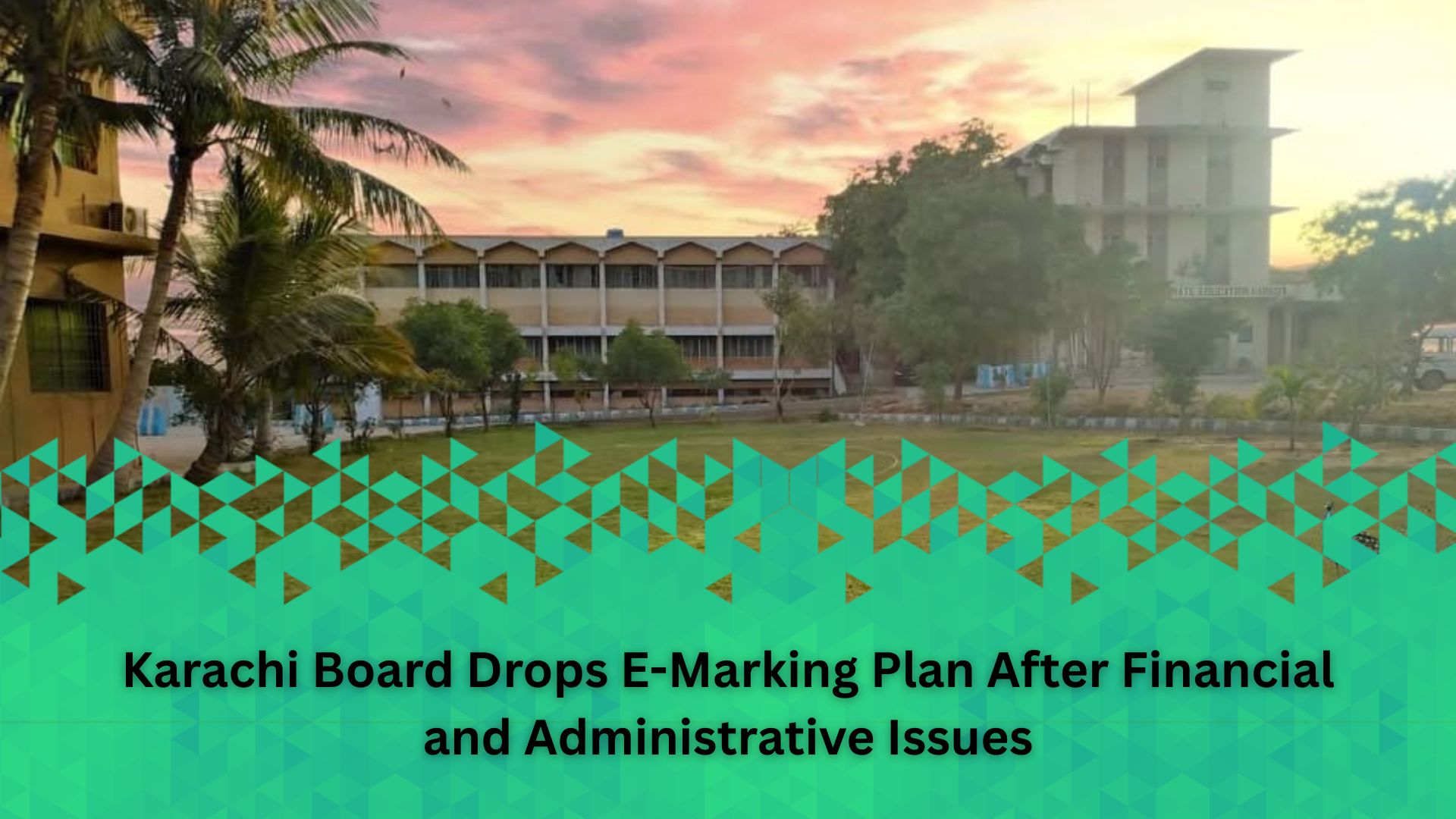
A significant setback to digital reforms in secondary education, the Board of Secondary Education Karachi (BSEK) has decided in principle to abandon its much-awaited e-marking system for this year’s matriculation examinations. The decision follows a series of administrative failures, financial irregularities, and corruption allegations that have plagued the board’s previous management.
The collapse of the Karachi Board e-marking system has left nearly 175,000 matric students in limbo, who will now have their examination papers checked manually instead of through the digital assessment platform originally introduced for Class X mathematics and computer science papers.
Financial Irregularities Come to Light
Sources within the board revealed that special answer sheets worth approximately Rs 25 million had already been printed exclusively for the e-marking project. These sheets, designed for scanning and digital evaluation, cost between Rs 70 and Rs 80 per copy nearly triple the cost of regular answer sheets, which are priced between Rs 28 and Rs 30.
More than 350,000 answer sheets were reportedly printed for just two subjects. However, with the Karachi Board digital marking system never fully implemented, these sheets will now be assessed manually, rendering the entire expenditure a complete loss.
The financial mismanagement did not stop there. Officials confirmed that the board spent around Rs 18 million on procuring software from an IT company hired for the project. Shockingly, that company was never formally engaged to test or operate the software, leaving the system non-functional at the time of need.
Corruption Allegations and Leadership Change
The decision to scrap the digital system comes in the wake of former board chairman Muhammad Hussain Sohu stepping down amid serious Karachi Board corruption allegations . An inquiry into irregularities within the board has since been initiated, with investigative reports pointing to deep administrative lapses.
While an inquiry report recommended the removal of the controller of examinations, and the provincial minister for universities and boards reportedly approved the findings, no official notification has yet been issued. This delay has further complicated efforts to restore accountability within the institution.
Teachers Untrained, Deadline Looms
One of the critical factors behind the failure of the BSEK e-marking controversy was the complete absence of training sessions for teachers. Examiners were never trained to use the digital marking tools, making it impossible to deploy the system even if the software had been operational.
“The board spent millions on procurement but zero on capacity building. Without trained staff, no digital system can work,” a senior BSEK official told reporters on condition of anonymity.
With a June 30 deadline for announcing matric results and a severe shortage of trained examiners, implementing the system for Class X this year has been ruled out entirely. This has resulted in matric papers manual checking Karachi being the only viable option.
What Happens Next? Class IX May Get E-Marking
In a partial move toward recovery, board sources said efforts are now being made to introduce e-marking for Class IX subjects, starting with teacher training workshops. However, no timeline has been fixed, and officials remain cautious given the scale of previous failures.
For now, the BSEK paper checking system reverts to traditional manual methods, raising concerns about delays, human error, and the timely release of results. Parents and students have expressed frustration over the board’s mismanagement, with many calling for a high-level judicial inquiry.

Impact on Students and Results
The manual assessment of 175,000 answer sheets is expected to put immense pressure on examiners, potentially delaying the Karachi matric result updates . However, board officials have assured that every effort will be made to meet the June 30 deadline.
“We understand the anxiety of students and parents. We are deploying additional examiners to ensure results are announced on time,” a BSEK spokesperson said. But critics argue that without a functioning digital system, transparency and speed will remain major challenges.
A Lesson in Digital Governance
The Karachi Board latest news serves as a cautionary tale for other educational boards in Pakistan considering digital transformation. Without transparent procurement, formal contracts, and systematic teacher training, even well-funded projects can collapse, wasting millions of rupees and disrupting academic calendars.
As the board struggles to contain the fallout, students of Class X are left to rely on a manual system that many thought had been phased out. For now, the promise of a digital future in Karachi’s secondary education remains unfulfilled and expensive lessons have been learned at the cost of public money and student convenience.






.jpg)

.jpg)

Share your comments & questions here
No comments yet. Be the first to comment!