




 Home
Home
 National
 International
 Merit list
 Date Sheet
 Result
 Admission
 Study Abroad




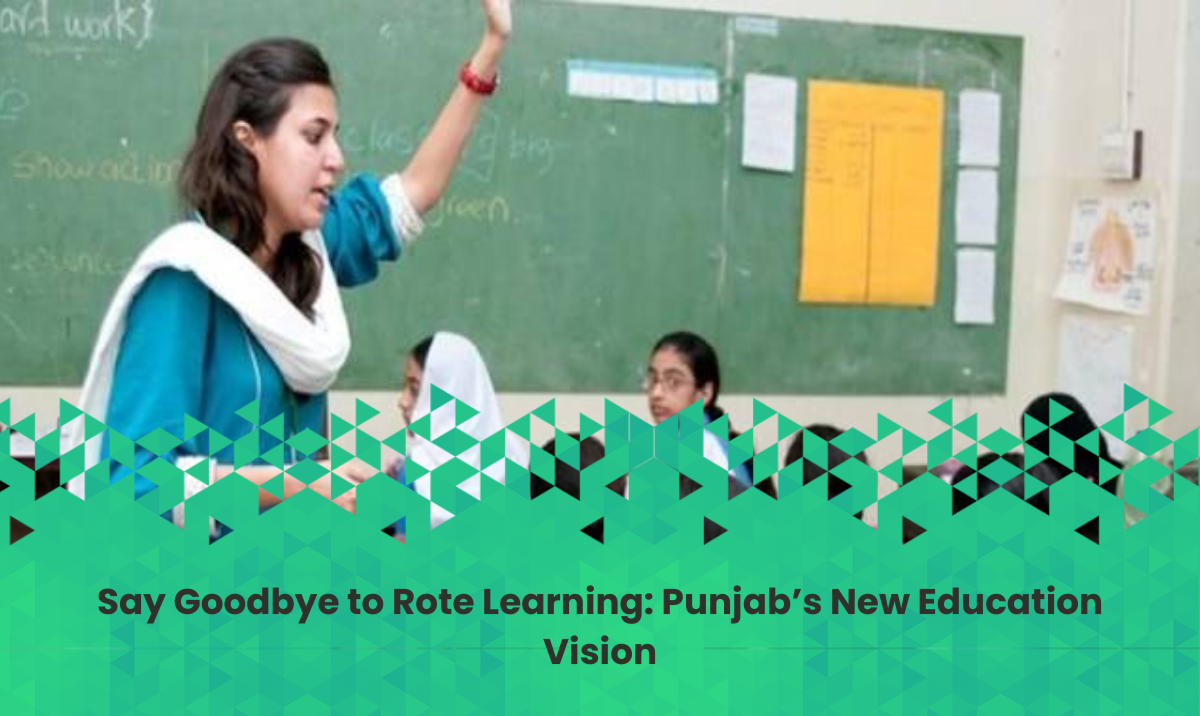
Punjab Announces Major Step Towards Ending the Rote Learning System
The education landscape in Pakistan's largest province is undergoing a historic paradigm shift. In a major move aimed at dismantling decades of rigid academic conditioning, the Punjab education reforms have officially set their sights on replacing the country’s archaic rote learning system with an innovative model centered around activity-based learning and concept-based learning.
This transformative initiative has received widespread applause from key scholastic bodies, most notably the Serving Schools Association Punjab, which views the policy as a long-overdue remedy for a system that has historically prioritized memorization over genuine intellectual growth.
Moving Beyond Memorization: A Vision for Critical Thinking
For generations, classrooms across Pakistan have operated on a single, rigid premise: memorize textbook answers, reproduce them flawlessly on examination sheets, and secure high grades. Critics argue that this cycle does little to prepare students for the complexities of the modern global economy.
Weighing in on the provincial government's announcement, Serving Schools Association Punjab President Raza ur Rehman lauded the initiative, describing it as a vital beacon of hope for educational revitalization.
According to the association, the province's transition towards activity-driven methodologies allows young learners to digest abstract concepts through hands-on classroom experiences. Rather than treating textbooks as sacred scripts meant for blind memorization, students will now be encouraged to apply acquired knowledge directly to their daily lives. This shift aims to foster creativity, problem-solving, and a lifelong curiosity for learning.
The Roadmap: Practical Implementation and Curriculum Overhaul
Educational planners and policy experts emphasize that moving away from conventional teaching requires synchronized adjustments across the entire academic ecosystem—from textbook publishing to student assessment.
Recent updates from educational authorities indicate that structural changes are already underway to support this transition. For instance, curriculum authorities are rolling out specialized, interactive textbooks designed for primary grades, ensuring that concept-based learning takes root right from the foundational stages of a child's schooling.
However, education leaders caution that execution is everything. Raza ur Rehman emphasized that before finalizing and cementing these policies, policymakers must actively consult seasoned education experts, teachers, and parents. Involving grassroots stakeholders ensures that the redesigned curriculum remains practical, culturally grounded, and seamlessly executable in both public and private institutional settings.
Safeguarding Progress: The Call for a "Charter of Education"
One of the greatest historical hurdles facing Pakistan's educational framework has been the lack of policy continuity. With every shift in political administration or change in government, foundational educational strategies are frequently altered, leaving teachers, students, and administrators disoriented.
To counter this chronic instability, the Serving Schools Association Punjab has issued a powerful recommendation to the nation’s political leadership: establish a non-partisan "Charter of Education."
-
Policy Immunity: A unified multi-party agreement would shield critical academic reforms from the whims of shifting political landscapes.
-
Long-Term Strategic Vision: Continuity ensures that multi-year transitions—such as moving from rote memorization to analytical competency—can mature fully without abrupt interruptions.
-
Stakeholder Confidence: Predictable, stable policies encourage private sector investment, teacher training consistency, and parental trust.
By securing a national or provincial consensus across political lines, Punjab could set a gold standard for sustainable educational transformation across the country.
Transforming Pakistan's Educational Future
The shift away from rote learning is much more than a procedural curriculum update; it is an economic and social imperative. In an era defined by rapid technological advancements, artificial intelligence, and global competitiveness, students require dynamic skill sets that static textbooks simply cannot provide.
The joint momentum of government policy, administrative restructuring, and active endorsement from organizations like the Serving Schools Association Punjab creates a viable pathway toward a smarter future. If implemented with transparent assessments, robust teacher training, and unwavering political commitment, this reform could permanently alter how Pakistani students learn, innovate, and apply knowledge on the global stage.







Share your comments & questions here
No comments yet. Be the first to comment!