




 Home
Home
 National
 International
 Merit list
 Date Sheet
 Result
 Admission
 Study Abroad




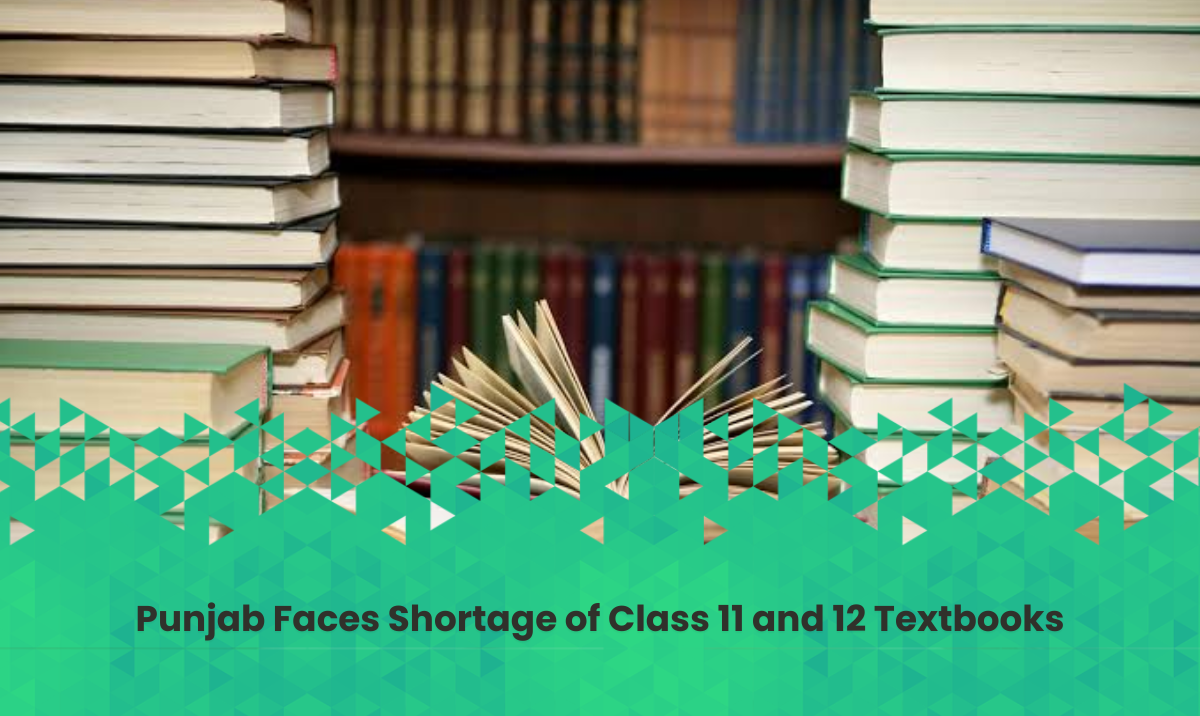
Punjab Faces Shortage of Class 11 and 12 Textbooks Ahead of College Reopening
As higher secondary schools and colleges across Punjab gear up to resume academic activities following the summer break, students and parents are facing an unexpected and alarming hurdle: a severe Class 11 and 12 textbook shortage. With educational institutions scheduled to officially reopen on August 24, the acute scarcity of essential course books in open markets has triggered widespread concern among academic circles, families, and student bodies.
According to insider sources within the publishing and distribution sectors, the primary driver behind this sudden crunch is the heavily restricted allocation of textbooks to the open market during the initial printing and supply phase. Market analysts reveal that publishers were greenlit to print and distribute book volumes equivalent to a mere 30% of total market demand. This massive deficit has left major educational supply hubs—including Lahore’s historic Urdu Bazaar and regional bookstores across major districts—largely empty of crucial intermediate-level curriculum materials.
Understanding the Scope of the Crisis
The timing of this Class 11 and 12 textbook shortage could not be worse. Higher secondary education marks a critical academic turning point for students entering the first and second years of intermediate studies (FSc, ICS, I.Com, and FA). These foundational months dictate how well students grasp advanced concepts in core subjects such as Physics, Chemistry, Biology, Mathematics, and Computer Science.
When students walk into their classrooms on August 24, many will do so empty-handed. Teachers note that instructional pacing is heavily compromised when learners lack physical textbooks. Without immediate access to assigned readings, problem sets, and curriculum guidelines, students fall behind within the first few weeks of the academic calendar—a setback that often ripples through to their final board examinations.
Root Causes of the Textbook Bottleneck
Industry stakeholders point toward a combination of administrative delays, tight printing quotas, and surging paper and production costs as catalysts for the current predicament.
-
Restricted Market Quotas: In the first phase of distribution, regulatory bodies and educational authorities capped the market allocation at approximately 30% of what is normally required.
-
Supply Chain Lags: Because publishing houses were restricted early on, the subsequent cycle required to ramp up printing, bind volumes, and ship them to provincial warehouses has faced severe bottlenecks.
-
High Demand vs. Low Output: While the government frequently relies on recycled "book banks" or phased rollouts for primary and secondary government tiers, intermediate students—particularly those enrolled in private institutions or relying on open-market purchases—must acquire brand-new curriculum copies. The restricted initial print run failed to account for this distinct consumer demographic.
Impact on Students, Parents, and Teachers
The financial and psychological toll on families is mounting. With inflation already placing immense pressure on household budgets, parents are now vulnerable to secondary black-market markups. When basic government-regulated texts disappear from standard storefronts, unscrupulous elements often exploit the scarcity, driving up prices for whatever old or smuggled stock remains available.
Teachers, meanwhile, face an uphill battle. Educators are tasked with diving straight into rigorous intermediate syllabi on day one of the term. Instructors report that lecturing without student access to textbooks turns classrooms into inefficient lecture-only environments where homework assignments and collaborative text-based learning become nearly impossible to execute.
Furthermore, students preparing for highly competitive medical and engineering entrance exams later down the line rely heavily on a strong first-year foundation. Any disruption or delay in covering the basic curriculum during these formative weeks creates long-term academic anxiety.
Urgent Calls for Government Intervention
In light of the impending reopening date, teachers' associations, parent councils, and student federations are urgently calling upon the Punjab School Education Department and relevant board authorities to intervene immediately.
Stakeholders are demanding emergency measures, including:
-
Immediate authorization for an expanded second phase of textbook printing.
-
Direct directives to registered publishers to flood the market with high-demand Class 11 and 12 titles.
-
Strict price-monitoring mechanisms to prevent hoarding and price gouging in major book markets.
As the August 24 reopening approaches, all eyes remain fixed on educational administrators. Swift corrective action is vital to ensure that the educational future of thousands of young scholars in Punjab is not compromised by avoidable supply chain failures.








Share your comments & questions here
No comments yet. Be the first to comment!