



.jpg)
 Home
Home
 National
 International
 Merit list
 Date Sheet
 Result
 Admission
 Study Abroad
.gif)


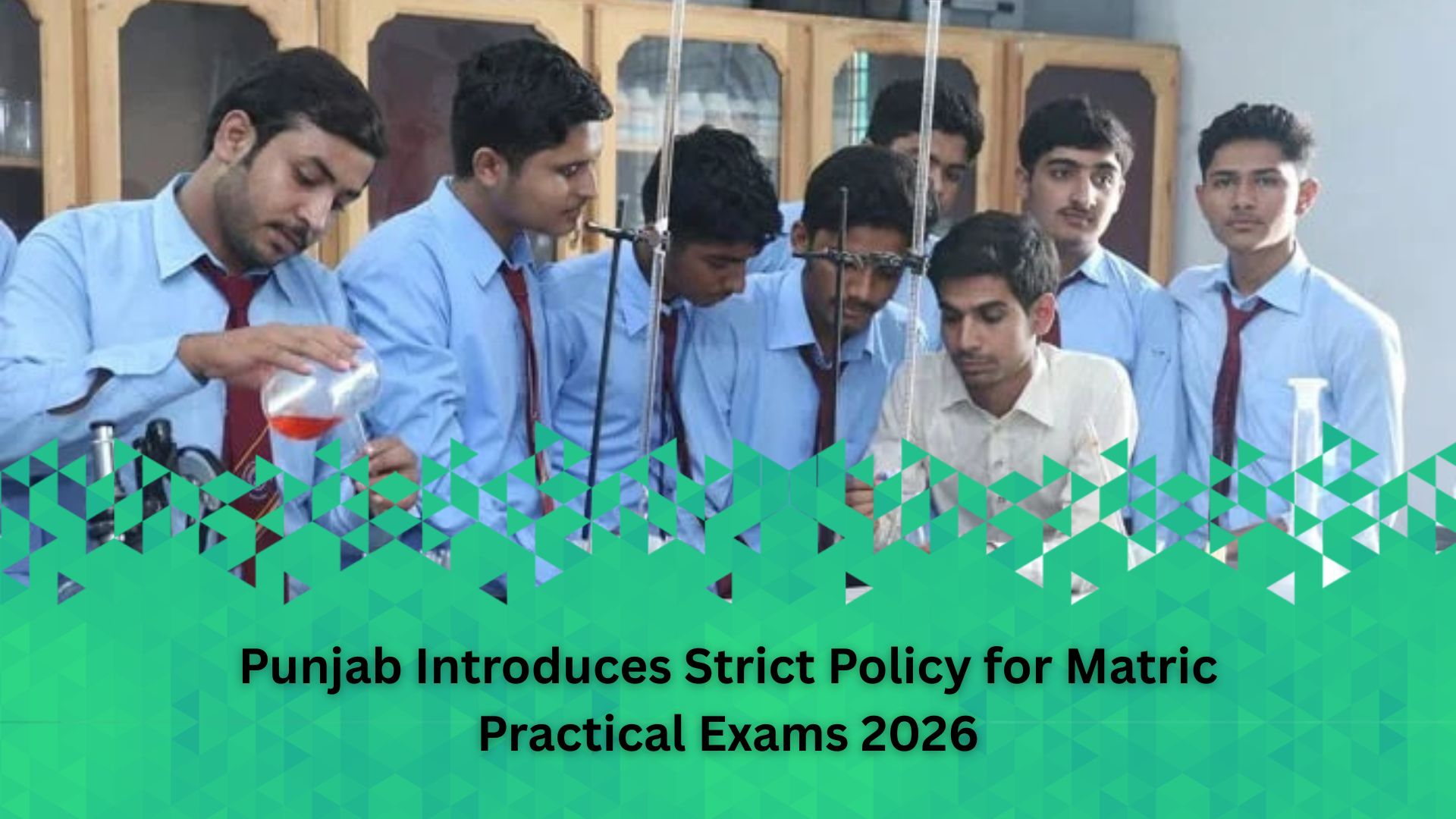
A great move aimed at eradicating the long-standing culture of fraudulent laboratory work, the Chief Minister’s Task Force on Examination Reforms has officially released the new framework for the Matric Practical Exams 2026 . Authorities have confirmed that these rules will be binding across all educational boards in the province, signaling a zero-tolerance approach towards academic dishonesty.
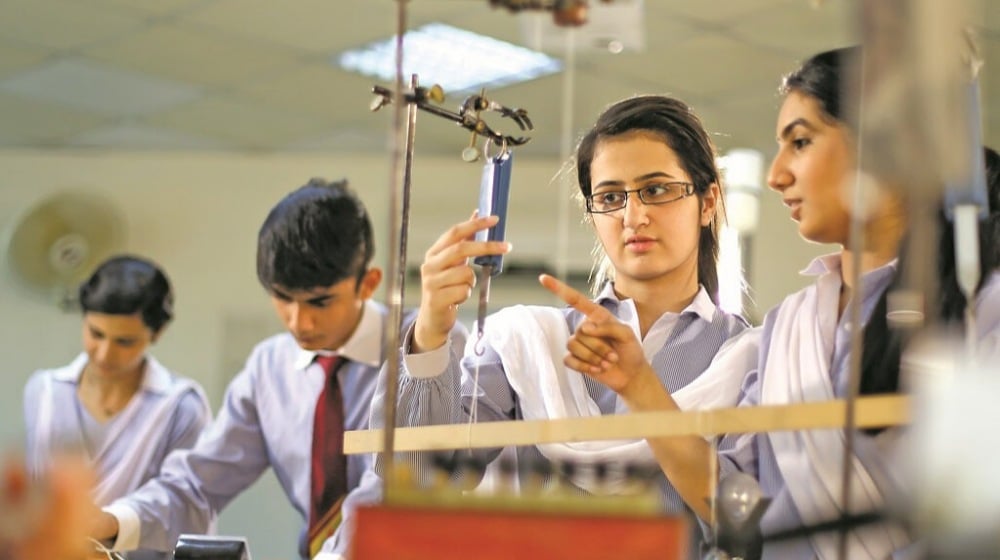
For decades, a prevalent issue in the Matriculation Practical Exams Pakistan has been the use of “ready-made” or bazaar-purchased practical notebooks. Students often submitted neatly written copies prepared by professional writers without ever stepping into a laboratory. To combat this, the new Punjab Examination Reforms 2026 mandate that students must perform the actual experiments during the academic session, with teachers acting as direct custodians of integrity.
Strict Verification: Self-Attestation & Handwriting Checks
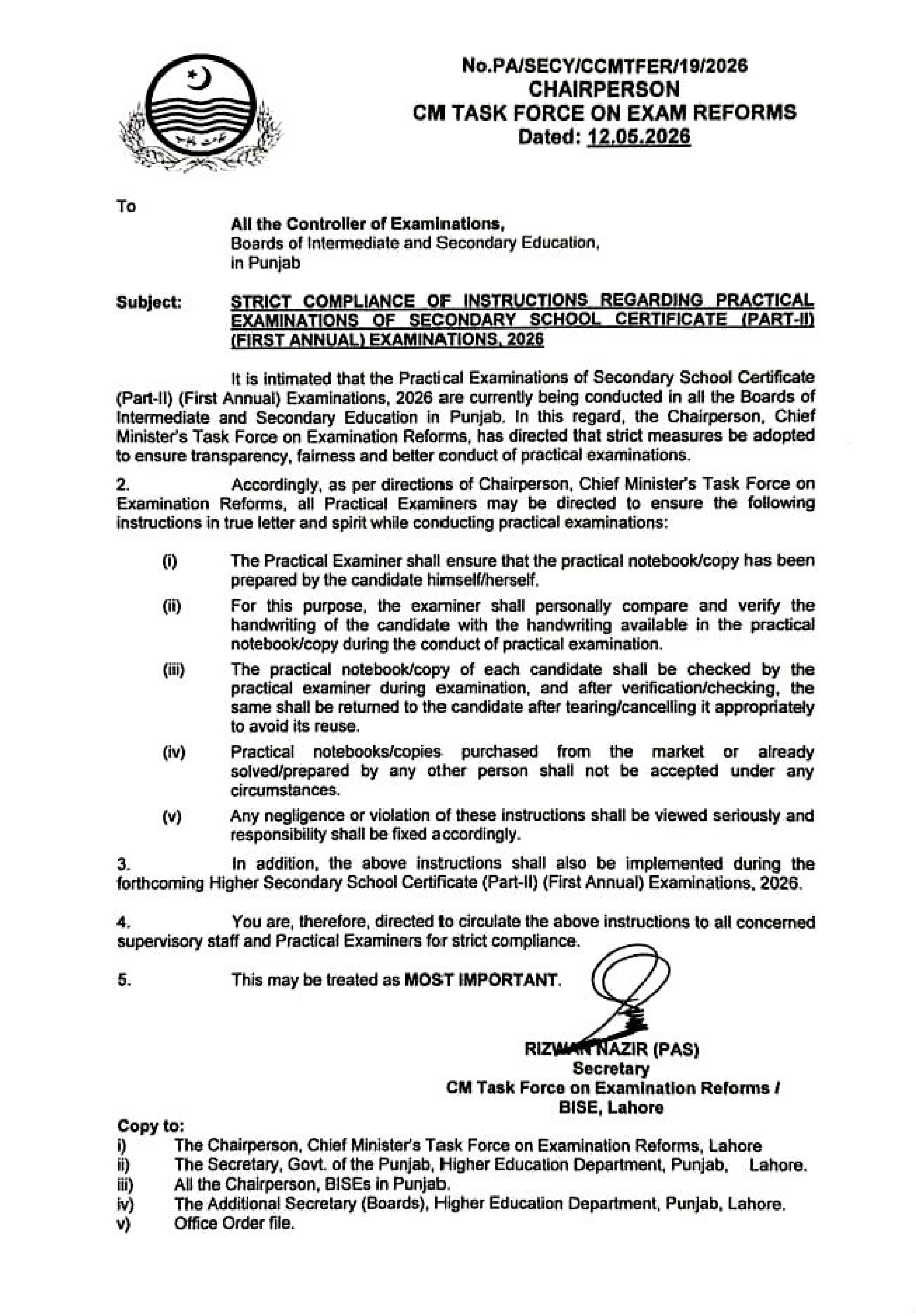
Under the updated Matric Practical Exam Rules Punjab , the role of the subject teacher has become significantly more accountable. According to the official notification, teachers are now required to personally verify every student’s work throughout the year.
The most critical change is the mandatory self-attestation clause . Teachers must self-attest the student’s practical notebook, verifying not only the experiments recorded but also the handwriting of the student . This dual verification ensures that the notebook belongs to the student who claims it and that the work was done during the scheduled lab hours.
Officials state that examiners conducting the Punjab Board Practical Exams will be strictly instructed to reject any notebook that lacks the teacher’s signature or shows signs of inconsistent handwriting.
Ban on Market-Bought Copies & Rejection Protocol
The Task Force has explicitly banned the submission of notebooks purchased from commercial markets or written by third parties. During the Practical Exam New Rules 2026 rollout, it was clarified that any practical copy prepared by another person will face immediate rejection at the examination center.
"We have intelligence that a black market exists for completed practical notebooks. This new rule cuts the supply chain," stated a spokesperson for the Task Force. "If the student did not write it or perform the experiment, the examiner will throw the notebook out immediately. No appeals will be entertained."
The "Cancellation" Protocol to Prevent Recycling
Perhaps the most innovative measure introduced for the Punjab Board Exams 2026 is the mandatory "cancellation" protocol. In previous years, completed practical notebooks were often sold, recycled, or shared with junior students, perpetuating a cycle of cheating.
To end this, the Task Force has ordered that after verification , the staff must properly cancel or tear the practical copy in a specific manner to ensure it cannot be resubmitted by another student in the future. This physical defacing of the notebook eliminates the resale value of used copies and ensures that every new batch of students starts from scratch.
Legal Consequences for Negligence
The government has warned that this is not a suggestion but a binding legal directive. The Chief Minister’s Task Force has stated that any negligence regarding these instructions will result in strict legal action against the concerned staff and examiners. Teachers found guilty of allowing fake notebooks or failing to cancel copies will face heavy penalties, including potential dismissal and criminal charges under the examination bylaws.
Restoring Merit in Punjab
These sweeping changes are part of a broader push to modernize the assessment system in Pakistan. By enforcing individual accountability from the student writing the notes to the teacher attesting them the Task Force hopes to restore the credibility of practical evaluations.
As the Punjab Matric Practical Exams 2026 approach, board officials are training examiners to identify forged notebooks and enforce the new tearing protocol. Education experts have largely welcomed the move, stating that it forces students to actually learn science rather than memorize pre-written answers.
With the implementation of the Matric Practical Exam Rules Punjab , the era of buying marks through ready-made notebooks appears to be ending. Students appearing for the Punjab Board Exams 2026 must now rely solely on their own laboratory work, while teachers carry the burden of attesting to the truth.




.jpg)

.jpg)
.jpg)
Share your comments & questions here
No comments yet. Be the first to comment!