



.jpg)
 Home
Home
 National
 International
 Merit list
 Date Sheet
 Result
 Admission
 Study Abroad
.gif)


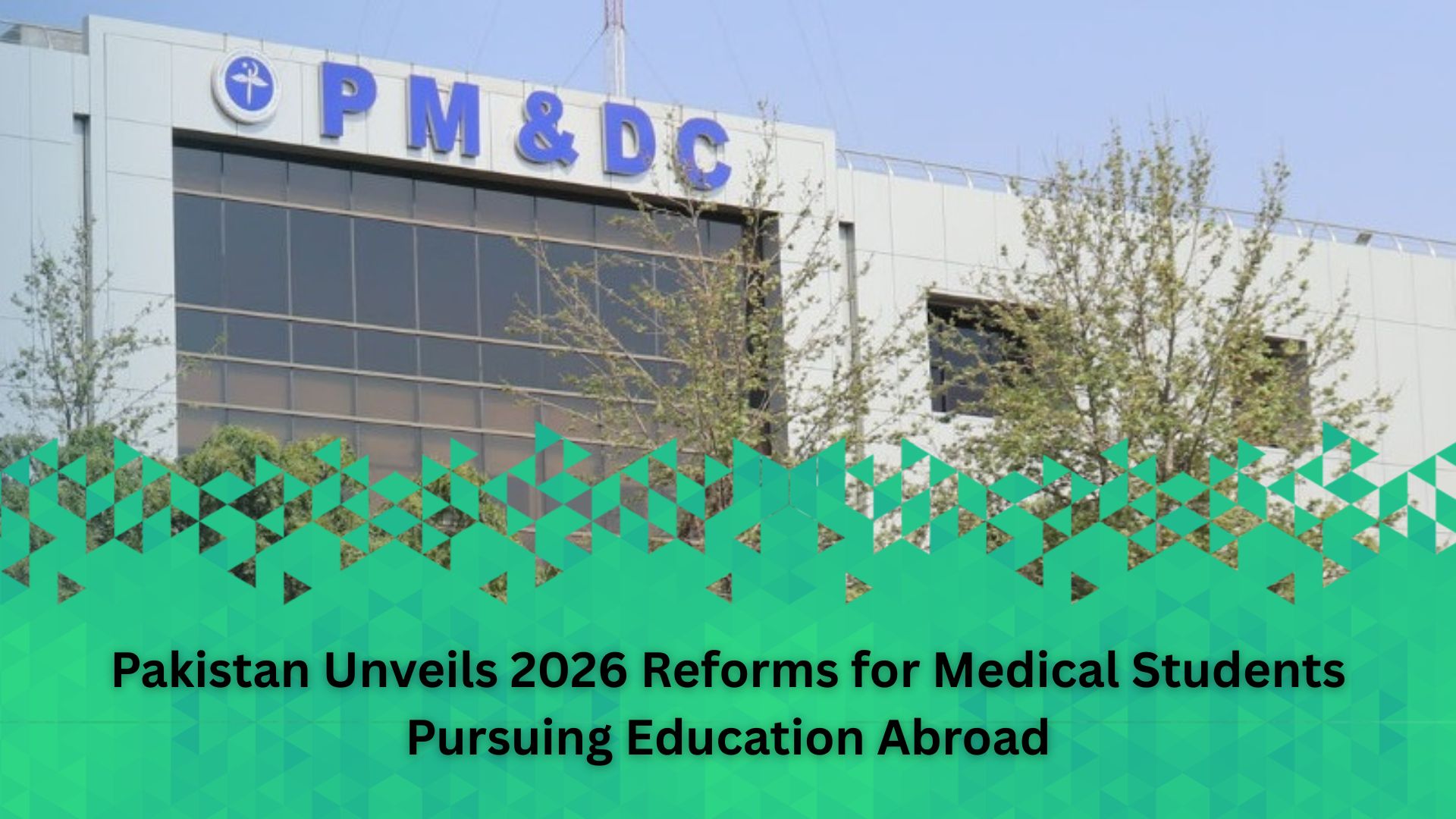
In a decisive move to change the quality of medical professionals trained overseas, the Pakistani government has introduced sweeping reforms for students seeking medical and dental degrees outside the country. Chaired by Deputy Prime Minister and Foreign Minister Ishaq Dar in Islamabad on Tuesday, a high-level session mandated that no student will be permitted to enroll in a foreign institution without prior clearance from the Pakistan Medical and Dental Council (PMDC) .
These Pakistan medical education reforms 2026 mark a radical departure from previous laissez-faire policies, directly targeting the challenges posed by varying international training standards. The primary goal, officials stated, is to ensure that overseas graduates possess competency equivalent to local medical professionals before they return to serve the national healthcare system.
MDCAT Becomes Mandatory for Aspiring Overseas Students
One of the most significant hurdles introduced is the universal MDCAT requirement for studying abroad . Under the new framework, Pakistani students will be strictly prohibited from enrolling in any foreign medical university unless they first clear the Medical and Dental College Admission Test (MDCAT).
Previously, the MDCAT was only a prerequisite for admission to domestic medical colleges. However, to facilitate PMDC foreign medical student registration , candidates must now prove their foundational knowledge through this standardized national exam before leaving Pakistan. “This ensures that only students with a baseline level of scientific aptitude seek international training,” a senior health ministry official explained.
PMDC Approved Foreign Medical Colleges: A New Global Standard
To eliminate predatory or substandard institutions, the committee ruled that only those foreign universities recognized by the World Federation for Medical Education (WFME) and included in the PMDC approved foreign medical colleges list will be considered valid.
This means that for those looking to study MBBS abroad from Pakistan , the pool of acceptable universities has been significantly narrowed and standardized. The move is designed to protect students from diploma mills in various countries. Students are now advised to consult the official PMDC portal before applying anywhere, especially in popular destinations like China, Russia, Kyrgyzstan, and Kazakhstan.
The NRE Exam and Mandatory Academic Benchmarks
Returning graduates will face further scrutiny. The government has reinstated and strengthened the NRE exam for foreign medical graduates . Before being granted a license to practice medicine in Pakistan, all overseas professionals must successfully clear the National Registration Examination (NRE).
Furthermore, to ensure academic rigor, students must complete a minimum of 6,200 teaching hours and maintain 80% attendance during their tenure abroad. These benchmarks directly address Pakistan foreign MBBS regulations that previously lacked oversight over student engagement in foreign classrooms.
Language Proficiency for Non-English Speaking Countries
In a unique addition aimed at reducing clinical risks, the government directed that students intending to study in non-English-speaking countries must first acquire proficiency in the local language of that nation. This is designed to prevent academic isolation and clinical miscommunication during hospital rotations, a growing concern for foreign medical universities for Pakistani students in nations where English is not the primary medium of instruction.

Domestic Inspections and Zero Tolerance on Malpractice
The meeting did not limit itself to overseas education. Authorities were directed to conduct transparent, merit-based inspections of medical and dental colleges within Pakistan. A strict zero-tolerance policy against negligence, irregularities, and malpractice in the inspection process was announced.
The session was attended by federal ministers for health and law, senior bureaucrats, and regulators. The PMDC reiterated its commitment to aligning Pakistan’s system with global standards, warning students that failure to secure prior approval for medical education abroad for Pakistani students could result in permanent legal and professional disqualification.
A Response to the Exodus of Medical Students
These reforms arrive at a critical time. Due to limited seats and high tuition costs at local institutions, thousands of Pakistani students seek admission to medical universities in Central Asia and Eastern Europe. However, experts have long complained that many returnees struggle with basic clinical skills.
By enforcing Pakistan Medical and Dental Council new rules , the government hopes to filter out unqualified candidates before they leave and ensure those who return are ready to serve. Education experts note that while the rules may reduce the number of students leaving initially, they will ultimately improve the reputation of Pakistani doctors globally. The PMDC has advised all students to complete their registration process before leaving the country to avoid future legal complications.




.jpg)
.jpg)
.jpg)
.jpg)
Share your comments & questions here
No comments yet. Be the first to comment!