

 Home
Home
 National
 International
 Merit list
 Date Sheet
 Result
 Admission
 Study Abroad
.jpg)


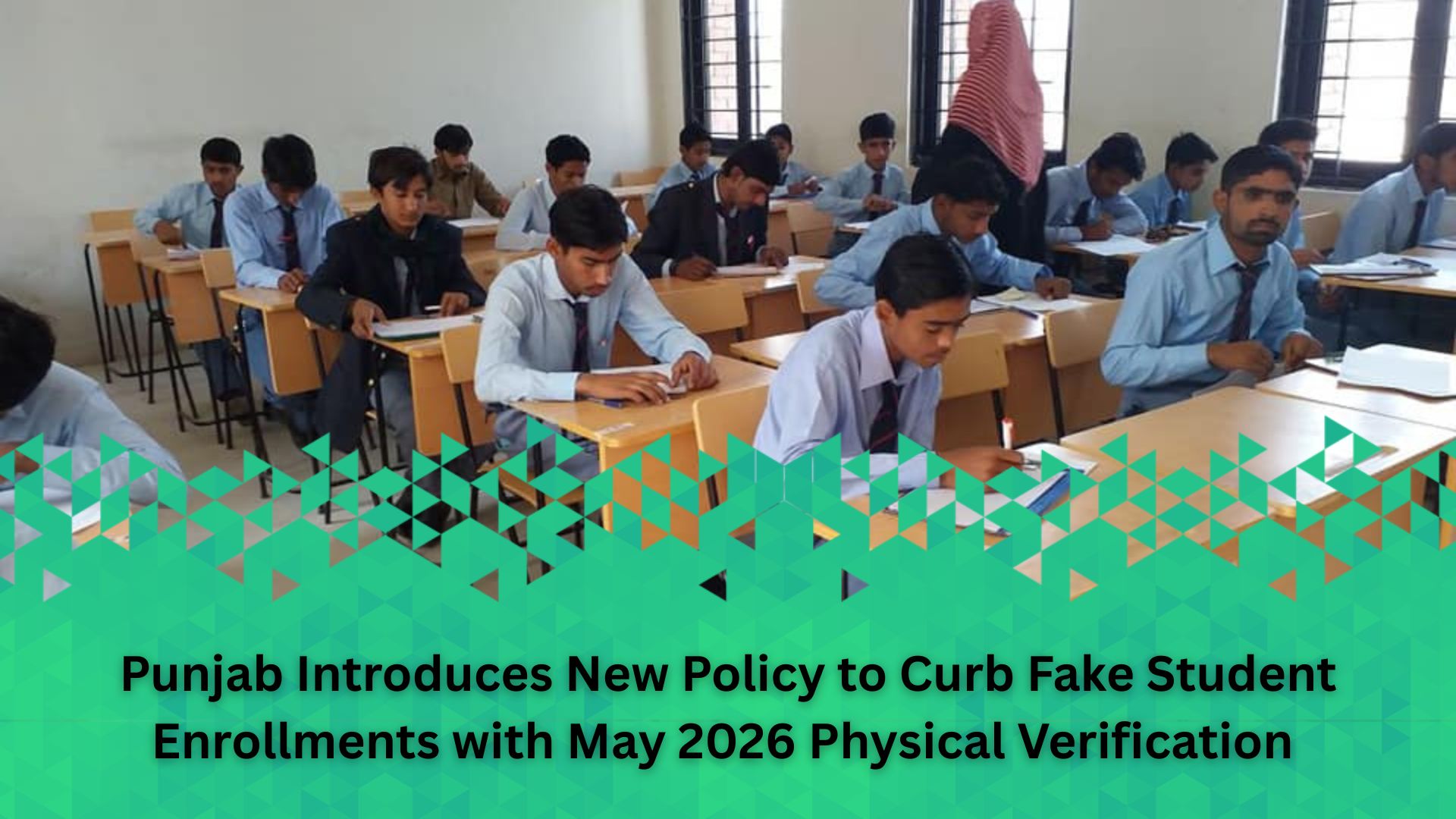
Punjab Education Management Authority (PEMA) has launched a rigorous province-wide physical verification drive aimed at curbing the persistent issue of fake student enrollments . Starting May 4th, 2026 and continuing through May 21st, 2026 , this initiative marks the most aggressive attempt by the provincial government to ensure that only genuine students are counted on official rolls.
The decision comes in response to growing concerns over fictitious admissions that have long plagued the system, leading to embezzlement of funds and distorted educational planning. Under the newly introduced Punjab fake student enrollment policy , any school found manipulating its attendance records will face strict departmental consequences.
PIMA Student Verification Process: A Two-Tier Annual Mandate
Officials from the Punjab Education Management Authority have detailed that the PIMA student verification process is no longer a one-off event but a mandatory biannual requirement. According to the new directives, every school under the authority’s jurisdiction must undergo physical student verification twice per year first in May and then in October.
This structured schedule is designed to catch discrepancies mid-academic year and again at the beginning of the second term. The verification will strictly adhere to the data logged in the School Information System (SIS). By cross-referencing physical attendance with digital records, authorities aim to identify ghost students or duplicate entries that have historically been used to claim illegal government subsidies.
Tackling Fake Enrollments in Punjab Schools
The primary target of this campaign is the widespread issue of fake enrollments in Punjab schools . These fraudulent enrollments often involve students who either do not exist, have transferred elsewhere, or never attended classes, yet remain on the books to inflate school funding requests.
Under the new Punjab school enrollment verification campaign , AEOs (Assistant Education Officers) and DEOs (District Education Officers) have been directed to visit every public and partnered private institution within their jurisdictions. They are required to physically check the presence of each enrolled child in their classroom. Schools failing to produce students during the drive will be flagged for a detailed audit.
Role of the School Information System Verification Punjab
A cornerstone of this anti-fraud effort is the integration of digital monitoring. The School Information System verification Punjab protocol requires field officers to carry digital rosters during their inspections. An official explained that the system automatically highlights red flags when a student marked as "present" in the system is not physically found on the premises.
This digital backbone allows for real-time reporting, making it nearly impossible for schools to manipulate data after the fact. The physical verification of students Punjab schools is being recorded via tablet devices linked directly to the central PIMA dashboard, ensuring that no manual tampering occurs.
AEO and DEO School Inspection Punjab: Ground-Level Enforcement
To ensure compliance, the authority has mobilized its entire cadre of middle-tier management. The AEO and DEO school inspection Punjab teams have been given strict deadlines to cover every school in their clusters. They are tasked not only with counting heads but also with verifying enrollment slips, parent signatures, and student identity cards where necessary.
“This is a zero-tolerance operation,” a senior PIMA official stated. “We have instructed all officers to prepare detailed reports after the exercise. Any deviation from the standard operating procedure will be considered dereliction of duty.”
Emphasis on Student Data Verification Punjab Education Department
For decades, inflated enrollment figures have crippled the student data verification Punjab education department efforts. With this new drive, the department is shifting from periodic estimates to real-time census-style counting. All verified data will be fed into a central repository, allowing policymakers to allocate resources such as textbooks, teachers, and funding based on actual student strength rather than fabricated numbers.
Officials have also been instructed to submit comprehensive findings post-verification. These reports will include photographic evidence, classroom headcounts, and discrepancies between SIS records and on-ground reality. The collected data will form the basis for the upcoming education transparency policy Punjab , which aims to digitize and open school records for public scrutiny.
Strict Actions Under the Education Transparency Policy Punjab
PIMA has warned that strict departmental and financial action will be taken against schools found guilty of artificial inflation. The new education transparency policy Punjab categorizes fake enrollments as a serious administrative offense, potentially leading to the termination of school recognition or withholding of funds.
The school enrollment audit Punjab 2026 is being seen as a pilot for a larger, long-term strategy. If successful, similar drives could be extended to higher education institutions and vocational training centers. For now, parents and school administrators have been asked to ensure full cooperation, as the May 4–21 window leaves no room for exemptions.

As the Punjab Education Management Authority news continues to dominate headlines, the message is clear: the days of phantom students are numbered. With the Punjab education verification drive 2026 now in full swing, the province is setting a precedent for accountability that could reshape school governance across Pakistan. The success of this mission will ultimately hinge on the honesty of its field officers and the vigilance of the digital systems backing them.





.jpg)