
 Home
Home
 National
 International
 Merit list
 Date Sheet
 Result
 Admission
 Study Abroad
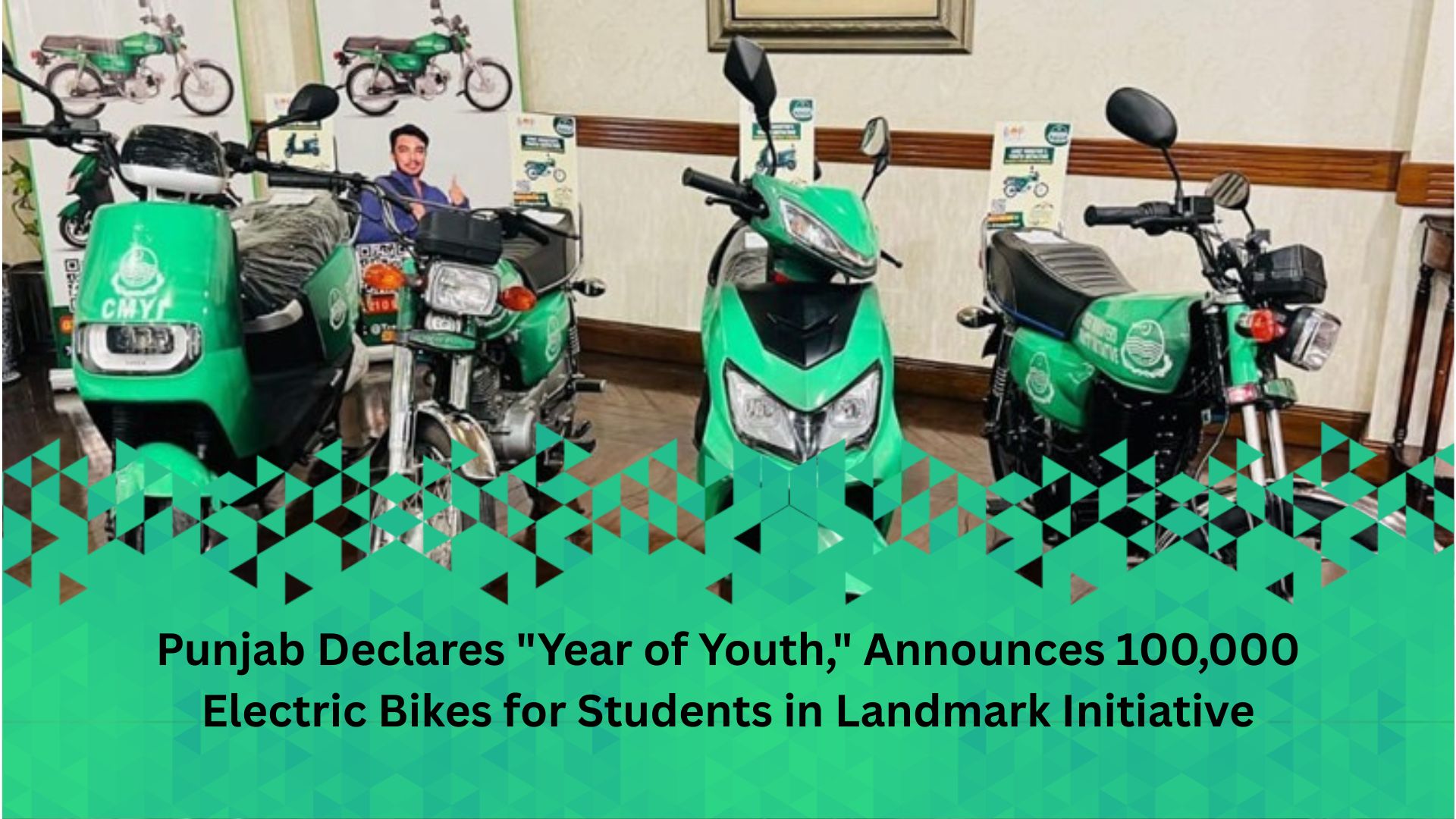
Punjab Declares "Year of Youth," Announces 100,000 Electric Bikes for Students in Landmark Initiative
In a sweeping vision aimed at transforming the socio-economic landscape for the younger generation , Punjab Chief Minister Maryam Nawaz Sharif on Monday declared 2026 as the “Year of Youth” and unveiled a monumental package of initiatives, headlined by the distribution of 100,000 electric bikes for students across the province.
The landmark announcements were made during the Honhar Scholarship and Laptop Scheme ceremony in Lodhran, signaling a strategic shift towards decentralizing development and directly investing in human capital.
A Comprehensive Youth Empowerment Blueprint
Moving beyond singular interventions, Chief Minister Maryam Nawaz presented a multi-pronged strategy designed to address education, technology, skill development, and mobility challenges faced by students.
-
Electric Bike Scheme: The flagship initiative promises to provide 100,000 electric bikes to students. This ambitious project aims to revolutionize student mobility, offering an affordable, eco-friendly solution to transportation hurdles, particularly for those from middle and low-income families. The move is also expected to reduce urban carbon emissions and traffic congestion around educational institutions.
-
Tech Infrastructure Expansion: In a significant push to position Punjab as a future tech hub, the CM announced plans to establish IT cities in multiple districts and a dedicated Artificial Intelligence (AI) center in Lahore . This initiative is designed to create localized tech ecosystems, generate high-value employment, and equip youth with cutting-edge skills.
-
Laptops & Scholarships: Scaling up previous efforts, the government will commence an annual distribution of 100,000 laptops and an equal number of scholarships starting next year. This program is intended to bridge the digital divide and provide crucial financial support for higher education.
-
Parwaz Card for Skilled Youth: A new Parwaz Card program was launched to specifically support skilled young individuals in their career development. While full details are pending, the card is expected to offer benefits such as soft loans, toolkits, and mentorship opportunities to entrepreneurs and tradespeople.
Decentralizing Development: A Message from Lodhran
Explaining the choice of Lodhran for the launch, Chief Minister Maryam Nawaz emphasized a core philosophy of her administration: inclusive and equitable development .
“Development initiatives will not remain limited to major urban centers,” she asserted. She named districts including Rawalpindi, Lahore, Multan, Layyah, Bhakkar, and Sahiwal as examples of areas that will receive focused attention under the province’s development agenda. This move is seen as an effort to address regional disparities and ensure growth reaches underserved regions.
Reflecting on past programs, she noted that an earlier launch of such scholarship and laptop initiatives could have benefited more students, underscoring the urgency of her current push.
Parallel Progress on Housing and Land Rights
The Chief Minister also connected youth empowerment to broader social welfare, providing updates on flagship housing schemes. She reported that construction is actively underway on 125,000 homes under the Apni Chhat, Apna Ghar (My Roof, My Home) scheme.
“We have completed 50,000 houses , while over 70,000 are currently under construction,” she stated. Additionally, under the Apni Zameen, Apna Ghar (My Land, My Home) scheme, the government will allot three-marla plots to landless citizens , a step aimed at providing foundational assets to the most vulnerable.
Analysis: A Strategic Investment in the Future
Policy analysts view this suite of announcements as one of the most comprehensive youth-centric packages in recent years. The electric bike scheme , in particular, tackles a pervasive daily challenge student mobility while aligning with global sustainability trends.
The focus on IT cities and an AI center indicates a forward-looking approach to job creation, aiming to retain talent within Punjab and attract investment. Coupled with the laptop scheme, it forms a cohesive tech-empowerment pipeline from hardware access to advanced training and employment.
By launching these programs from Lodhran and naming specific districts, the CM is building a narrative of provincial unity and focused development, which may have significant socio-political resonance.
Challenges and the Road Ahead
While the vision has been met with enthusiasm, implementation will be key. Observers point to challenges such as:
-
Establishing a transparent and merit-based distribution mechanism for the electric bikes and laptops .
-
Ensuring the timely development of promised IT infrastructure outside Lahore.
-
Creating sustainable funding models for these large-scale annual programs.
-
Integrating the Parwaz Card effectively with existing vocational training frameworks.
The declaration of 2026 as the “Year of Youth” sets a high benchmark for the provincial government. It raises public expectations for tangible, rapid deliverables. The success of these initiatives will depend on efficient execution, robust monitoring, and sustained budgetary commitment.
Chief Minister Maryam Nawaz Sharif’s announcements mark a decisive pivot towards making youth development the central pillar of Punjab’s policy agenda. From 100,000 electric bikes for students to futuristic AI labs and widespread scholarship programs, the “Year of Youth 2026” blueprint is an ambitious attempt to empower a generation, fuel a knowledge economy, and ensure equitable growth across all districts of Punjab. The nation will be watching closely as these promises move from the ceremony in Lodhran to reality on the ground.