
 Home
Home
 National
 International
 Merit list
 Date Sheet
 Result
 Admission
 Study Abroad


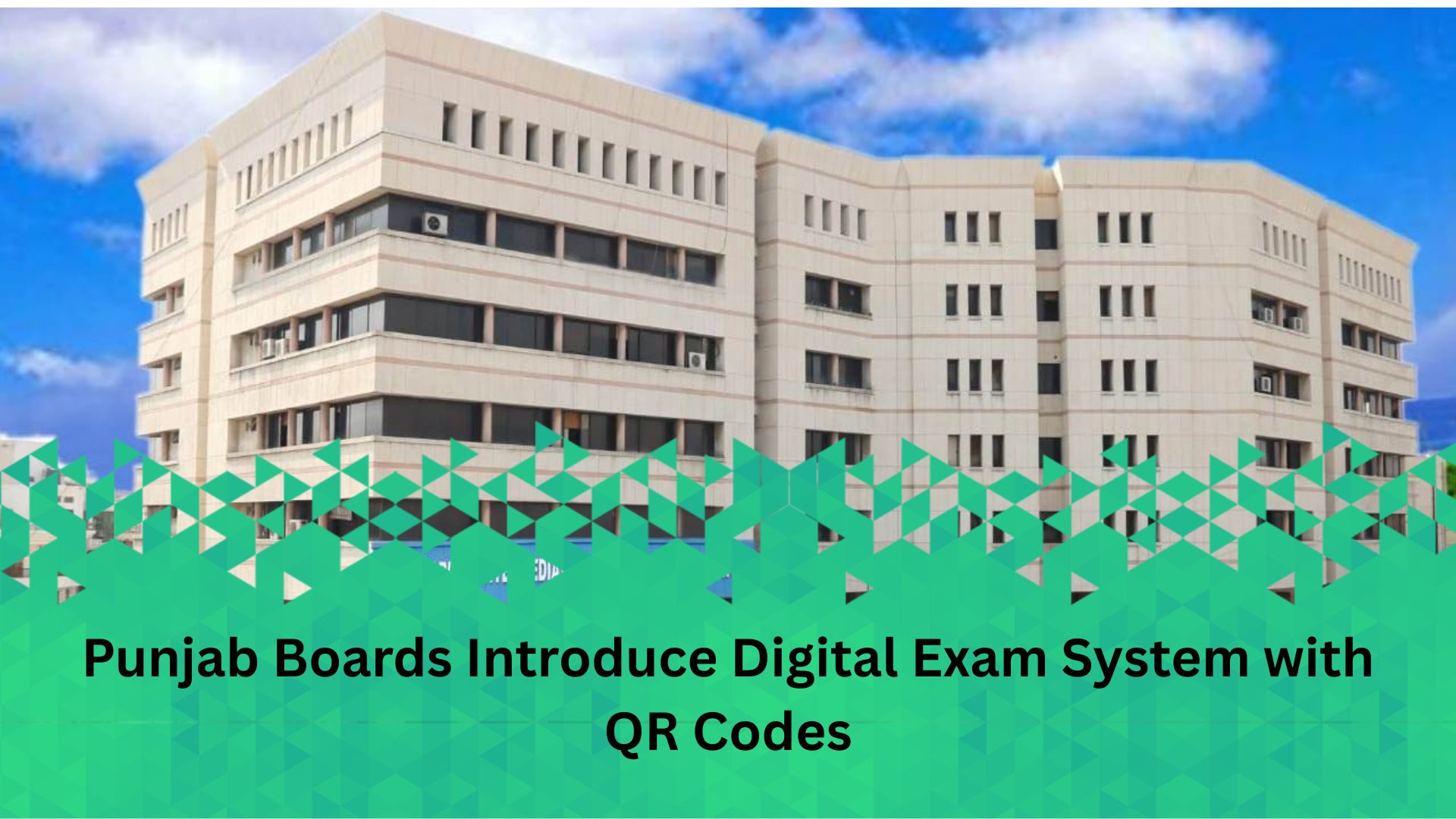
Punjab Boards Introduce Digital Exam System with QR Codes
In a decisive move to eradicate malpractice, accelerate processes, and restore public confidence, the government of Punjab has sanctioned the complete digitization of the examination system across all its education boards . This transformative policy, championed by the Chairperson of the Task Force on Education , Muzammil Mahmood , marks the end of an era defined by manual, paper-heavy procedures and heralds a new age of secure, transparent, and efficient academic assessment. The initiative is not a mere technological upgrade but a foundational reform aimed at modernizing the very backbone of the province's educational evaluation framework. By integrating advanced digital solutions, Punjab aims to address perennial challenges such as result delays, forgery risks, and logistical bottlenecks, thereby setting a new standard for examination integrity in the region. You can also view Class 9th Smart Syllabus 2025 & Class 11th Smart Syllabus 2025 .
The Core Technology: Fortified E-Sheets with Anti-Forgery Features
At the heart of this digital transformation is the replacement of traditional paper answer scripts with secure, technology-embedded "e-sheets." This is the cornerstone innovation designed to directly combat fraud. Unlike their physical counterparts, these digital scripts will be fortified with multiple, tamper-proof security layers:
-
Unique Security Codes: Each e-sheet will be assigned a singular, encrypted identifier, making every document uniquely traceable within the system.
-
QR Codes: Quick Response codes will be printed on sheets for physical-distribution phases, allowing for instant digital verification and tracking of the script’s journey.
-
Digital Watermarks: Embedded watermarks, invisible to the naked eye but detectable by the system, will provide a final, unforgeable seal of authenticity.
"These features work in concert to create a hermetic seal around the student's work," explained a senior official from the Board of Intermediate and Secondary Education (BISE) Lahore . "Any attempt at alteration, duplication, or forgery after the exam will be immediately flagged by the system. The integrity of the answer script is guaranteed from the moment it is submitted."
Comprehensive Training Initiative: Building a Digitally Proficient Workforce
Recognizing that technology is only as effective as the people who operate it, the Task Force has launched an extensive, province-wide capacity-building program. The first major milestone in this effort is a specialized training session scheduled for December 13 , targeting the technical linchpins of the project: the system analysts and computer programmers from all Punjab boards.
This crucial workshop will be conducted by a team of experts from BISE Lahore and the Inter-Board Committee of Chairmen (IBCC) . Its curriculum is meticulously designed to provide a practical, hands-on understanding of the new digital ecosystem. Key training modules include:
-
E-Marking: Instructing officials on the secure digital assessment of scanned answer scripts, ensuring examiner anonymity and standardized marking.
-
Question Item Banking (QIB): Training on the digital system for creating, storing, and securely assembling question papers.
-
Data Analysis and Management System (DAMS): Overview of the analytics platform that will process results and generate insights.
-
E-Sheet Management: Practical handling of the new secure script system from distribution to compilation.
The participation of representatives from all nine provincial boards ensures uniform implementation and establishes a common standard of operation across Punjab.
Expected Impacts: A Multi-Faceted Enhancement of the Exam Cycle
Officials project that the full digitization will yield significant, tangible benefits across the entire examination chain:
-
Enhanced Security & Fraud Prevention: The layered security on e-sheets directly targets document tampering and impersonation. The digital trail makes any irregularity easily detectable, acting as a powerful deterrent against organized cheating rings.
-
Increased Efficiency & Faster Results: The E-Marking system eliminates the physical transportation of tonnes of paper scripts. Examiners can assess scanned copies from anywhere, reducing time spent on logistics and coordination. This automation in the checking and tabulation process is expected to dramatically shorten the period between exams and result announcements.
-
Improved Transparency and Auditability: Every action on a digital script—from scanning to marking to grading—is logged. This creates a complete, transparent audit trail. Students and institutions can have greater faith in the fairness of the process, knowing that each script is handled within a secure, monitored digital environment.
-
Data-Driven Decision Making: The DAMS platform will provide boards with real-time analytics on student performance across subjects, districts, and demographics. This data is invaluable for curriculum developers, policymakers, and teachers to identify learning gaps, tailor interventions, and improve educational outcomes at a systemic level.
Stakeholder Reception and the Road Ahead
The announcement has been met with cautious optimism by educators, parents, and students. While acknowledging the initial challenges of such a large-scale transition, stakeholders recognize the long-term necessity. "The move to digital is inevitable and welcome," stated a college principal from Faisalabad. "The initial learning curve will be steep, but the promise of timely, tamper-proof results is worth the effort. It is a vital step towards restoring the credibility of our board examinations."
The December 13 training is viewed as the first critical step. The Task Force has plans for subsequent training phases to onboard examiners, supervisory staff, and other personnel. The success of this rollout in Punjab is being closely watched, as it could serve as a scalable model for other provinces in Pakistan and beyond.

Setting a New Benchmark in Educational Assessment
Punjab's full-scale digitization of its examination system represents a bold and ambitious leap into the future of educational administration. By marrying cutting-edge anti-forgery technology like QR codes and digital watermarks with a robust investment in human capital through targeted training , the province is tackling the root causes of inefficiency and mistrust. This reform is more than an administrative change; it is a reaffirmation of commitment to millions of students that their hard work will be evaluated with utmost fairness, security, and speed. As the systems go live and staff become proficient, Punjab is poised to establish a new, higher benchmark for transparency and quality in public examinations, potentially inspiring a nationwide educational reform movement.