




 Home
Home
 National
 International
 Merit list
 Date Sheet
 Result
 Admission
 Study Abroad


.jpg)
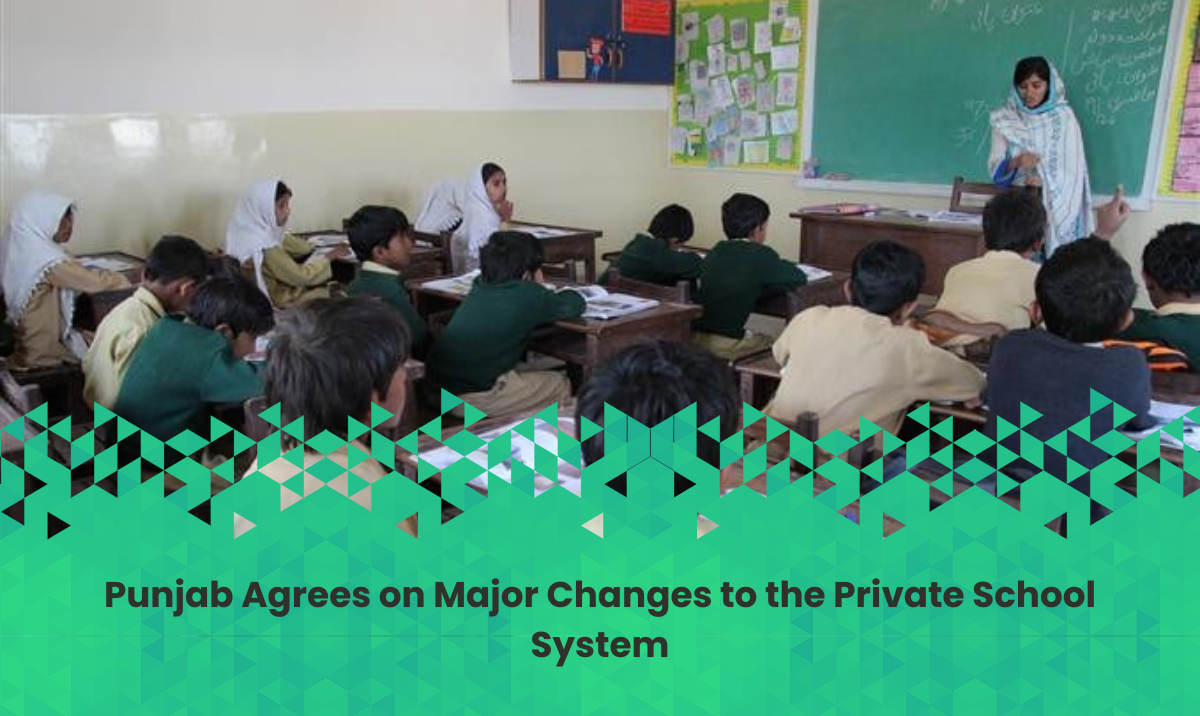
Punjab Agrees on Major Changes to the Private School System
The educational landscape in Pakistan’s most populous province is undergoing a transformative shift. In a landmark development, the Punjab School Education Department and the All Pakistan Private Schools Management Association (APPSMA) have reached a broad consensus on a comprehensive package of education reforms. Designed to streamline academic management, ease regulatory burdens, and provide financial relief, these sweeping changes are set to redefine how private educational institutions operate across the province.
The agreement marks a collaborative approach between state regulators and private sector stakeholders, addressing long-standing grievances that have plagued school administrators for years. With the provincial government gearing up to introduce formal legislation, stakeholders anticipate a more balanced, growth-oriented framework starting from the next academic year.
Key Pillars of the Private School Reforms
The newly agreed-upon reform package targets several critical areas of educational administration, operational compliance, and financial management. By addressing these foundational elements, the Punjab School Education Department hopes to bridge gaps between public and private sector standards while fostering a healthier environment for institutional growth.
1. Introduction of a Uniform Academic Calendar
One of the core components of the reform package is the rollout of a standardized, uniform academic calendar . Historically, discrepancies in term dates, vacation periods, and exam schedules across various private and public networks led to fragmented learning cycles.
Under the new framework, educational institutions will synchronize their operational schedules. Crucially, the policy mandates an increase in annual teaching days, setting an official requirement of a minimum of 190 teaching days and a maximum of 227 teaching days per academic year. Education experts and policymakers believe that optimizing instructional days will successfully mitigate learning losses caused by extended, unstructured holidays and ensure the thorough, timely completion of curricula.
2. Relief Through Domestic Utility Tariffs
Perhaps the most financially impactful relief measure for school owners is the decision regarding utility billing. For years, private educational entities have struggled under the immense financial pressure of utility bills charged under commercial rates.
The government has agreed to the reclassification of private educational institutions from the commercial utility tariff category to the domestic utility tariff category . This critical policy adjustment is expected to drastically slash overhead utility expenses for school administrations. In turn, it aims to curb runaway operational costs, helping school management maintain stable tuition fee structures for middle-class families.
3. Extension of School Registration Validity
Regulatory red tape has long been a major source of friction between school owners and provincial authorities. Previously, private schools were subjected to a cumbersome annual registration renewal cycle, draining administrative time and resources.
To alleviate this burden, the government has agreed to extend the validity period of school registrations from one year to four years . This administrative simplification will allow school boards to focus their time and energy on instructional quality and infrastructure development rather than endless bureaucratic paperwork. Furthermore, the framework aims to streamline registration fees, ease building fitness certificate issuances, and offer a clear path for currently unregistered institutions to regularize their status.
4. Transition from Punitive Fines to Sector Promotion
Representatives from the All Pakistan Private Schools Management Association (APPSMA) —including Central President Kashif Adeeb Jawadani, Central Secretary General Amjad Ali Khan, and North Punjab President Abrar Ahmed Khan—strongly advocated for a philosophical shift in regulatory enforcement.
Discussions highlighted that the existing Punjab Private Educational Institutions (Promotion and Regulation) Act relied too heavily on steep punitive fines and strict punitive measures rather than actively supporting educational expansion. The forthcoming legislative drafts are expected to amend these statutes, realigning the law to prioritize sector promotion, guidance, and institutional development.
Legislative Process and Future Implementation
The consensus was reached during the fifth high-level meeting of a special committee established on the directives of the Lahore High Court (LHC). Chaired by Punjab School Education Secretary Mudassar Riaz Malik, the session brought together top education bureaucrats, regional association leaders, and representatives from various private school networks and chambers of education.
With broad consensus achieved, the provincial School Education Department is tasked with drafting formal legislation reflecting these agreed-upon proposals. This drafting process will proceed in continuous consultation with relevant stakeholders to ensure transparency and practical viability.
If successfully enacted, these changes will officially take effect starting from the upcoming academic year. Education analysts are optimistic that this collaborative framework will set a positive precedent for public-private partnerships, ultimately uplifting the standard of education, financial sustainability, and administrative efficiency across Punjab.








Share your comments & questions here
No comments yet. Be the first to comment!