

 Home
Home
 National
 International
 Merit list
 Date Sheet
 Result
 Admission
 Study Abroad




Private Schools Plan Early Academic Session Ahead of Ramadan
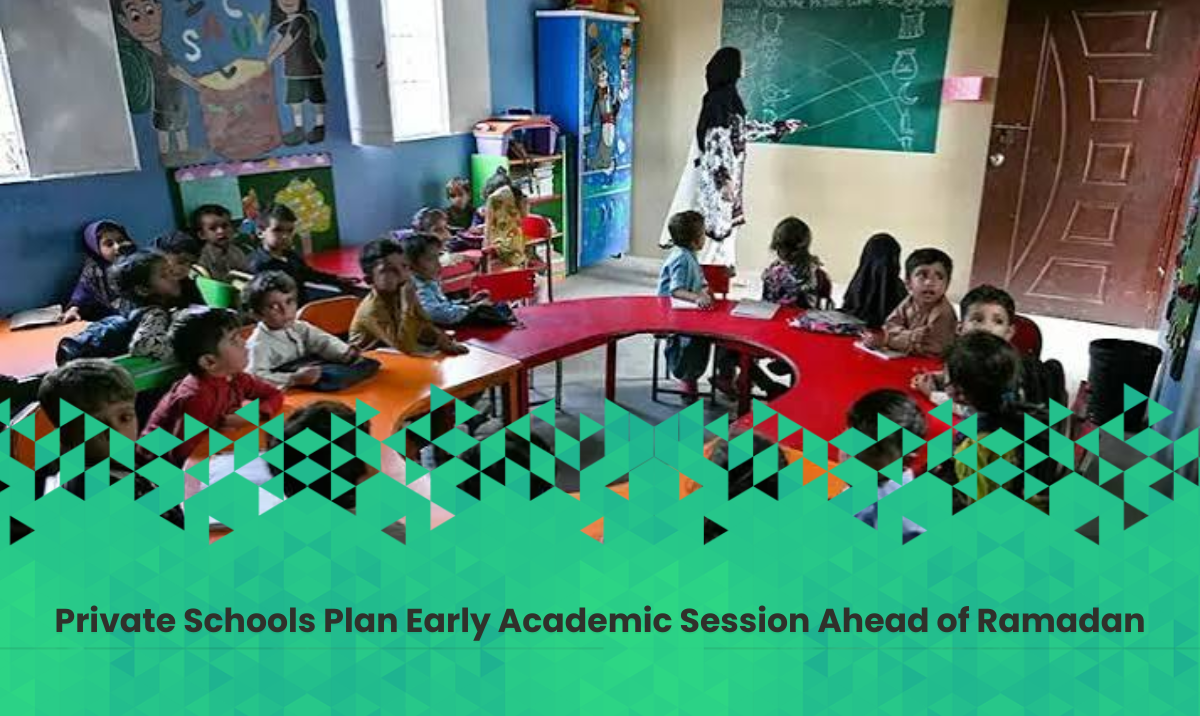
Private educational institutions across the province of Punjab are proactively reorganizing their academic calendars. In response to the upcoming holy month of Ramadan and the subsequent adjustments required in daily school routines, major private school networks have decided to advance the start of their new academic session. According to emerging details, private schools plan early academic session ahead of Ramadan to safeguard instructional time, prevent syllabus delays, and manage the complex logistics surrounding annual examinations and textbook transitions.
Shifting Timelines: December 1 Start and November Exams
Traditionally, private and public school systems across Pakistan follow a standardized academic calendar that concludes the school year late in December, with final-term exams wrapping up right before the winter break or stretching into the new year. However, administrative bodies and school owners have noted that shifting lunar calendars mean Ramadan will intensely overlap with crucial instructional periods.
To counter potential academic disruptions, sources indicate that most private schools now plan to begin their new academic session on December 1 instead of adhering to the conventional timeline.
-
Accelerated Final-Term Examinations: To pave the way for this early December rollout, school administrations are rescheduling their final-term exams to November.
-
Early Evaluation Window: Shifting assessments forward by a month allows teachers to evaluate student performance, compile results, and transition smoothly into the new grade levels before the winter closure and the arrival of Ramadan.
School administrators emphasize that maintaining the status quo would heavily jeopardize academic targets. By moving the academic calendar forward, institutions aim to purchase valuable teaching weeks that would otherwise be lost to shortened school days.
Why the Shift? Managing Reduced Hours During Ramadan
The core driver behind this strategic calendar overhaul is the operational reality of Ramadan school timings. During the holy month, provincial authorities routinely mandate reduced school hours to accommodate fasting students, teachers, and administrative staff. Typically, these adjustments include delayed morning openings, shortened class periods, and early dismissals.
While these humanitarian and practical adjustments are necessary, school owners and educationists point out severe downstream consequences:
-
Compressed Teaching Hours: Shorter school days drastically slash the actual minutes available for classroom instruction.
-
Syllabus Backlogs: Teachers frequently struggle to complete extensive curricula, particularly for board-bound or foundational classes where core concepts cannot be rushed.
-
Student and Teacher Fatigue: Fasting during demanding weather conditions naturally impacts concentration levels, making heavy academic instruction less effective during the holy month.
By initiating the academic year on December 1, schools create a strong buffer. Educators will have substantial, uninterrupted weeks of full-day instruction during December and January, allowing them to cover the bulk of core syllabus requirements well before Ramadan begins.
Impact on Private Publishers and Textbook Stocks
Beyond classroom logistics, the premature transition of the academic session introduces significant commercial and structural shifts for private publishers and textbook markets across Punjab.
Sources familiar with the matter reveal that this early transition offers an unexpected window for publishers to clear out their existing inventories. Schools are widely reported to be planning a complete replacement of current textbooks as part of upcoming revised syllabuses.
-
Clearing Old Inventory: Because schools are starting the year earlier using transitional or current curriculum frameworks, publishers have a viable commercial avenue to sell off remaining stocks of older editions. Industry insiders estimate that publishers could generate millions of rupees by liquidating these books before new editions completely dominate the marketplace.
-
Arrival of New Editions: Market projections suggest that the newly revised syllabus textbooks will officially hit the market around March or April.
This creates a unique two-tier publishing cycle where schools utilize existing materials for the initial months of the early-started session, paving the way for mid-term curriculum updates once the revised publications become universally available.
Looking Ahead: Challenges and Parent Reactions
While school owners view the early start as an administrative necessity, parents and guardians are weighing the practical adjustments required at the household level. Moving final exams to November compresses the preparation time for students currently completing their grades, leading to a more intense autumn testing season.
Furthermore, aligning family routines with an early December school reopening means that traditional winter breaks and family travel plans may need to be recalibrated. Nevertheless, education stakeholders maintain that the long-term benefit of a completed syllabus—free from the intense time-crunches of Ramadan—outweighs the initial scheduling friction.