
 Home
Home
 National
 International
 Merit list
 Date Sheet
 Result
 Admission
 Study Abroad




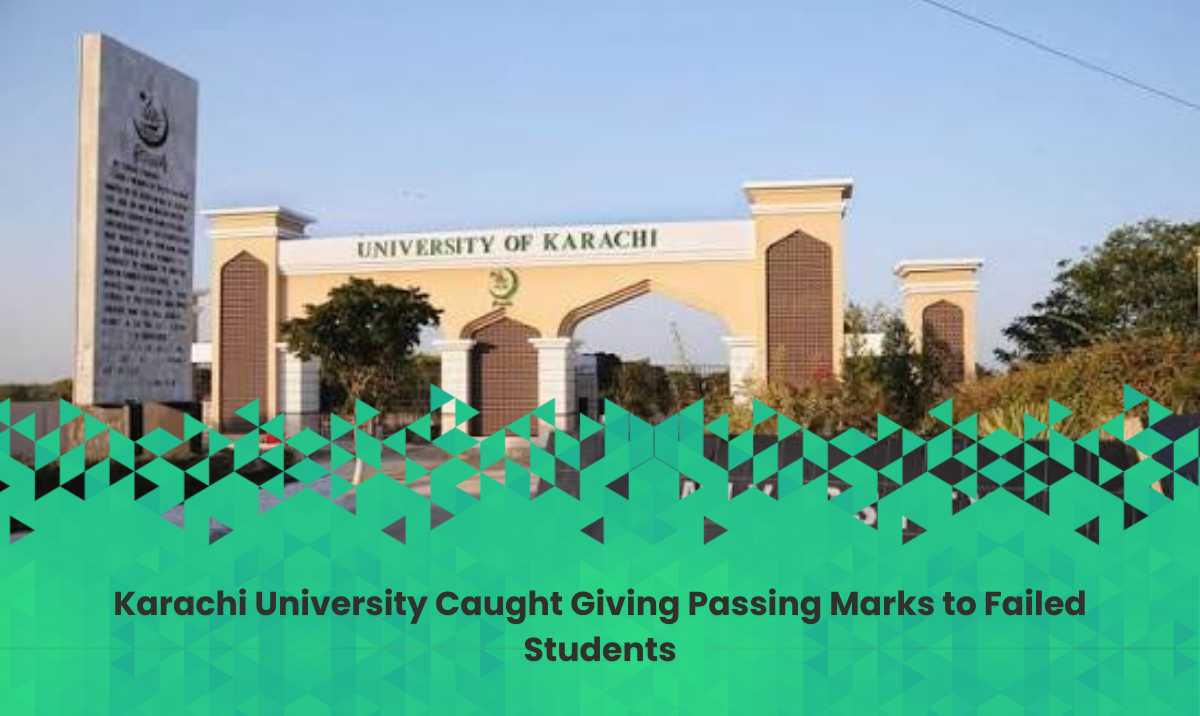
Karachi University Caught Giving Passing Marks to Failed Students
The University of Karachi (KU) has landed in the center of a major academic controversy following allegations that approximately 150 failed students from affiliated law colleges were awarded passing marks. The revision of results allegedly bypassed standard university examination protocols, triggering nationwide discussions regarding academic integrity, institutional transparency, and the oversight of legal education in Pakistan.
The Controversy: Fails Turned Into Passes
According to reports circulating across academic circles, students hailing from prominent institutions such as S.M. Law College and Islamia Law College received heavily revised examination results. These students had initially failed their BA LLB examinations, with several candidates logging zero or critically low marks in core subjects like Obligations and Pakistan Studies.
Following a disputed administrative and academic review, these failing grades were remarkably altered, with students receiving scores ranging between 50 and 65 marks. The sudden transformation of "fails" into "passes" has sparked outrage among academic professionals and student bodies alike, raising questions about how low scores or zero marks could drastically elevate to comfortable passing percentages without a transparent re-evaluation standard.
Involvement of High-Level Administration and Scrutiny Committee
The controversial changes were reportedly sanctioned during the tenure of former acting Vice Chancellor Dr. Tufail Jokhio. The approvals were reportedly based on recommendations put forward by a specialized committee comprising key stakeholders, including the law dean, institutional representatives from affiliated law colleges, and the university's examinations controller.
Chronologically, the committee convened on August 5 to review an LLB Part II paper. Formal approval was obtained the very next day. Critics and internal sources point out that the phrasing “other related cases” was allegedly utilized to widen the scope of the decision, ultimately extending the sweeping revisions to Pakistan Studies results as well.
However, institutional pushback against this shortcut process was immediate. Former Vice Chancellor Dr. Khalid Iraqi disclosed that he had previously rejected a similar collective appeal brought forward by the students. Dr. Iraqi emphasized that established annual examination statutes strictly permit the recounting of marks rather than the full re-checking or re-assessment of answer scripts.
Defense From College Leadership
Defending the integrity of the committee's decision, S.M. Law College Principal Prof. Fareed Dayo argued that the intervention was essential to fix systemic grading errors. He stated that roughly 180 students had been failed unfairly by a single teacher from Islamia College. According to Prof. Dayo, the scrutiny committee acted correctly by providing much-needed relief to candidates who had been treated unjustly by stringent or flawed evaluation.
Similarly, other administrative voices maintained that only candidates who fell short of passing marks by a narrow margin were accommodated, firmly denying claims that students with absolute zero scores were arbitrarily gifted passing grades.
Leadership Transitions and New Challenges
This examination scandal has surfaced during a period of turbulent administrative leadership transitions at the university. The fallout lands squarely on the desk of newly appointed Vice Chancellor Dr. Waseem Qazi, who inherited the tense situation following a series of temporary leadership swaps.
While the students whose results were revised have swiftly capitalized on the situation—moving forward with academic plans and enrolling in subsequent terms—educational experts caution that the incident sets a dangerous precedent. Observers note that unless independent oversight bodies or the Higher Education Commission (HEC) launch a formal inquiry into the misuse of scrutiny clauses, public trust in institutional degrees from Pakistan's premier public sector universities will continue to erode.