



 Home
Home
 National
 International
 Merit list
 Date Sheet
 Result
 Admission
 Study Abroad




Private vs. Govt Schools: Who Produced More Punjab Board 10th Class Toppers in 2026?
The release of the Punjab Board 10th Class Result 2026 has once again sparked a vibrant province-wide debate regarding educational quality, infrastructure, and resource allocation. Every year, millions of students across Punjab appear for the Secondary School Certificate (SSC) First Annual Examinations conducted under the umbrella of the Punjab Boards Committee of Chairmen (PBCC). However, the ultimate point of curiosity for educators, parents, and students alike remains the fierce academic rivalry between private vs govt schools .
A rigorous, in-depth analysis of the overall position holders announced by all nine major education boards across Punjab for the Matric Toppers 2026 reveals a distinct pattern. While public sector institutions continue to hold their ground with remarkable resilience, private schools have decisively taken the lead in producing the highest-ranking position holders.
The Big Picture: Statistical Breakdown of the 2026 Toppers
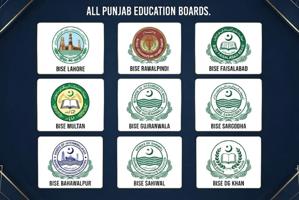
When evaluating the comprehensive merit lists issued across the provincial educational boards—including Lahore, Rawalpindi, Faisalabad, Multan, Gujranwala, Bahawalpur, Sargodha, DG Khan, and Sahiwal—a total of 11 students captured the absolute highest overall positions. This slight variation in the total number of top spots (upward of nine) is due to joint position holders recorded in boards like Gujranwala and Sahiwal.
A detailed categorization of these top-tier achievers highlights a striking divide:
-
Private Schools: Secured 8 positions , translating to an overwhelming 72.73% of the overall provincial board toppers.
-
Government (Public Sector) Schools: Secured 3 positions , accounting for 27.27% of the overall elite pool.
These statistics clearly outline that nearly three out of every four overall board position holders hail from private educational networks. Despite catering to a smaller fraction of total student enrollment compared to the massive network of public schools, the private sector consistently maximizes high-end academic outcomes.
Private Schools Dominate the 2026 Merit Lists
Private educational institutions reinforced their reputation for rigorous examination preparation during the 2026 matric examinations . Out of the 11 top spots, 8 went straight to students enrolled in private academies, foundation systems, and high schools.
The private sector stamped its authority across major urban educational hubs:
-
BISE Lahore: Amina Mahboob set a blistering pace by securing the highest overall marks in the province, scoring an incredible 1,192 marks out of 1,200 under a private school banner.
-
BISE Faisalabad & DG Khan: Private institutions maintained an unblemished streak at the very top, with students like Umna Salahuddin (1,191 marks) and Abdullah Saleem (1,191 marks) leading their respective jurisdictions.
-
BISE Rawalpindi & Multan: High-achieving candidates from private setups consistently crossed the elite 1,190-mark barrier, showcasing robust institutional training.
-
BISE Gujranwala: Witnessed a joint-topper scenario where both elite positions were claimed by brilliant female students representing private school systems (Adeena Rashid and Sadiqa Almas, both scoring 1,190 marks).
Factors Driving Private Sector Success
Educationists point to several structural advantages that often give private institutions an edge in high-stakes board exams:
-
Targeted Examination Training: Private schools frequently conduct continuous assessments, model testing, and board-pattern paper drills well in advance.
-
Individualized Student Tracking: Smaller class sizes in many private setups allow teachers to monitor individual student weaknesses closely.
-
Resource Availability: Enhanced administrative autonomy enables swift updates to learning materials and modern teaching aids.
Government Schools Fight Back: Stories of Grit and Excellence
While private schools captured a larger numerical share, government schools proved that they are far from outclassed. Accounting for 27.27% of the top position holders, public sector students delivered stellar performances that commanded immense respect across Punjab.
-
BISE Sargodha: Nabeel Ahmad Kazmi, studying at Government High School 47/TDA (Bhakkar), stunned academic circles by claiming the top position with an exceptional 1,188 marks .
-
BISE Bahawalpur: Abdul Haseeb of Govt. Abbasia Higher Secondary School maintained absolute dominance by securing first place with 1,186 marks , proving that historic public institutions still possess world-class academic potential.
-
BISE Sahiwal (The Historic Tie): Sahiwal board presented one of the most talked-about highlights of the 2026 results . Munsaf Bashir, representing a government higher secondary school, went head-to-head with private contenders, jointly sharing the overall 1st position with an identical score of 1,191 marks alongside private student Abdullah Nasir.
Government school students demonstrated that raw talent, personal grit, and dedication can bridge the resource gap, often competing neck-and-neck with students from elite private chains despite studying in standard public environments.
Comparative Overview: Private vs Govt Sector Performance
|
Metric / Category |
Private Schools |
Government Schools |
|
Total Overall Toppers |
8 Students |
3 Students |
|
Percentage Share |
72.73% |
27.27% |
|
Top Boards Dominated |
Lahore, Faisalabad, DG Khan, Multan, Rawalpindi, Gujranwala |
Sargodha, Bahawalpur, Sahiwal (Joint) |
|
Highest Individual Score |
1,192 Marks (BISE Lahore) |
1,191 Marks (BISE Sahiwal - Joint) |
Beyond the Toppers: Understanding the Broader Educational Landscape
While analysing the 10th Class Position Holders 2026 provides a fascinating glimpse into elite academic achievements, experts emphasize that position holders do not tell the whole story of an education system.
A board's overall success is measured by its pass percentage, institutional retention rates, and general educational uplift across remote districts. For instance, boards like DG Khan recorded exceptional overall pass rates, indicating that educational improvements are scaling into wider communities.
Furthermore, numerous government school students missed the absolute top spot by a mere single mark—finishing as runners-up or securing top positions within specific science and humanities sub-groups. This narrow margin underlines a transforming public sector where dedicated teachers and dynamic administrative reforms are slowly closing the historical gap between private and public institutions.





Share your comments & questions here
No comments yet. Be the first to comment!