

 Home
Home
 National
 International
 Merit list
 Date Sheet
 Result
 Admission
 Study Abroad
.jpg)


Pakistan Introduces Updated Admission Policy for Arts Students
In a historic move set to reshape the educational landscape, Pakistan’s Inter-Board Coordination Commission (IBCC) has abolished the decades-old policy that restricted students’ choice of academic streams at the intermediate level . The decision, hailed by educators as a transformative step toward flexibility and inclusivity, will empower students to pursue their career aspirations unhindered by their prior matriculation background.
Key Policy Shifts Approved
The landmark decisions were finalized during the 183rd meeting of the IBCC , held in Karachi . The commission, responsible for standardizing equivalence and coordination across the country’s educational boards, approved two major reforms.
1. Open Choice for Intermediate Streams
The most significant change ends the rigid linkage between a student’s matriculation (Grade 9-10) stream and their intermediate (Grade 11-12) group selection . Previously, a student who completed Matric in Arts was effectively barred from enrolling in pre-medical , pre-engineering , or ICS (Intermediate in Computer Science) groups at the college level . Under the new policy, effective from the next academic session, students can freely choose any intermediate group regardless of their Matric background.
2. Revised Equivalence for O/A-Level Students
In a parallel reform for the Cambridge system, the IBCC revised its equivalence policy for O-Level and A-Level students. Previously, students who passed two principal science subjects (like Physics, Chemistry, Biology, or Mathematics) were often placed in the Humanities group for equivalence. Now, such students will be granted equivalence in the Science group, a move officials state more accurately reflects their academic proficiency and strengths.
Aim: Removing Outdated Barriers
Officials present at the meeting stated the unanimous decision was driven by the need to dismantle artificial barriers that have long limited student potential and career trajectories.
“The core objective is to support student growth and eliminate outdated restrictions that have no place in a modern education system,” said Dr. Ghulam Ali Mallah, Executive Director of the IBCC , in an exclusive statement following the meeting. “For years, a student passionate about medicine but who opted for Arts in Matric due to various circumstances found their path permanently blocked. This policy ends that injustice.”
Dr. Mallah confirmed that instructions are being dispatched to all affiliated educational boards and colleges nationwide to implement open enrollment for first-year intermediate admissions starting the next academic session. He also noted that the IBCC has already begun issuing revised science-group equivalence certificates to qualifying O/A-Level students under the new formula.
Broader Vision: Potential Overhaul of Matric Streams
The meeting also engaged in preliminary discussions on an even more fundamental reform: phasing out the traditional Science and Arts divisions at the Matriculation (SSC) level altogether. The proposal envisages replacing the current bifurcated system with a single, standard Secondary School Certificate (SSC) , where students would select from a broader, more flexible menu of elective subjects based on their interests and future goals, without being labeled under a rigid stream.
While the forum acknowledged the potential benefits of such a model in reducing early specialization pressure and encouraging holistic learning, it decided to deliberate further. A final decision on restructuring the matriculation system will be taken in a subsequent meeting after comprehensive review and stakeholder consultation.
Educational Community Reacts
News of the reforms has sparked positive reactions from educators, students, and policy analysts.
“This is a student-centric policy that aligns with global best practices,” said Dr. Faisal Bari, an education economist and researcher . “Locking children into set paths at the age of 13 or 14 was counterproductive. Allowing fluid movement based on evolving interest and aptitude is crucial for human capital development.”
College principals welcomed the administrative clarity. “We have seen countless cases where talented students were turned away from our pre-engineering classes solely because their matric certificate said ‘Arts’,” shared Principal Ahmed Raza of a renowned Karachi college . “Implementing this change will require guidance counseling to help students navigate new choices, but it is a challenge worth embracing.”
Students and parents expressed relief and optimism. “I wanted to switch to Computer Science but felt trapped in my previous choice,” said Aliya Khan, a Matric student . “Hearing this news feels like a door has suddenly opened for me and many others.”
Implementation and the Road Ahead
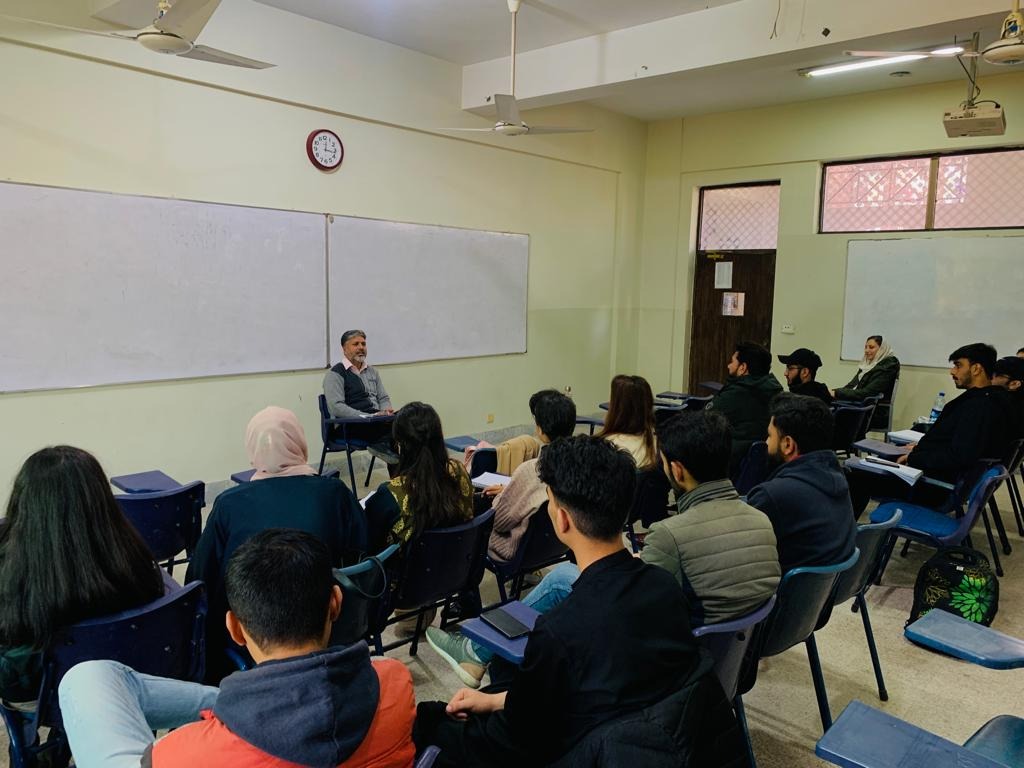
The success of the policy will hinge on effective implementation. Key challenges include:
-
Capacity Building: Ensuring colleges have the resources to accommodate potential shifts in student enrollment across streams.
-
Guidance Counseling: Establishing robust career counseling services at the school and college levels to help students make informed decisions in a more complex landscape.
-
Syllabus Bridging: Developing and offering foundational bridge courses for students switching streams to ensure they are not at a disadvantage.
The IBCC’s decisions mark a decisive break from a prescriptive past toward a more adaptive and empowering educational framework. By unlocking student choice at the critical intermediate juncture, Pakistan’s education authorities have taken a substantial step toward fostering a generation whose academic paths are defined by aspiration and ability, rather than by bureaucratic constraint.
This report is based on official proceedings from the IBCC’s 183rd meeting and subsequent briefings. The new policies are slated for implementation in the upcoming academic session.