




 Home
Home
 National
 International
 Merit list
 Date Sheet
 Result
 Admission
 Study Abroad


.jpg)
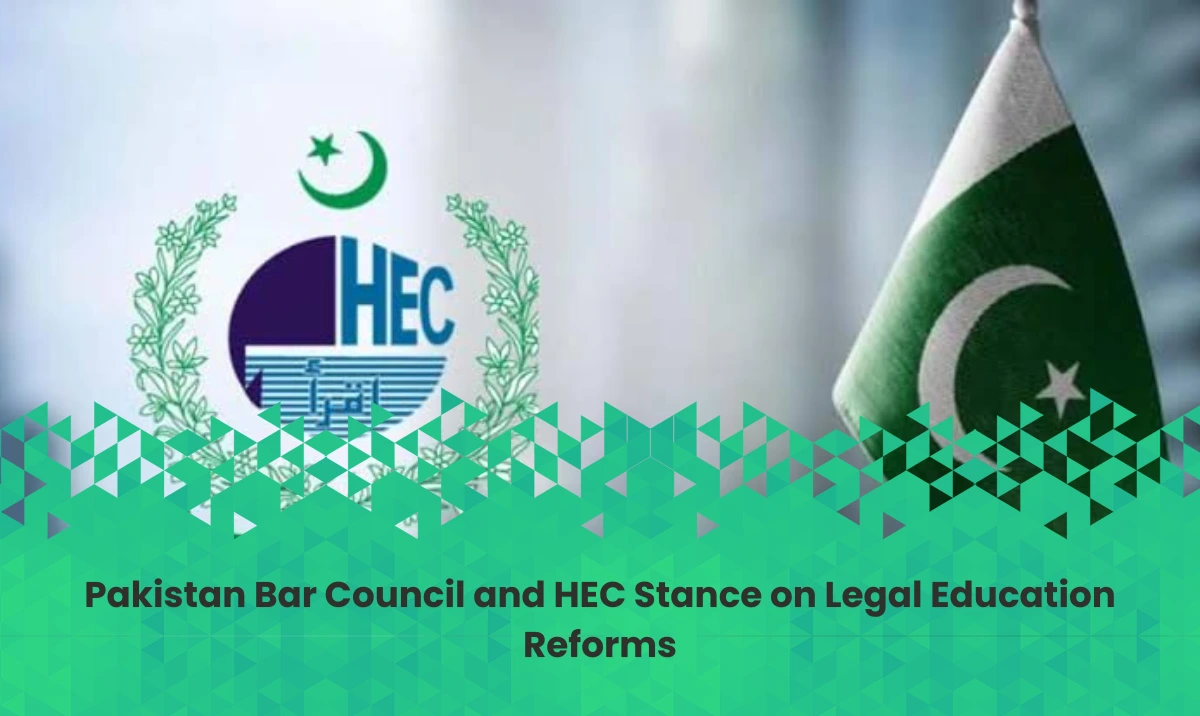
HEC Clarifies Viral Letter About LLB 4-Year Program: Facts and Official Stance
The Higher Education Commission ( HEC ) has officially dismissed a viral letter circulating rapidly across various social media platforms, calling it entirely fake and misleading. The forged document falsely claimed that the duration of the Bachelor of Laws ( LLB ) program had been prematurely shortened from five years to four years for currently enrolled students.
As misinformation continues to spread online, triggering widespread panic, confusion, and anxiety among law students and academic institutions, the country’s premier higher education regulatory body stepped forward to set the record straight. This comprehensive report explores the background of the controversy, the contents of the forged document, the official reaction from the commission, and what students must know regarding the actual status of legal education in the country.
Anatomy of the Rumor: What the Fake Letter Claimed
Over the last few days, digital platforms—including WhatsApp groups, Facebook student forums, and X (formerly Twitter)—witnessed the viral circulation of a document titled “Policy Guideline: LLB 4-Year Program Duration and GAT Eligibility for Current Students.”
The forged circular was meticulously designed to mimic official HEC correspondence, using similar formatting, structural layouts, and bureaucratic terminology to trick unsuspecting readers. The fabricated notification claimed that:
-
The standard five-year LLB program duration had been instantly reduced to a four-year timeline.
-
The revised policy applied retroactively, directly impacting students currently enrolled in various semesters of the traditional five-year curriculum.
-
New directives regarding the Law Graduate Assessment Test ( GAT ) eligibility criteria had been enforced immediately alongside the structural shift.
Because higher education policy changes directly affect career paths, professional licensing, and academic progress, the document caused immediate panic. Thousands of students flooded university administration offices with frantic inquiries regarding their remaining semesters, credit hours, and graduation timelines.
HEC’s Swift Clarification and Official Rebuttal
Recognizing the gravity of the misinformation, the Higher Education Commission acted promptly to issue a formal clarification. In its official statement, the commission categorically denied issuing any such policy guideline, notification, or directive regarding a retroactive reduction in the duration of the LLB program for currently enrolled batches.
The commission emphasized that official policy shifts of this magnitude are never announced via unverified social media PDFs. Instead, authentic decisions are formally published on the official HEC website ( www.hec.gov.pk ) and communicated directly to recognized universities and degree-awarding institutions through official dispatch channels.
Understanding the Legal Education Framework in Pakistan
To understand why the viral letter caused so much confusion, it is essential to look at the broader context of legal education reforms in Pakistan. The structure of law degrees has long been a subject of discussion among policymakers, the Pakistan Bar Council (PBC) , and academic circles.
Historically, the traditional LLB program in Pakistan was a 3-year post-graduation degree. However, in line with international standards and recommendations from various judicial bodies to improve the depth and quality of legal training, the regime was shifted to a 5-year integrated program (B.A. LLB) following intermediate or equivalent higher secondary school education.
Discussions, committee reviews, and consultative sessions regarding curriculum modernizations—including exploring future academic frameworks—frequently take place between the HEC and the Pakistan Bar Council . While stakeholders continuously evaluate ways to streamline education and align local degrees with global benchmarks, any structural transition—if approved—is subjected to rigorous legal, statutory, and administrative processes before implementation. Crucially, policy changes of this scale are prospective, meaning they apply exclusively to new incoming admission batches rather than disrupting the academic journeys of students already mid-way through their degrees.
The Danger of Social Media Misinformation in Academia
The rapid spread of the fake LLB 4-year program letter highlights a growing challenge in the digital age: the vulnerability of students to unverified academic rumors. In recent years, social media has frequently been exploited by malicious actors or pranksters aiming to generate panic, engagement, or confusion within student communities.
Fake notifications regarding semester fee hikes, sudden examination cancellations, policy alterations, and grading system overhauls routinely surface online. For university students whose futures depend heavily on strict regulatory compliance, these rumors can cause severe mental stress and disrupt academic planning.
Education experts and university administrations have repeatedly urged students to exercise digital literacy and critical thinking. Relying blindly on forwarded documents without cross-checking the primary source creates unnecessary chaos.
Guidelines for Students: How to Verify HEC Notifications
To protect themselves from falling victim to fake news and forged documents, students and faculty members are advised to follow these precautionary steps:
-
Check the Official Website: Always cross-verify major policy announcements, curriculum changes, or notification letters directly on the official HEC web portal. If a notification is not hosted there, it is almost certainly fake.
-
Consult University Authorities: If a notification claims to alter degree structures, credit hours, or graduation requirements, consult your university’s registrar, controller of examinations, or department focal person before reacting.
-
Analyze the Source: Look closely at the distribution channel. Authentic HEC policies are transmitted via official government domains, press releases, or mainstream media outlets, rather than anonymous WhatsApp forwards or unverified social media pages.
-
Beware of Retroactive Claims: Regulatory bodies rarely alter foundational degree structures retroactively for current students, as doing so violates established educational and legal norms regarding vested academic rights.






Share your comments & questions here
No comments yet. Be the first to comment!