




 Home
Home
 National
 International
 Merit list
 Date Sheet
 Result
 Admission
 Study Abroad



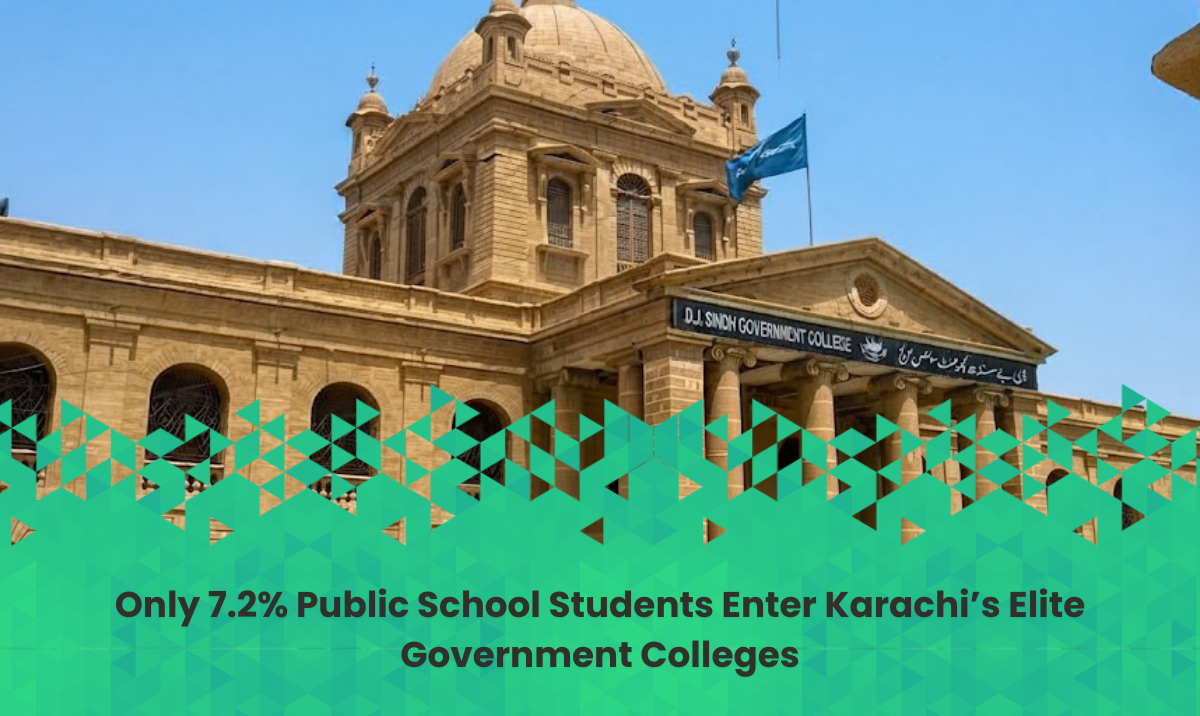
Karachi College Admissions Crisis: Only 7% of Students from Government Schools Secure Seats in Top 10 Institutions
The educational landscape in Pakistan’s largest metropolis has once again sparked intense debate following the release of striking admission statistics. Recent data compiled from Karachi’s top 10 government colleges reveals a profound disparity in academic outcomes between the public and private sectors. Out of thousands of eager applicants who cleared their matriculation examinations, an overwhelming majority of successful candidates hailed from private institutions, casting a long shadow over the state of public schooling in the province.
The numbers tell a stark story. According to official admission data obtained directly from these elite state-run institutions, a total of 13,211 students were granted admissions across the board. Out of this comprehensive figure, a staggering 12,264 students—accounting for 92.8%—came from private schools . In sharp contrast, a meager 947 students, representing just 7.2% , managed to cross the high merit thresholds coming out of government-run matriculation setups.
This deep imbalance has reignited concerns regarding equity, resource allocation, and the overall quality of education delivered within the public sector of Sindh.
The Anatomy of the Disparity: Private vs. Public Sector
To understand the weight of these statistics, one must look at how Karachi’s top 10 government colleges function within the Centralized Admission Policy (CAP). Institutions such as Adamjee Government Science College, D.J. Sindh Government Science College, BAMM PECHS Government College for Women, and Government Delhi Inter Science College are traditionally viewed as the holy grail for intermediate students. Securing a seat in these campuses is historically tied to high merit, fierce competition, and high expectations.
However, the recent data highlights an uncomfortable truth: public sector colleges, funded by taxpayer money to serve the general masses, are predominantly absorbing products of the private educational network.
Educationists and policy analysts point out several systemic reasons why private school graduates consistently outperform their government school counterparts in high-stakes merit races:
-
Resource Availability: Private institutions typically boast better-equipped science laboratories, IT infrastructure, and updated libraries.
-
Faculty Accountability: Private management models often enforce stricter monitoring of teacher attendance and pedagogical delivery.
-
Foundational Learning: Early-year education in many private setups places a heavier emphasis on conceptual understanding rather than rote memorization, which pays dividends during board exams.
-
English Language Proficiency: Since intermediate science and commerce exams require technical comprehension, students with stronger early English communication skills often navigate advanced texts with greater ease.
Voices from the Education Sector
The revelation that only 7% of students from government schools made the cut for premier state colleges has drawn sharp reactions from academic circles, civil society, and parent associations.
Critics argue that the data serves as a damning indictment of decades of neglect, administrative mismanagement, and underfunding within the Sindh public school framework. While thousands of children enrolled in government matriculation schools study amidst crumbling infrastructure, shortages of teaching staff, and erratic academic calendars, they are expected to compete on a level playing field with students nurtured in heavily resourced private systems.
Proponents of public schooling, however, emphasize that a select few government schools still punch above their weight, but they are heavily outnumbered by institutions plagued by administrative apathy. Without structural overhauls, the gap between the haves and have-nots within the public education ecosystem will only widen further.
Broader Implications for the Sindh Education System
The implications of this intake trend extend far beyond mere statistics. Intermediate colleges serve as the vital bridge between secondary school and professional universities—including medical, engineering, and business schools.
If students from public matriculation backgrounds are systematically locked out of Karachi’s top 10 government colleges , their representation in top-tier professional degree programs naturally dwindles. This creates a vicious cycle where children from lower-income backgrounds, who rely primarily on government schools, find themselves structurally marginalized from upward socioeconomic mobility.
Furthermore, the data raises critical questions regarding the implementation of the Centralized Admission Policy. While the CAP was designed to ensure transparency and meritocracy, meritocracy inherently favors those who have access to superior preparatory resources. Without affirmative action, remedial bridging programs, or a massive uplift of public school standards, pure merit-based allocation risks institutionalizing existing socioeconomic inequalities.
Moving Forward: What Needs to Change?
Addressing the massive imbalance highlighted by the 92.8% to 7.2% ratio requires emergency interventions from the Government of Sindh and the Directorate of Inspection and Registration of Private Institutions Sindh (DIRPIS). Key recommendations from education experts include:
-
Targeted Public School Upgrades: Injecting dedicated funds into public secondary schools to upgrade science labs and digital learning centers.
-
Teacher Training Programs: Implementing rigorous, continuous professional development models for government school educators, particularly in STEM fields.
-
Curriculum Modernization: Aligning public school examination boards with conceptual learning frameworks to reduce reliance on outdated rote-learning practices.
-
Quotas and Support Systems: Exploring introductory transitional support or carefully structured regional allocations to ensure talented students from marginalized public schools are not entirely squeezed out of top institutions.






Share your comments & questions here
No comments yet. Be the first to comment!