




 Home
Home
 National
 International
 Merit list
 Date Sheet
 Result
 Admission
 Study Abroad
.jpg)


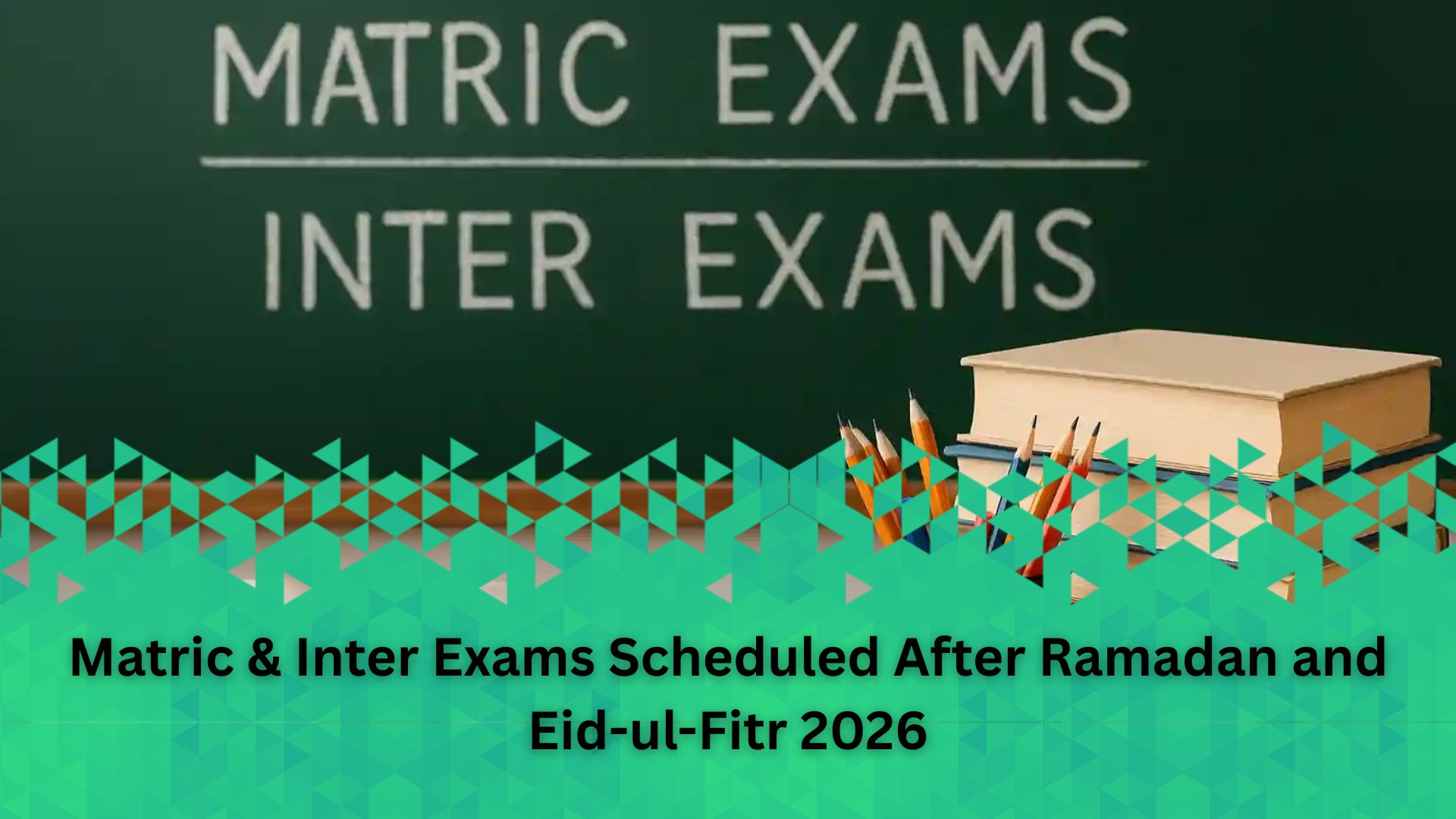
Matric & Inter Exams Scheduled After Ramadan and Eid-ul-Fitr 2026
In a decisive move aimed at student welfare and academic performance, the Punjab government has officially revised the examination calendar for all board students across the province. Punjab Education Minister Rana Sikandar Hayat announced a significant rescheduling of the 2026 Matriculation (Secondary School Certificate) and Intermediate (Higher Secondary School Certificate) annual board examinations, shifting them to the period after Ramadan and Eid-ul-Fitr .
This policy reversal, confirmed by the Minister on December, directly overrides the official schedule issued by the Punjab Education Department just over a week prior. It marks a proactive response to longstanding concerns from parents, students, and educators regarding the challenges of exam preparation during the holy month.
The New Exam Timeline: A Clear Shift
Under the newly announced directives:
-
Matric (9th & 10th Class) Exams are now tentatively expected to commence around March 24, 2026 . This is a substantial delay from the previously circulated date of March 3, 2026 .
-
Intermediate (11th & 12th Class) Exams will follow the Matric examinations, with their schedule also being pushed back. They were originally slated to begin on May 5, 2026 , but will now be held later, ensuring a complete post-Ramadan and Eid timeline.
Minister Rana Sikandar Hayat emphasized that the core objective is to provide a "more suitable academic environment" for the hundreds of thousands of students under the nine Punjab boards, including Lahore, Gujranwala, Faisalabad, Multan, Rawalpindi, Sargodha, Bahawalpur, and Dera Ghazi Khan.
Rationale Behind the Rescheduling: Prioritizing Student Well-being
The Minister elucidated that holding exams after the holy month allows students to concentrate on their studies without the dual pressures of rigorous exam preparation and the spiritual and physical commitments of fasting. Ramadan is a time for spiritual reflection, prayer, and altered daily routines, which can impact study schedules and cognitive stamina.
"Aligning the examinations with the post-Ramadan period is a student-centric decision," stated Minister Hayat. "It ensures our young learners can appear for their board exams with greater focus, better preparation, and without unnecessary physical strain. This is about fairness and optimizing conditions for success."
Educational experts and parent bodies have frequently advocated for such a change. They argue that exam preparation during Ramadan can lead to increased stress, sleep deprivation, and suboptimal performance, putting fasting students at a potential disadvantage.
Reversing the Earlier Schedule: A Swift Government Response
The speed of this revision highlights the government's attentiveness to stakeholder feedback. The Punjab Education Department had formally issued the 2026 academic calendar more than a week before the Minister's announcement, locking in the earlier March and May start dates.
The swift overhaul of that official schedule demonstrates a top-down intervention to prioritize student welfare over administrative convenience. The government's move is being widely interpreted as a fulfillment of its promise to make the education system more empathetic and responsive.
Stakeholder Reactions and Implications
Initial reactions from the educational community have been largely positive.
-
Parents & Students: Many have welcomed the decision, expressing relief. "This is a huge burden lifted," said Ayesha Khan, mother of a prospective 2026 Matric candidate in Lahore. "Now my son can observe Ramadan peacefully and then dedicate his full energy to exams."
-
Teachers & Principals: Educators have acknowledged the logistical challenges of rescheduling but agree on the benefit to students. "It will require adjusting the internal school exam and revision timelines, but the academic rationale is sound," commented Principal Tariq Mahmood of a Lahore model school. "Students will have a clear, uninterrupted period for final preparation."
-
Administrative Boards: The various Punjab boards are now tasked with formally amending their calendars, adjusting paper-setting and distribution logistics, and coordinating with affiliated schools to cascade the changed dates effectively.
Looking Ahead: Key Considerations for Students
While the new dates provide clarity on the broader timeline, students and institutions are advised to await the formal notification from their respective boards for the exact date sheets. However, the ministerial announcement sets a definitive direction.
Education analysts suggest this policy could set a precedent for future academic years, potentially leading to a permanent alignment of the secondary and higher secondary exam schedule with the post-Ramadan period. The success of this change in 2026 will likely be closely monitored to assess its impact on overall pass percentages and student well-being.

A Student-Centric Policy Shift
The Punjab government's decision to reschedule the 2026 Matric and Intermediate exams represents a significant, welfare-oriented reform in the province's examination administration. By moving the high-stakes board examinations to after Ramadan and Eid , Minister Rana Sikandar Hayat has addressed a critical concern, aiming to enhance fairness and performance. This move not only alleviates student stress but also reaffirms the government's commitment to adapting educational policies for tangible student benefit. All eyes will now be on the implementation and outcomes of this revised schedule in the 2026 academic cycle.









Share your comments & questions here
No comments yet. Be the first to comment!