

 Home
Home
 National
 International
 Merit list
 Date Sheet
 Result
 Admission
 Study Abroad




A New Technological Era for Lahore Board
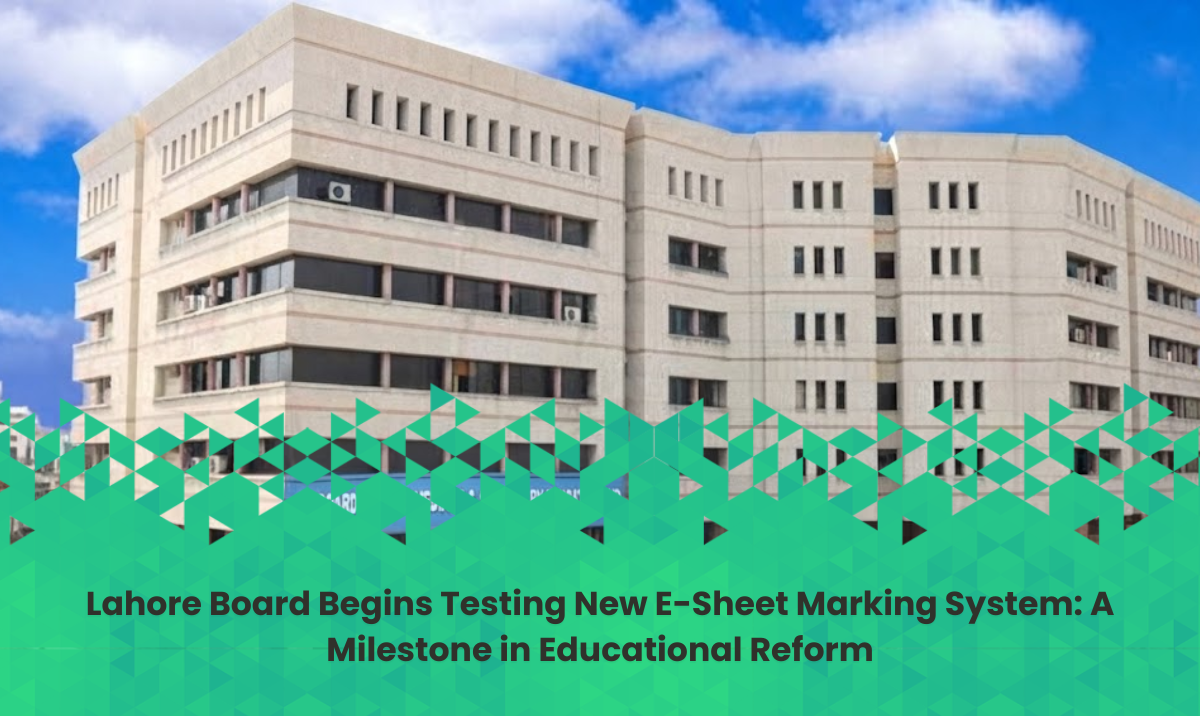
The education landscape in Pakistan is undergoing a massive paradigm shift, and at the forefront of this digital transformation is the Board of Intermediate and Secondary Education (BISE) Lahore. In a pioneering move to modernize evaluation procedures, transparently grade assessments, and eliminate traditional bottlenecks, the Lahore Board has officially initiated a mock test for its innovative on-screen marking system applies to Intermediate (HSSC / Grades 11 and 12) and Matriculation (SSC / Grades 9 and 10) classes.
This pilot project marks a critical milestone in Pakistan’s educational framework. By shifting from conventional pen-and-paper checking to a digital E-Sheet Marking System, BISE Lahore aims to align local examination standards with international best practices. As educational authorities look for ways to restore absolute faith in public examinations, this digital leap promises unmatched accuracy, security, and administrative efficiency.
The Pilot Project Kickoff: Students and Campuses Involved
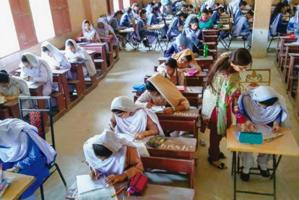
The initial phase of the pilot project rolled out with significant momentum. On the very first day of testing, 150 students from prominent educational institutions across the provincial capital participated in the trial. The participating students were drawn from:
-
Government College University (GCU)
-
Punjab College
-
Superior College
These students appeared for a specially curated mock examination utilizing the newly introduced digital e-sheets. The successful execution of this first day provided vital operational data, testing the system's stability, user-friendliness, and interface responsiveness under real exam conditions.
High-Level Oversight and Leadership Inspection
The significance of this transition was underscored by the active presence of top-tier educational leadership during the rollout. Chairman of the Task Force on Examinations, Muzammil Mahmood, personally reviewed the logistical arrangements and technical infrastructure.
He was accompanied by:
-
Professor Badar-ul-Islam, Chairman of BISE Lahore
-
Tauseef-ur-Rehman, Controller of Examinations
The leadership team closely monitored how the digital papers were deployed, how students interacted with the e-sheets, and how evaluators would eventually access the encrypted data on secure terminals. Their joint supervision reflects the government’s serious commitment to executing structural reforms without disrupting the academic year.
Key Benefits of the E-Sheet Marking System
During the evaluation and review sessions, key stakeholders highlighted several transformative advantages that the E-Sheet Marking System will bring to the Lahore Board examination process.
1. Boosting Student Confidence and Integrity
According to Task Force Chairman Muzammil Mahmood, the primary objective of implementing the on-screen marking system is to bolster students' trust in the examination system. For decades, concerns over human error, lost answer booklets, or biased scoring have plagued national examination bodies. By digitizing the workflow, every stroke and entry is securely tracked, ensuring a fair evaluation environment.
2. Eliminating Impersonation and Fraud
One of the most innovative security features highlighted during the launch is the system's ability to curb malpractice. Mahmood noted that the implementation of e-sheets makes it significantly easier to detect and intercept impersonators. Digital tracking, integrated student credentials, and biometric or systemic checks safeguard the integrity of the examination halls, ensuring that the right candidate occupies the seat.
3. Tapping into Nationwide Expert Teachers
BISE Lahore Chairman Professor Badar-ul-Islam elaborated on the logistical superiority of digital grading. Under the traditional framework, physical copies had to be transported to designated marking centers, limiting the pool of available examiners. With the new E-Sheet Marking System, expert teachers from across Pakistan will be securely authorized to check examination papers digitally. Crucially, Professor Badar-ul-Islam stressed that only qualified and vetted teachers will be granted access credentials to grade the papers, maintaining uncompromised academic standards.
4. Drastic Reduction in Rechecking Complaints
For students, waiting for board results is often accompanied by anxiety regarding marks calculations, totaling errors, or unassessed questions. Controller of Examinations Tauseef-ur-Rehman pointed out that the digital transition will significantly reduce complaints related to the rechecking of examination papers. Because the system automatically tallies scores, prevents skipped questions, and records digital annotations by markers, the margin for clerical error drops close to zero.
How the On-Screen Marking System Works
Understanding the mechanics of the on-screen marking system sheds light on why educational boards globally are shifting away from paper.
-
Digital Submissions: Once students complete their tests on e-sheets (or paper scripts are scanned securely into high-resolution digital formats), the files are uploaded to a centralized, encrypted database.
-
Anonymization: Student identification data is masked or encrypted before reaching the examiner, eliminating unconscious bias based on handwriting, school background, or gender.
-
Structured Rubrics: Expert examiners log into secure terminals where they evaluate questions page-by-page or section-by-section using standardized digital rubrics.
-
Automated Computation: The platform automatically sums up sub-scores into total marks, transferring results directly to the board’s central database, thereby omitting manual calculation mistakes.
Broader Implications for Education in Pakistan
The initiative by BISE Lahore serves as a pilot for the rest of the country. Pakistan's educational infrastructure has long grappled with scale: millions of students register for board examinations annually, placing immense pressure on administrative staff, examination centers, and teaching faculty.
By streamlining paper distribution, physical storage, transport security, and manual tabulation, digital examination systems offer a sustainable solution. If the Lahore Board successfully scales this pilot project, other educational boards across Punjab and Pakistan are expected to follow suit, leading to a unified, transparent, and modernized national assessment framework.